SSP 390 The 7-speed Double-clutch Gearbox 0AM
Double clutch and torque curve
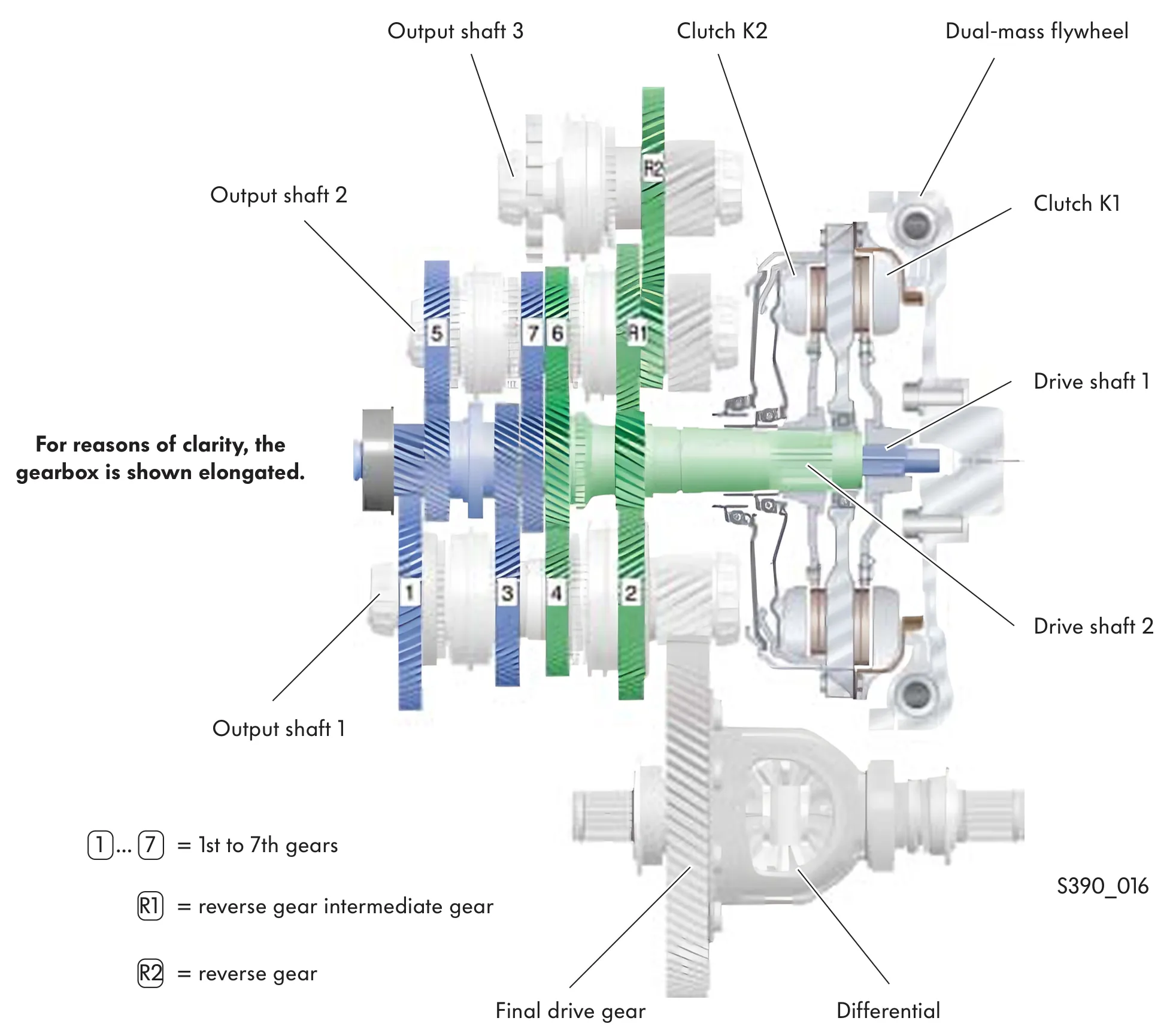
The double clutch is located in the bell housing. It consists of two conventional clutches, which are comprised to form a double clutch. During the remainder of this self-study programme, the clutches are referred to as K1 and K2.
Clutch K1 transfers the torque to drive shaft 1 via splines. From drive shaft 1, the torque for gears 1 and 3 is transferred to output shaft 1 and that for gears 5 and 7 to output shaft 2.
Clutch K2 transfers the torque to drive shaft 2 via splines. It transfers the torque for gears 2 and 4 to output shaft 1 and the torque for 6th gear and reverse gear to output shaft 2. Via reverse gear intermediate gear R1, the torque is then passed on to reverse gear R2 on output shaft 3.
All three output shafts are connected to the differential final drive gear.
Double clutch drive plate
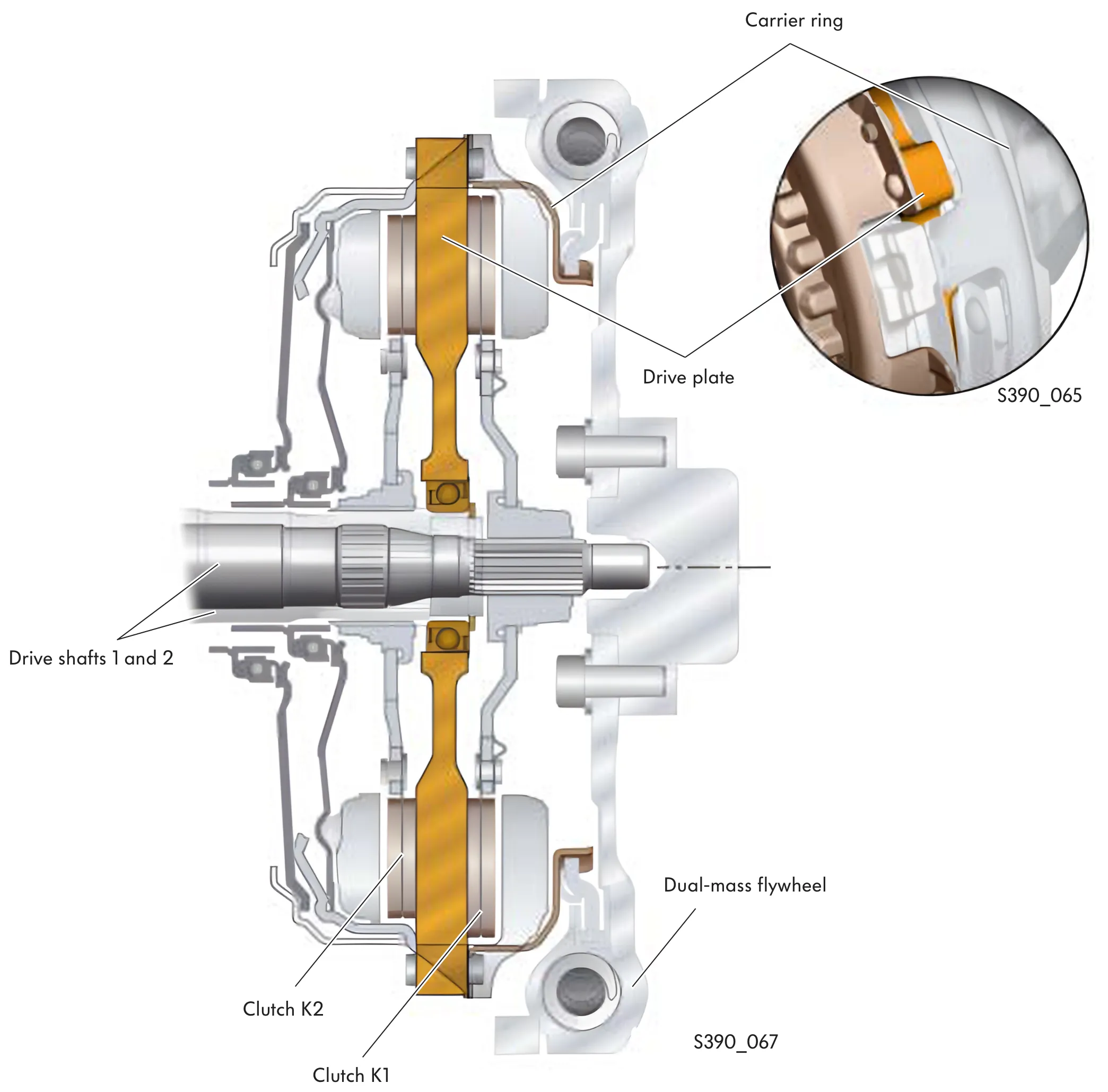
From the carrier ring, the torque is transferred to the drive plate in the double clutch. To achieve this, the carrier ring and drive plate are joined firmly together. The drive plate is mounted on drive shaft 2 as an idler gear.
How it works
If one of the two clutches is actuated, the torque is transferred from the drive plate onto the relevant clutch plate and onwards onto the corresponding drive shaft.
The clutches
Two independent, dry clutches operate in the double clutch. They each conduct the torque into one gear train half. Two clutch positions are possible:
- When the engine is switched off and idling, both clutches are open.
- During vehicle operation, only one of the two clutches is ever closed.
Clutch K1
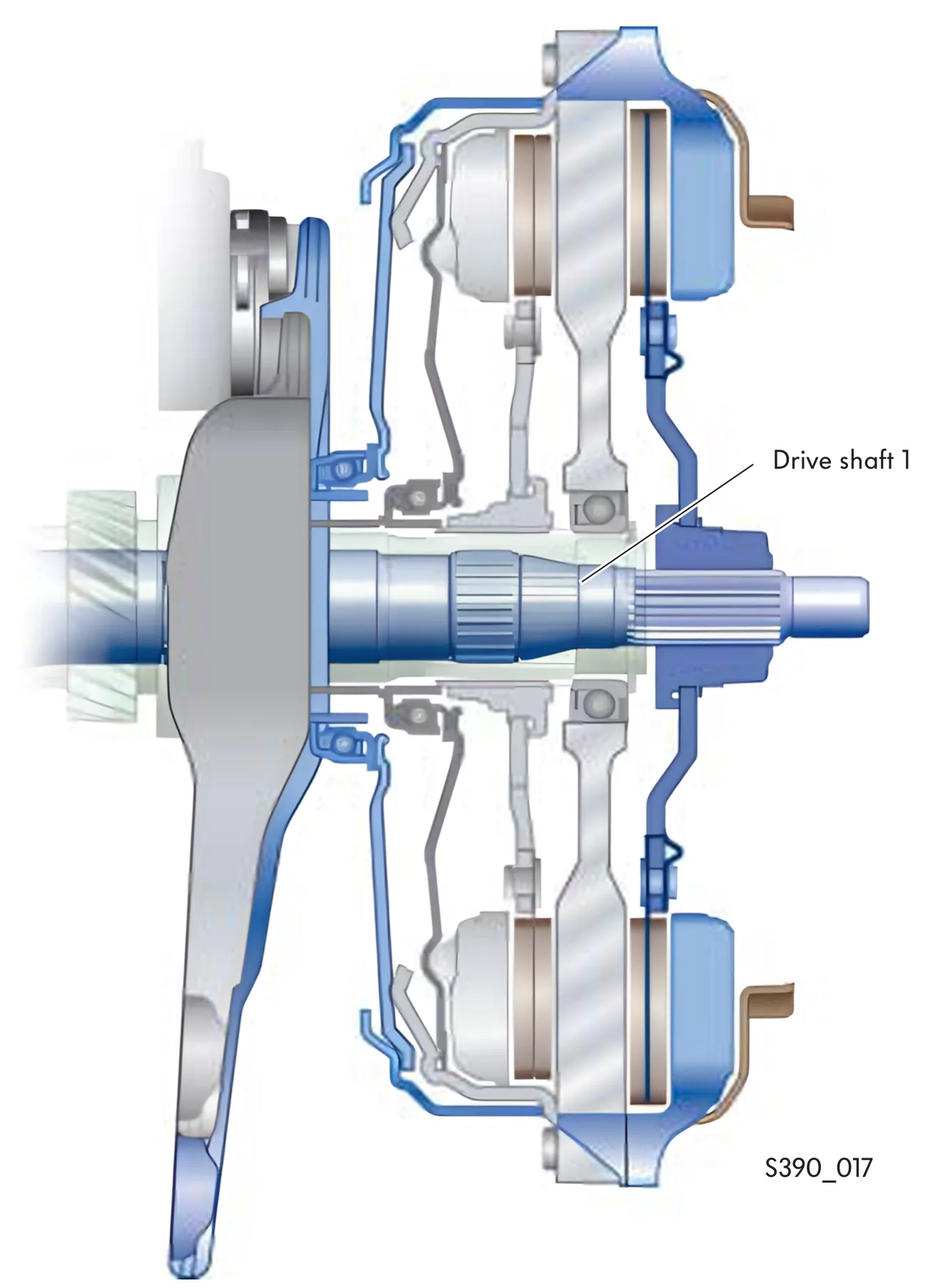
Clutch K1 conducts the torque for gears 1, 3, 5 and 7 to drive shaft 1.
Clutch K1 not actuated
How it works
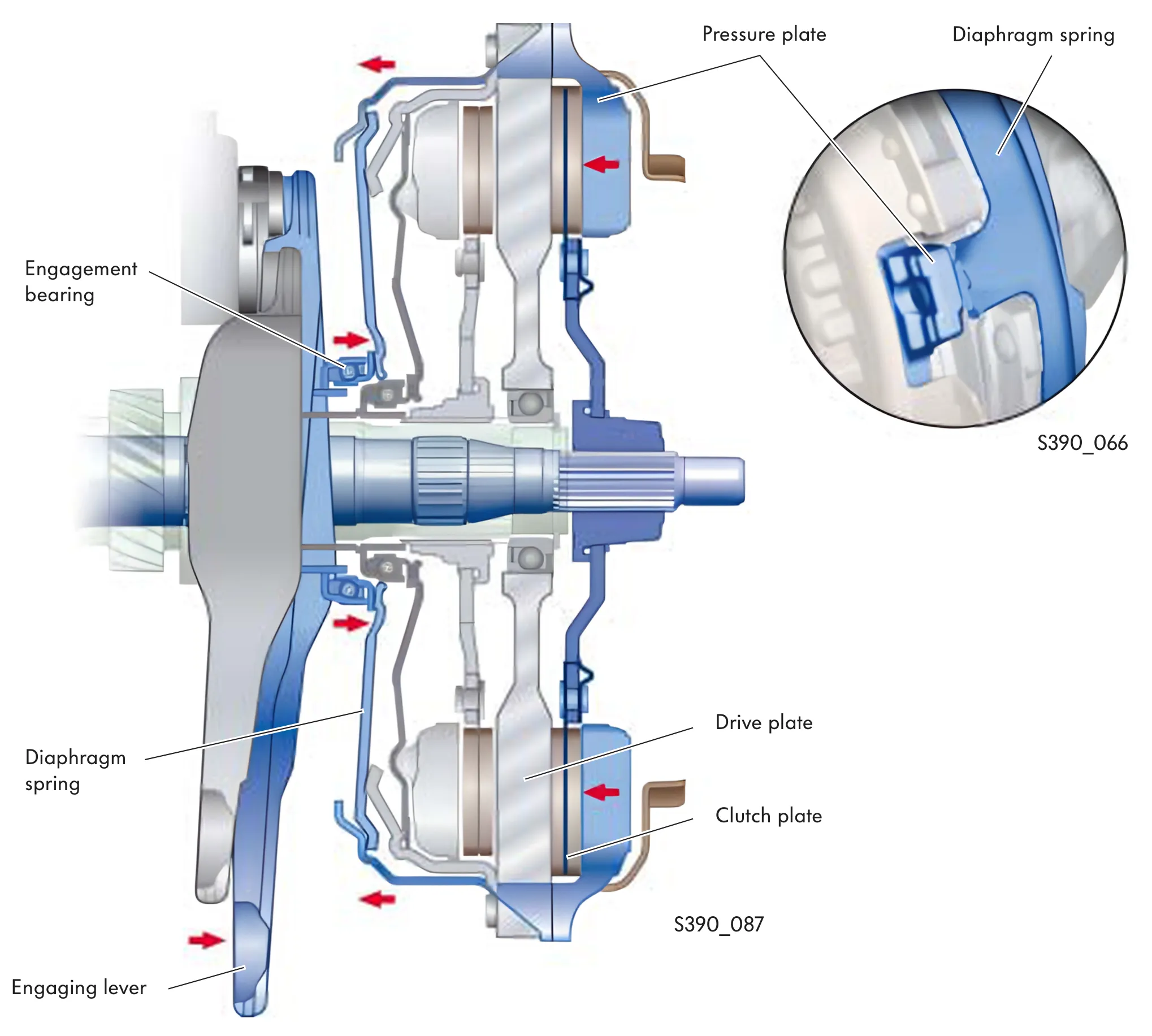
Clutch K1
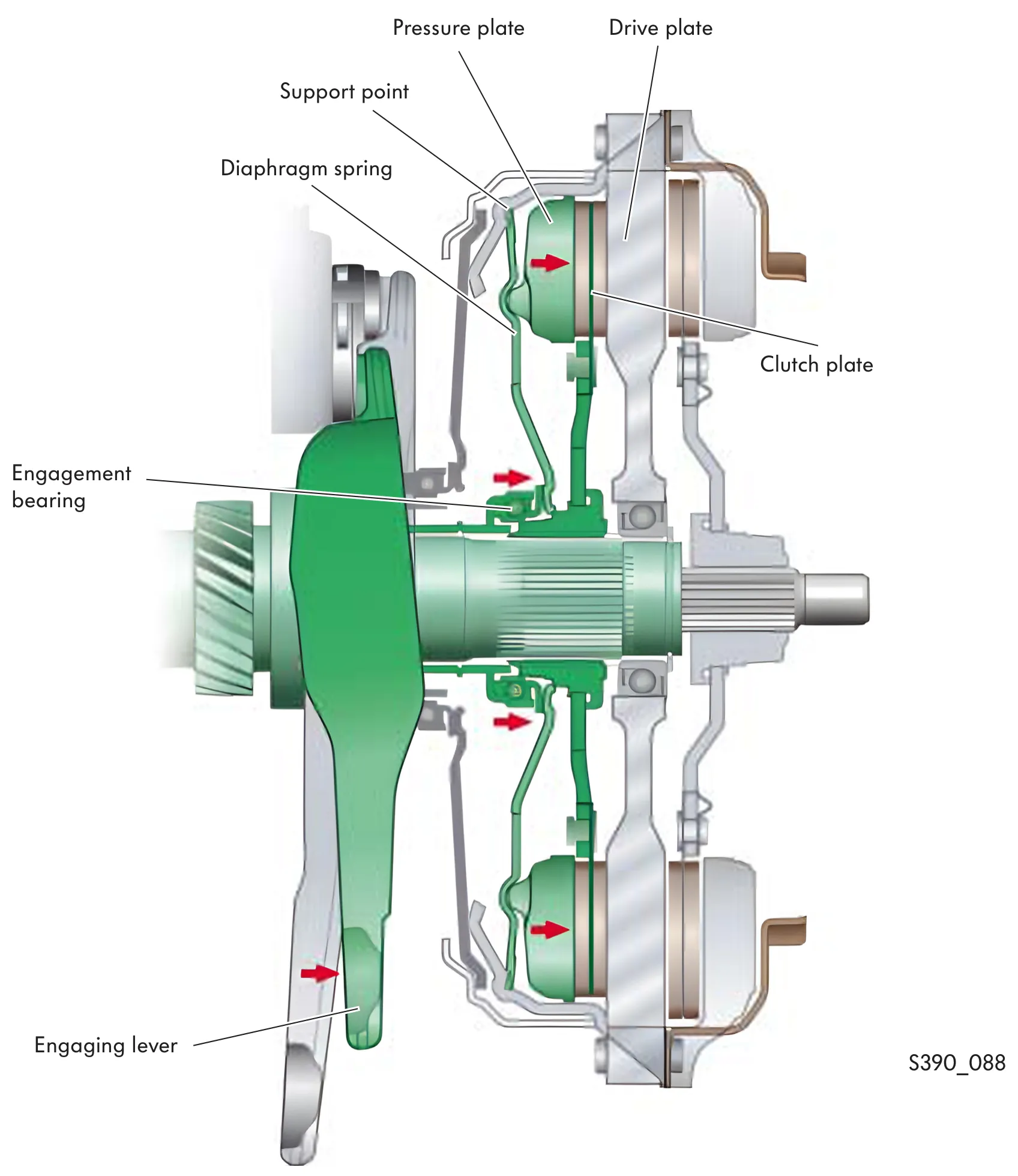
To actuate the clutch, the engaging lever presses the engagement bearing onto the diaphragm spring. At several relay points, this compression movement is transformed into a tension movement.
As a result of this, the pressure plate is pulled onto the clutch plate and the drive plate. The torque is therefore transferred onto the drive shaft.
The engaging lever is actuated via valve 3 in gear train half 1 N435 by the hydraulic clutch actuator for K1.
Clutch K1 actuated
Clutch K2
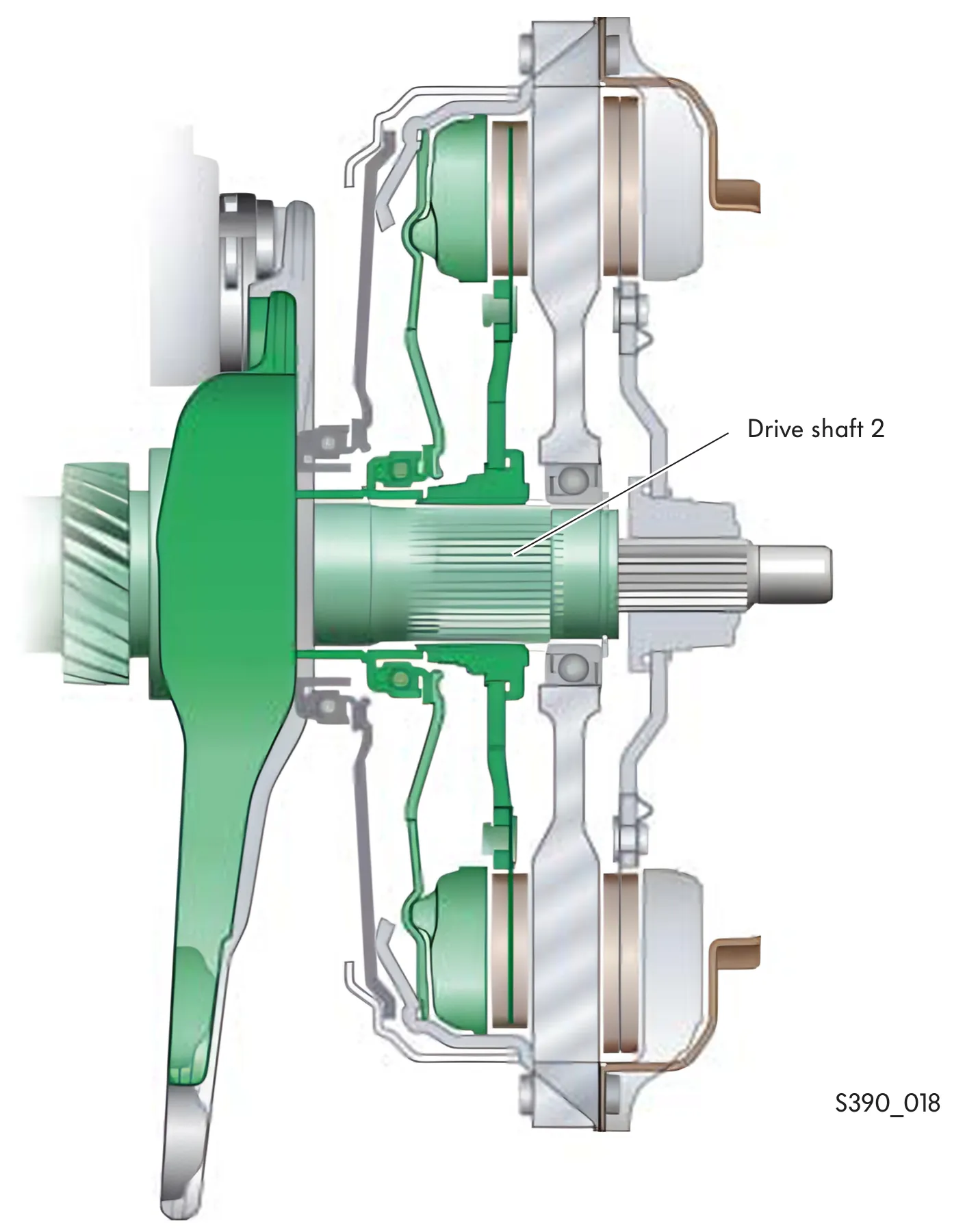
Clutch K2 conducts the torque for gears 2, 4, 6 and R to drive shaft 2.
How it works
Clutch K2
If the engaging lever is actuated, the engagement bearing presses against the pressure plate's diaphragm spring. As the diaphragm spring is supported by the clutch housing, the pressure plate is pressed against the drive plate and the torque is transferred onto drive shaft 2. The engaging lever is actuated via valve 3 in gear train half 2 N439 by the hydraulic clutch actuator for K2.
Clutch K2 actuated