
VW connector pins: single pins, repair wires and part numbers
Which single pin fits which VW repair wire: MQS, MCON, Micro Timer, JPT, SPT and MCP contacts with part numbers, plus seals, crimping tools and depinning.
Updated:
Adding a switch, a sensor or a light to a VW, or repairing a broken wire at a plug, comes down to one small part: the contact crimped onto the wire. VW sells it mostly as a repair wire, while the single pin is often cheaper, sometimes unavailable, and never shown next to the wire in the parts catalogue. This guide matches the two up for the common contact families and explains what you need to know to crimp, fit and remove them.
Basics
Single pin or repair wire
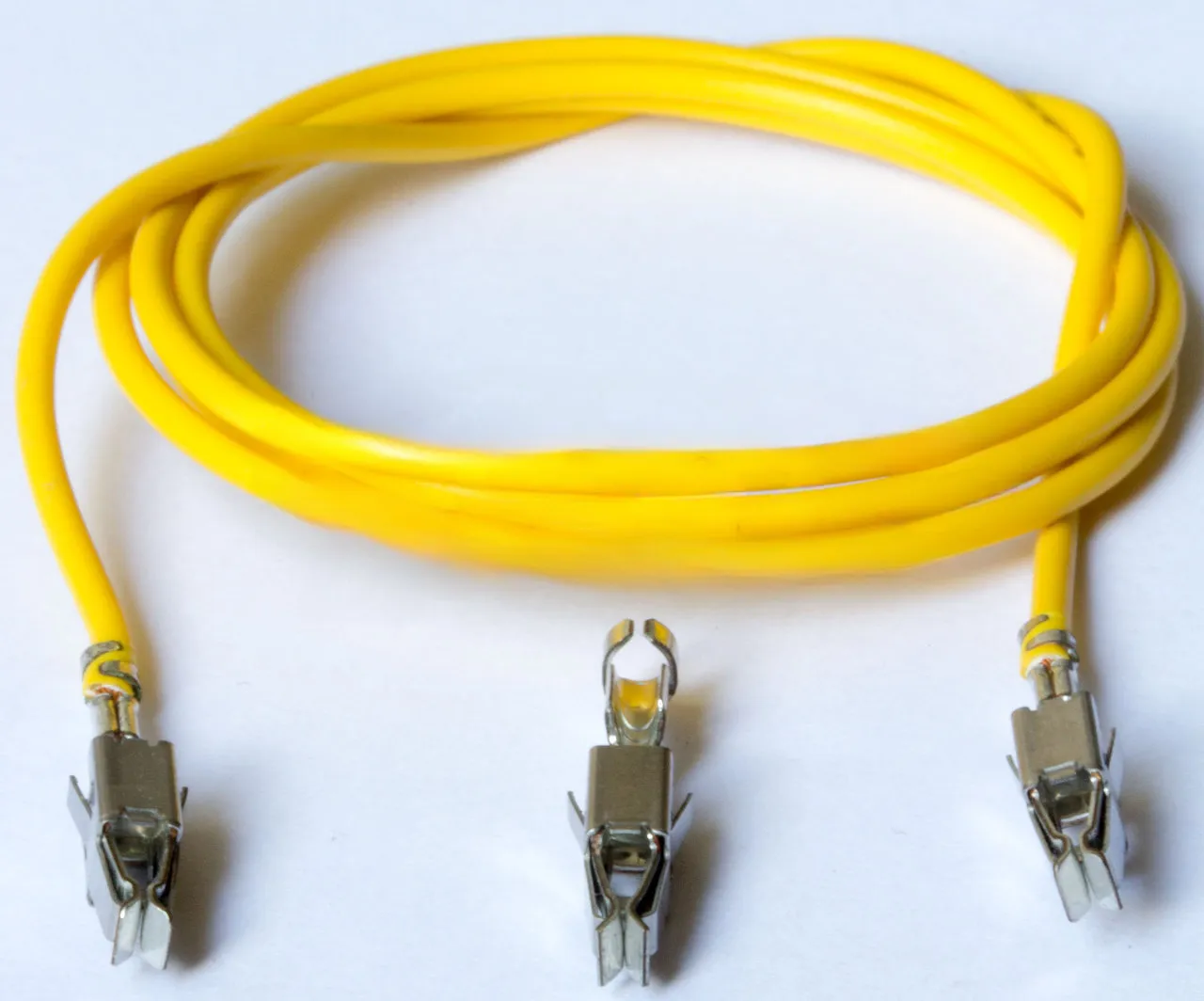
VW calls a repair wire (Reparaturleitung) a single yellow wire, about 60 cm long, with the same contact crimped on at both ends. Cut it in half and you have two contacts with a tail of wire, ready to be soldered or crimped to the car's wire.
The parts catalogue shows, for a plug or socket housing, which repair wires fit it. It does not show which single pin (the bare contact, to be crimped onto your own wire) is the same contact. The tables in Contact overview close that gap.
Not every repair wire has a single pin to go with it. Over the years VW has dropped many single pins and left only the repair wire (see Superseded part numbers), probably so that workshops don't need a crimping tool for every contact type. VW does not make the contacts itself, though, and buys them in, so they can be had from other sources.
Most of VW's contacts come from TE Connectivity, formerly Tyco Electronics, which took over AMP: that is why the name AMP often turns up on VW contacts. Each table below is headed by the name of the contact family, which is the name to look for in TE's catalogues. Two other large makers of automotive connectors are Delphi (now Aptiv) and Lear.
BMW uses a few TE contacts and Mercedes-Benz a good many more, but both charge more than VW. Their numbers are therefore given only where VW has no single pin of its own.
Male and female contacts
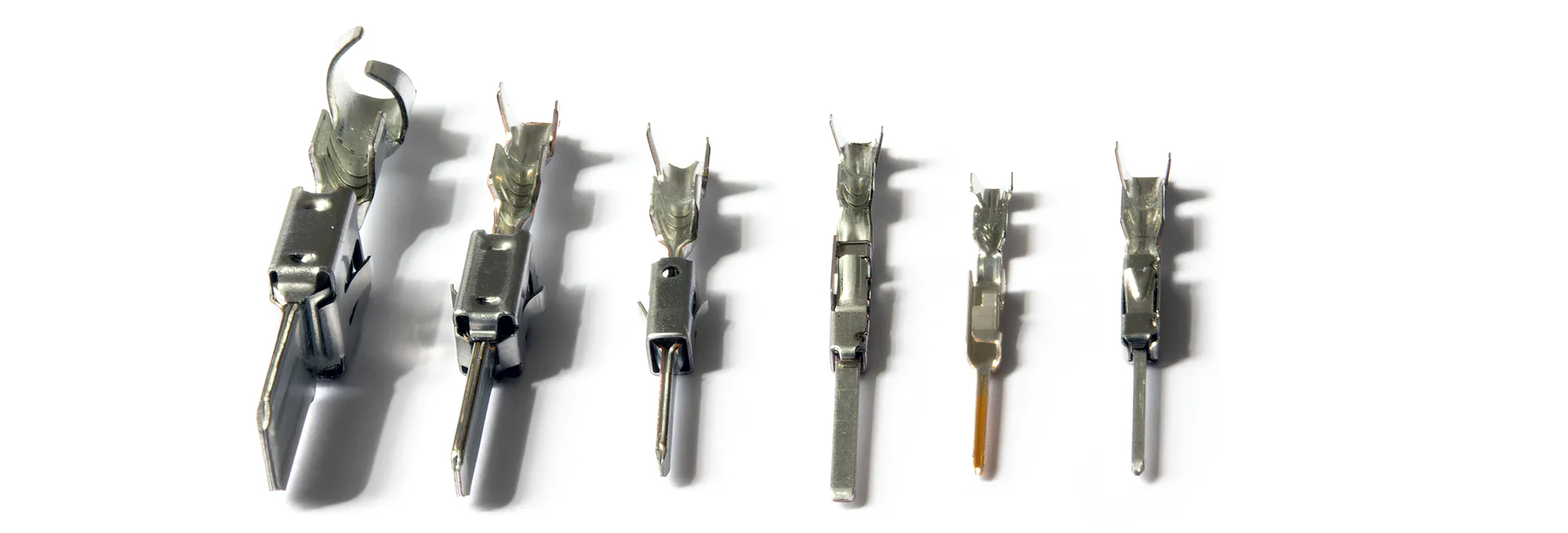
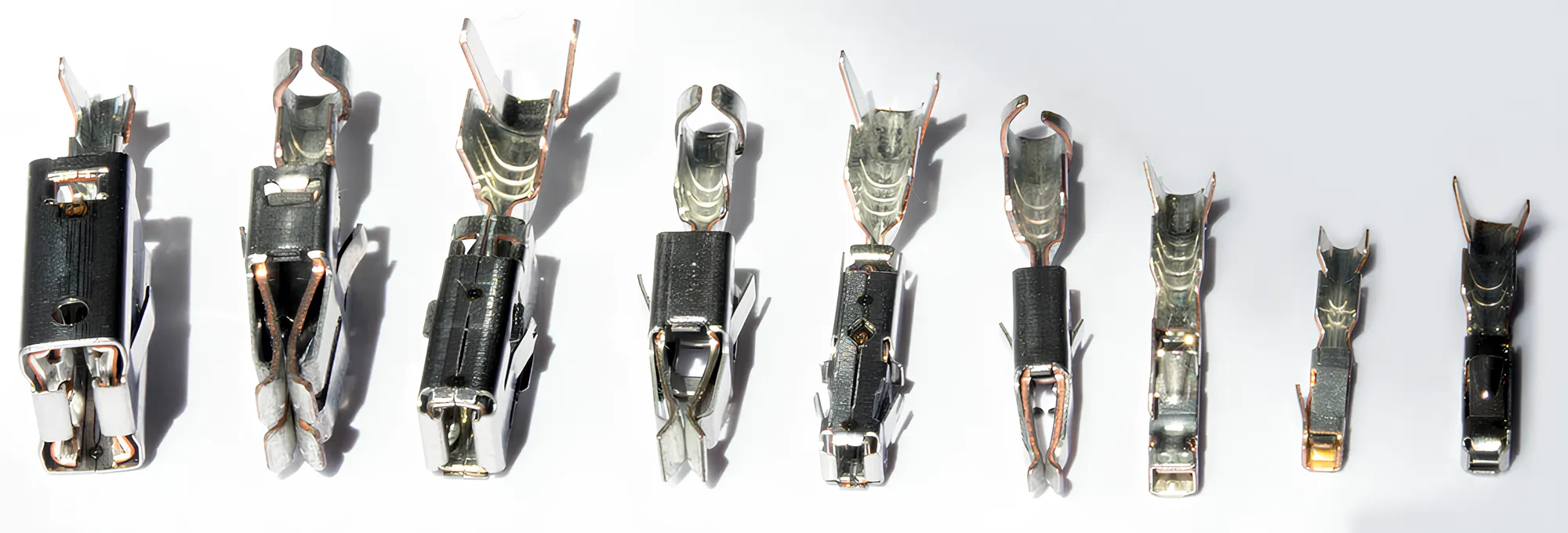
A female contact is the one that closes around its counterpart; the male contact is the blade or pin that goes into it. Female contacts sit in a socket housing, male contacts in a plug housing, although in everyday speech every connector is called a plug.
Most contacts you need for a retrofit are female: the car's control units and switches usually carry the male pins.
Contact width and wire cross-section
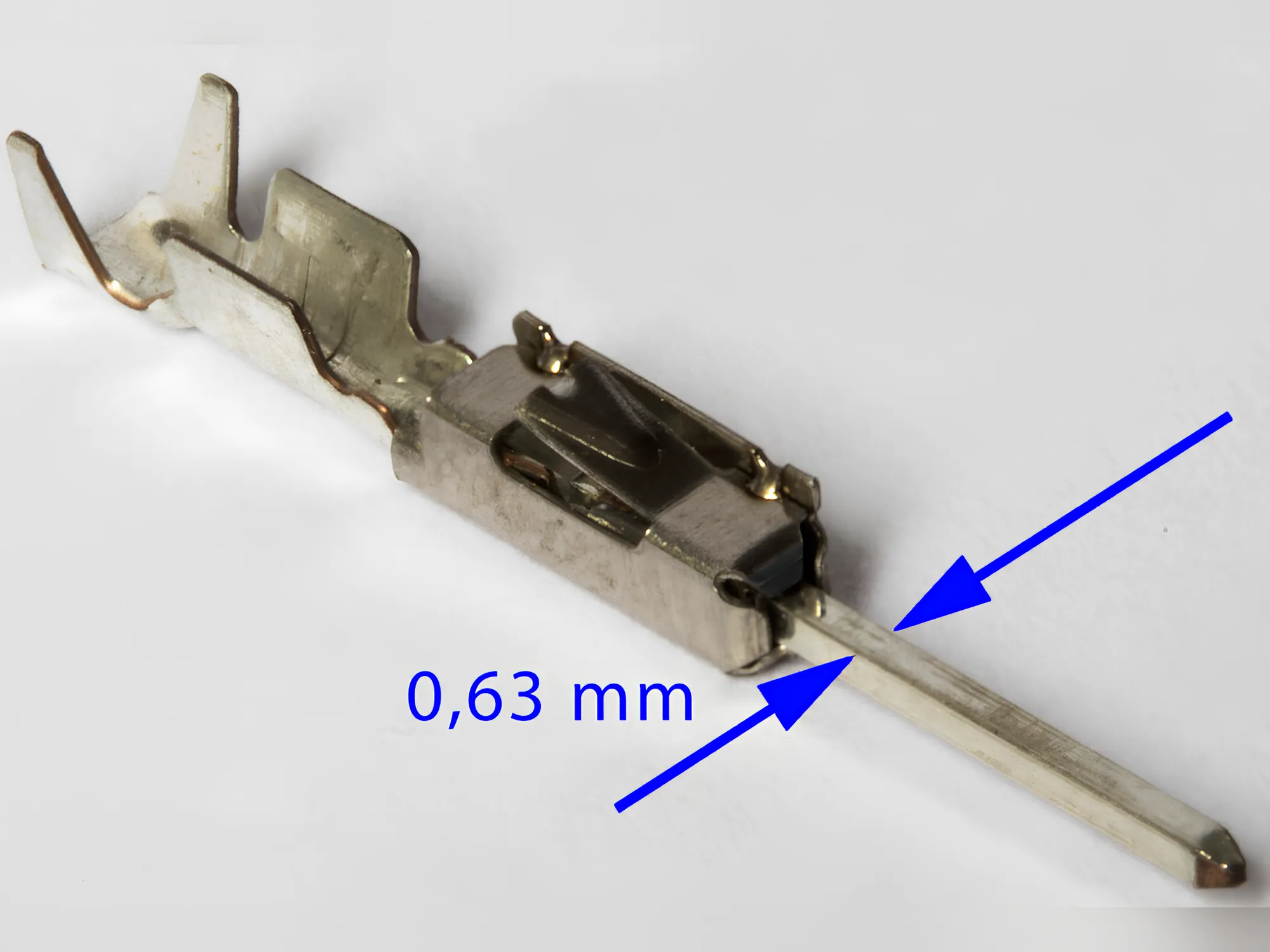
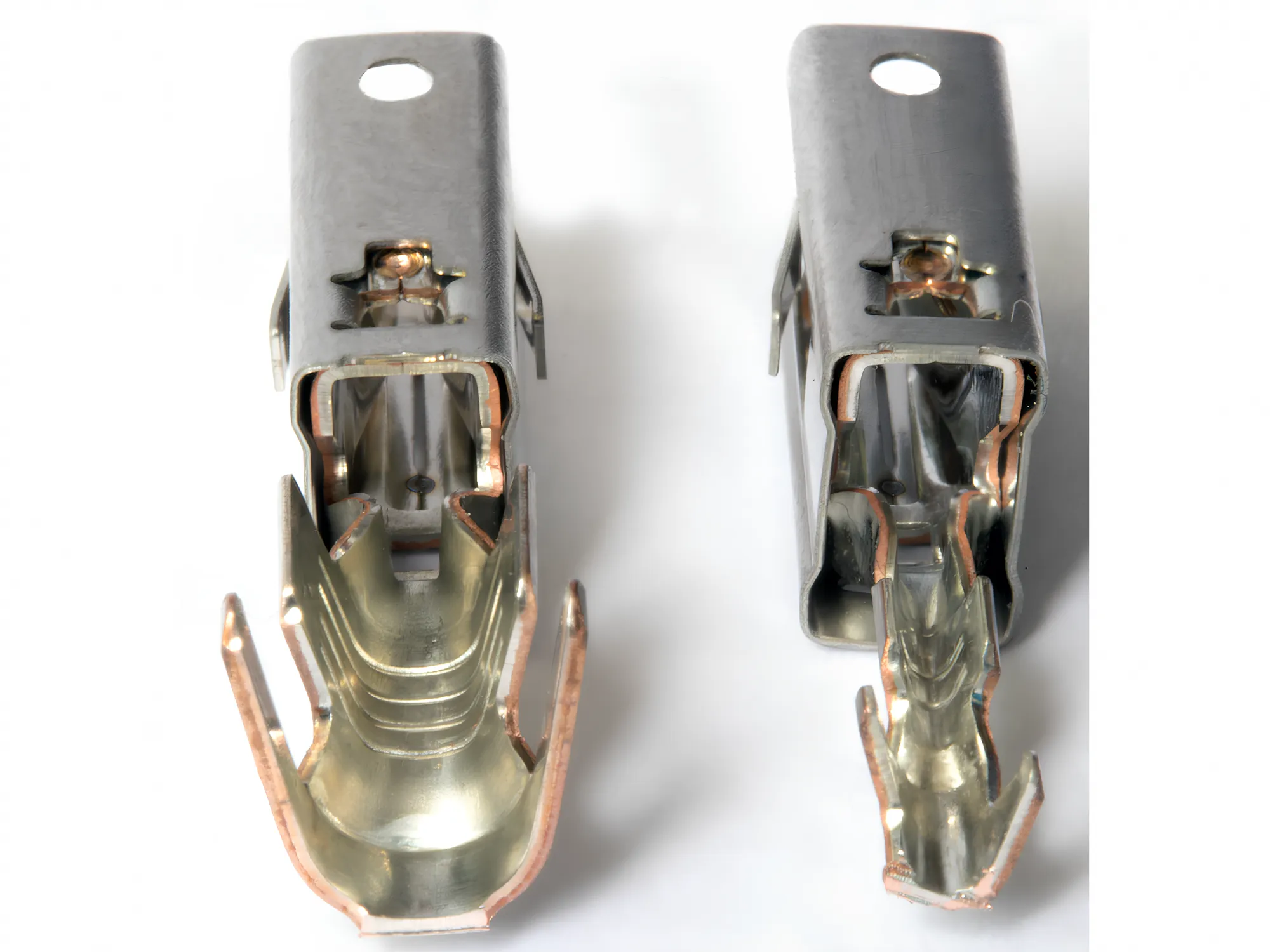
The more current a connection carries, the larger its contacts. Contact families differ in two ways: the cross-section of the wire they take, and the contact width, the width of the blade of the male contact where it touches the female one. It is measured on the male contact, but the female contact of the family carries the same figure, and TE's catalogues and the VW parts catalogue name the family by it.
Two contacts of the same family made for different wire sizes have the same contact end and differ only in the crimp area, so both fit the same housing. That is why the parts catalogue offers every repair wire of a family for a given housing.
Contact plating

Contacts are tin-plated as standard; TE also makes them gold-plated and some silver-plated. Gold-plated contacts are meant for places exposed to the weather, such as the engine bay, where they keep the contact from corroding.
VW sells hardly any of them as single pins, so the tables leave them out. Repair wires, however, come gold-plated too: replace the index E at the end of the part number with EA (000 979 009 E → 000 979 009 EA). Only the contact area is gold-plated, not the whole pin.
Crimping tools
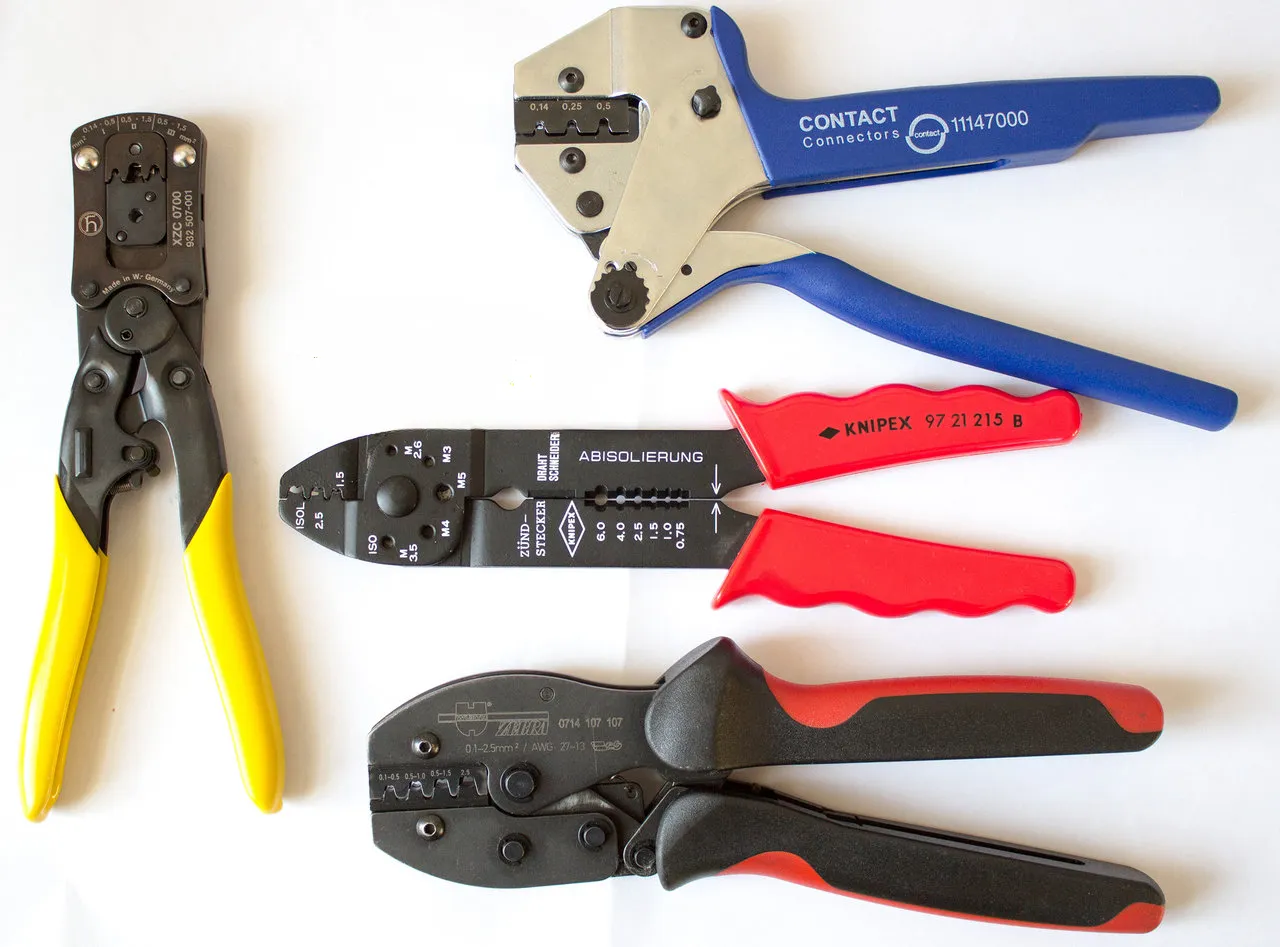
Working with single pins starts with a proper pair of crimping pliers. Pliers for wire-end ferrules or insulated cable lugs will not do: you need pliers for non-insulated (open-barrel) contacts, and they are not cheap. A frame costs roughly 70 to 300 euros and each set of dies 70 to 400, depending on the maker; second-hand ones turn up now and then. A simple pair is enough for large contacts from 1.5 to 2.5 mm², but small cross-sections need precise dies, and a bad crimp shows up later as an intermittent fault deep inside a wiring harness.
Makers name these pliers differently. The easiest way to find the right ones is to search for the contact system you want to crimp:
| Abbreviation | System |
|---|---|
| JPT | Junior Power Timer |
| JT | Junior Timer |
| SPT | Standard Power Timer |
| – | Micro Timer |
| MQS | Micro Quadlok System |
| MCP | Multiple Contact Point |
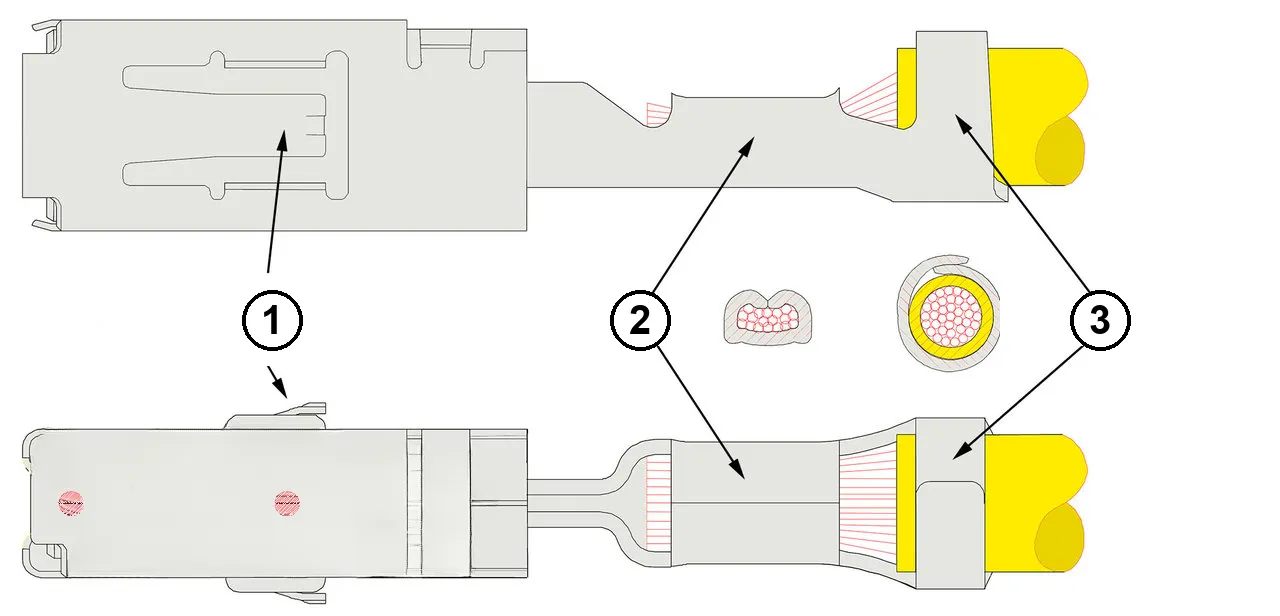
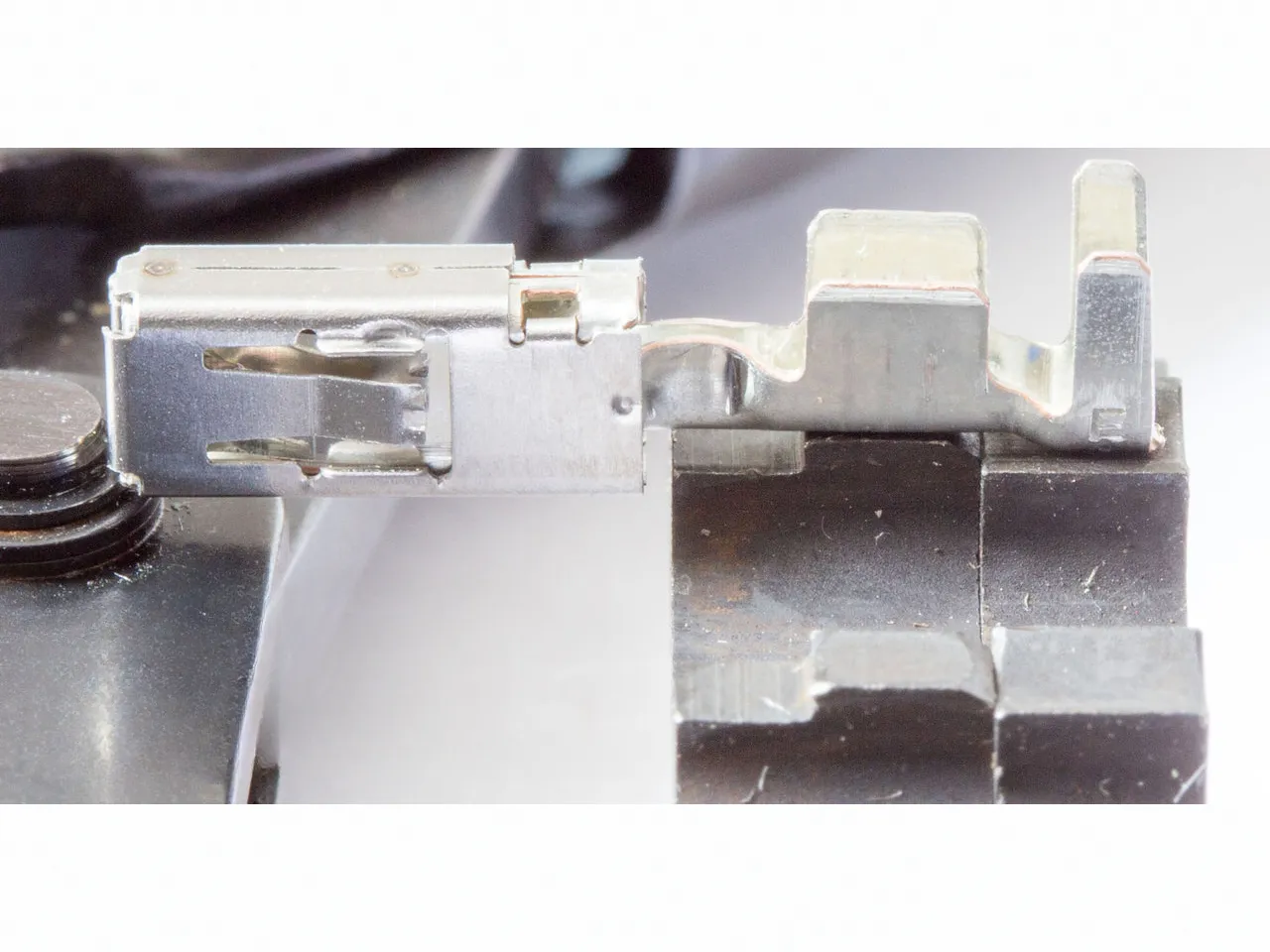
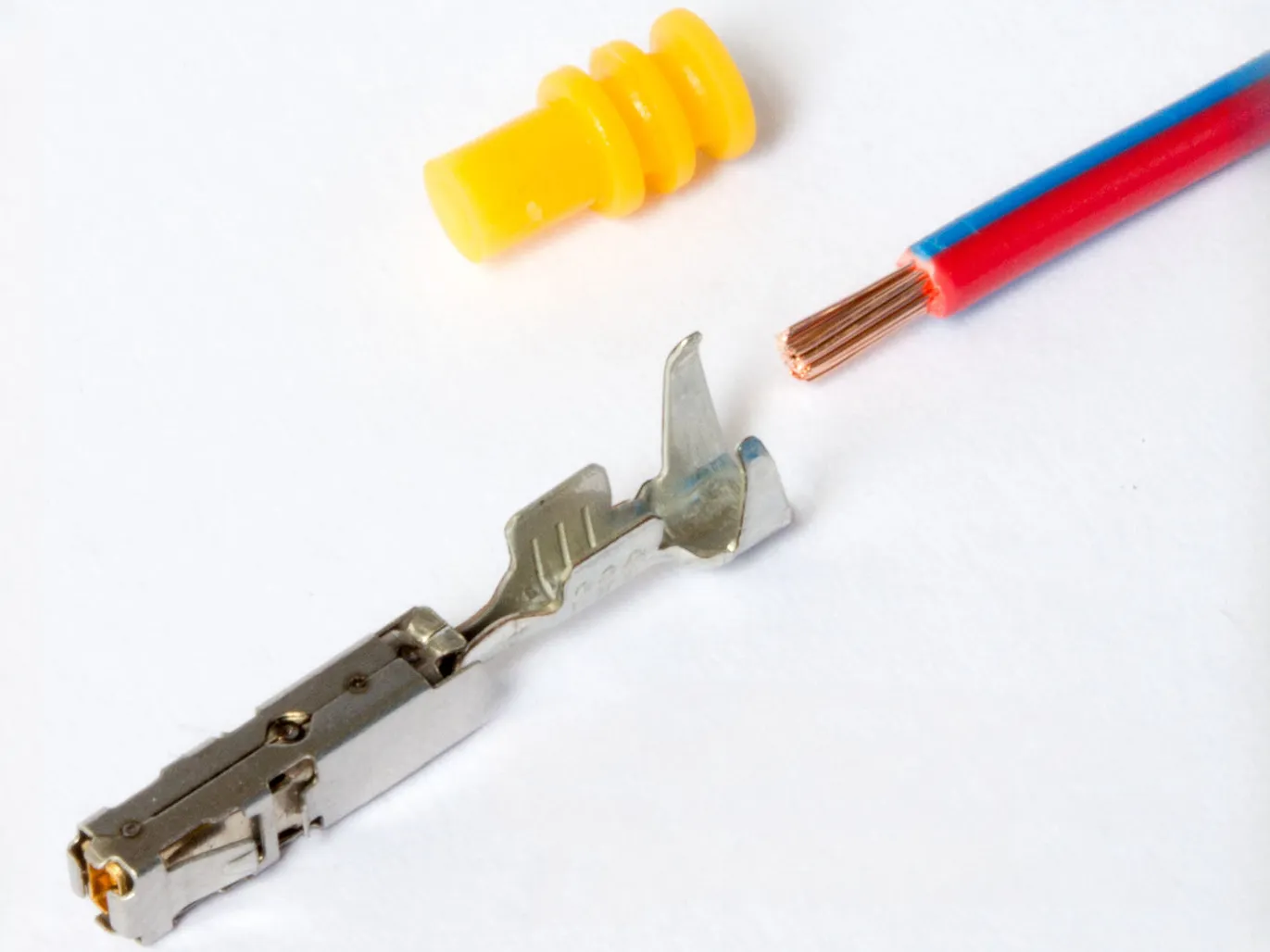
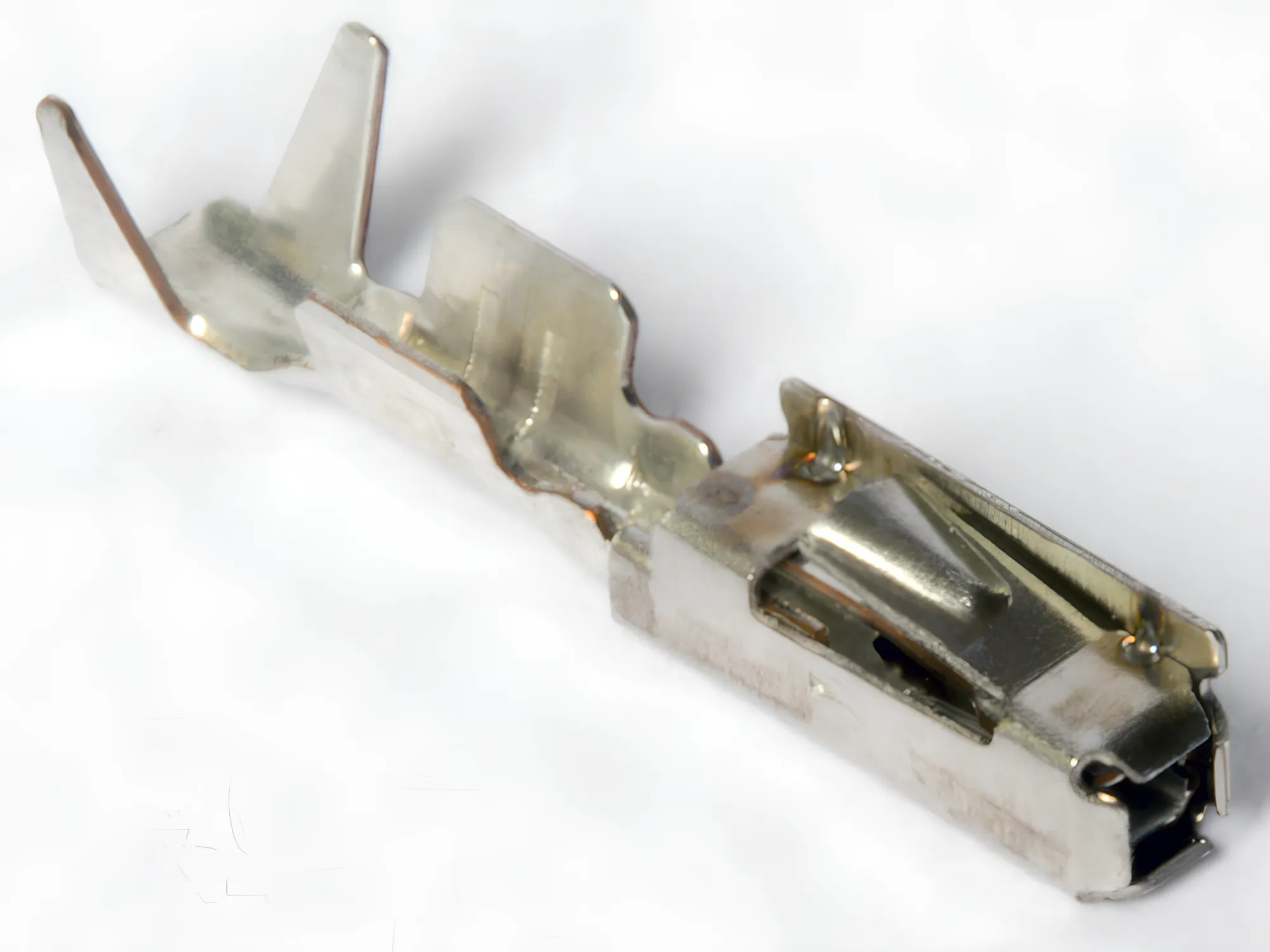
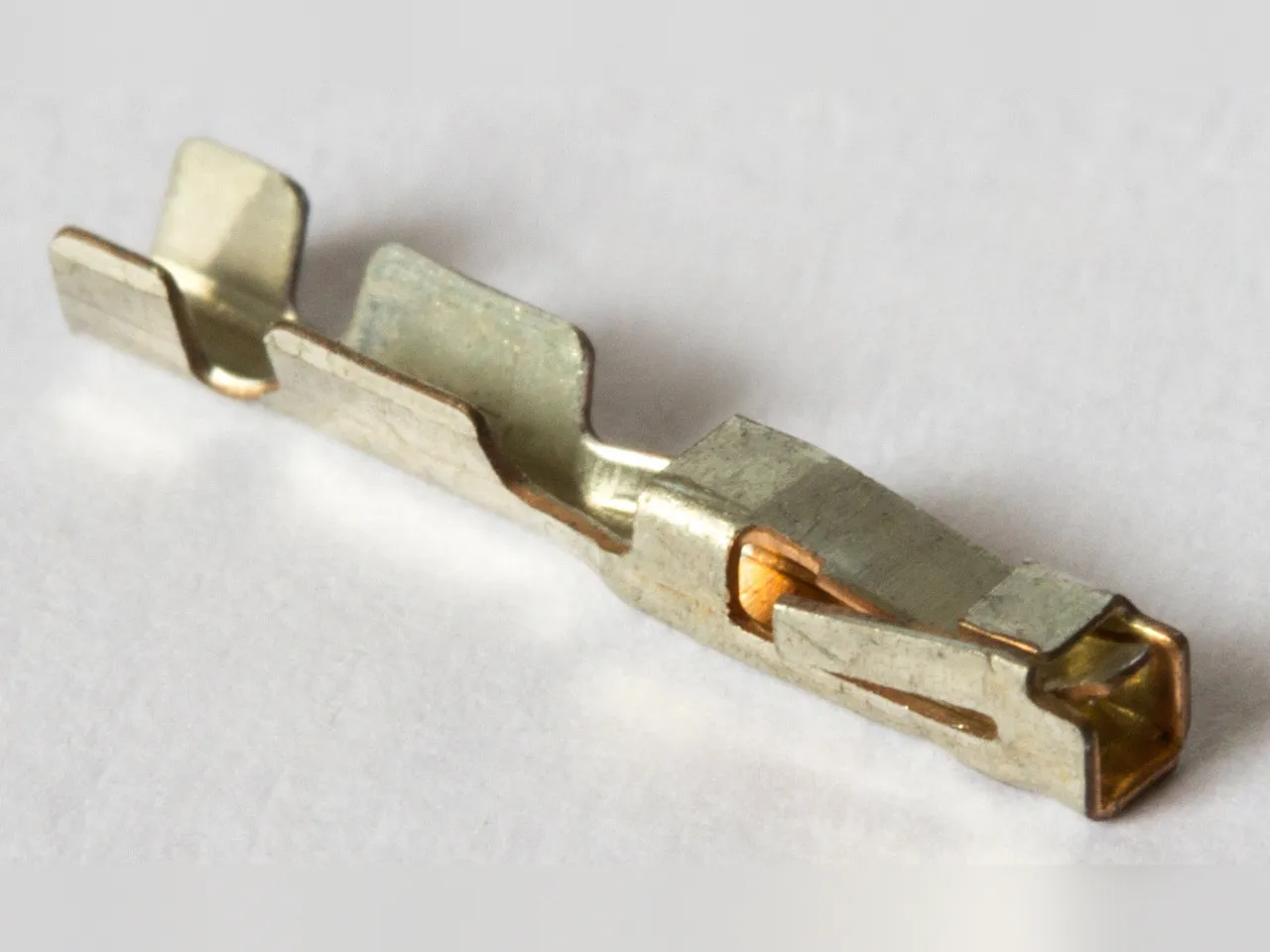
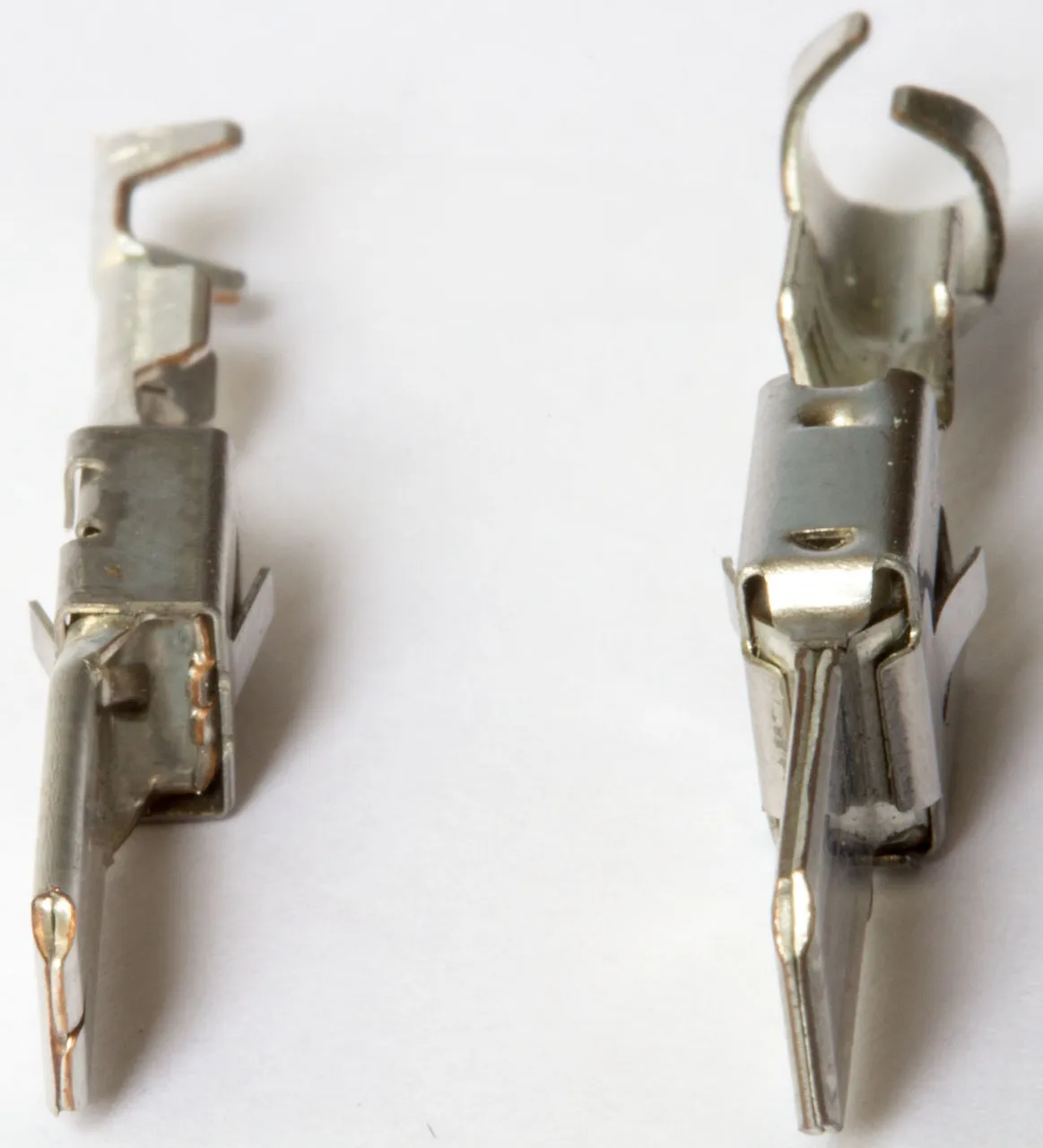
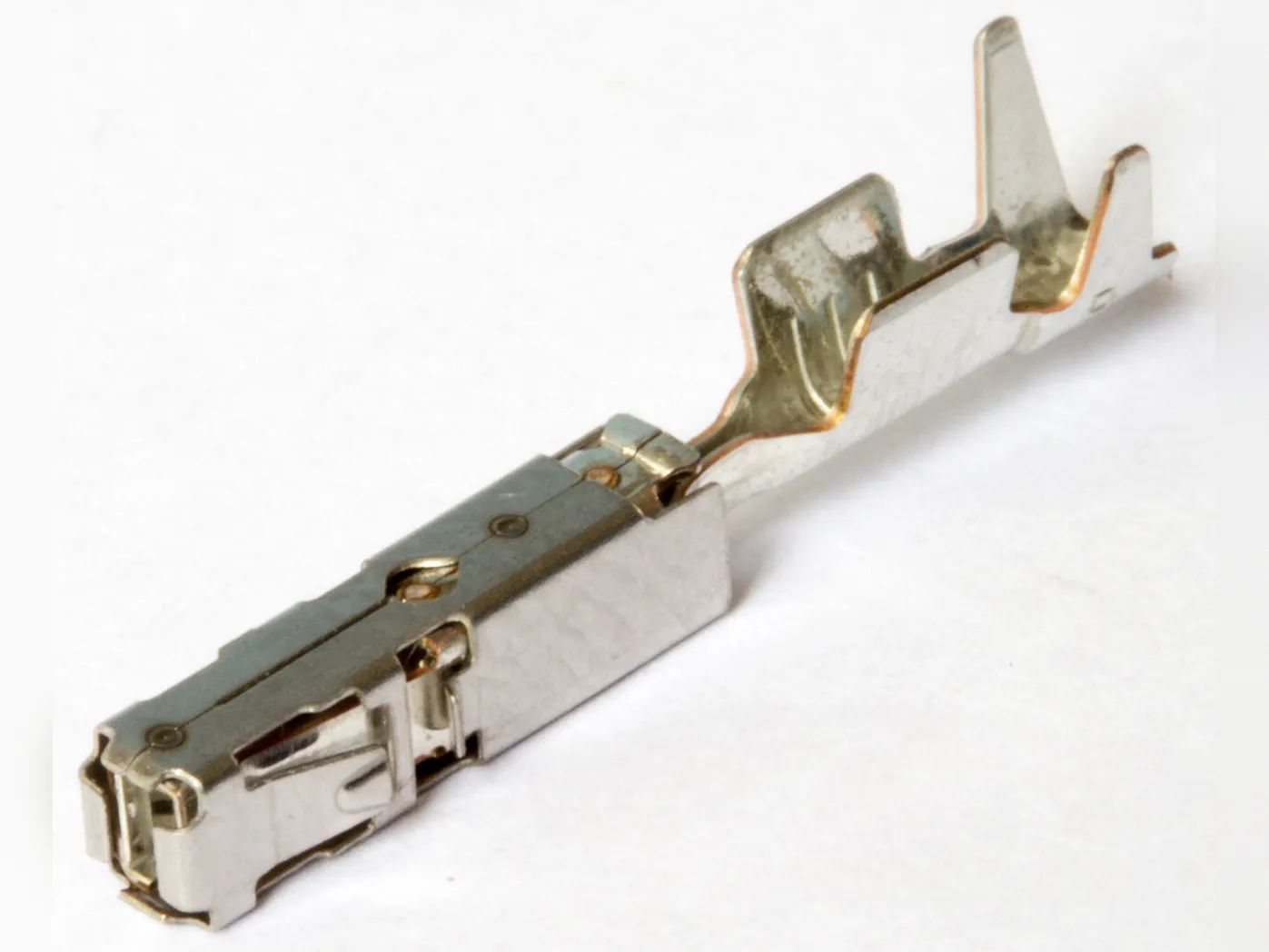
- 1 Locking lance (primary lock)
- 2 Wire crimp
- 3 Insulation crimp
The die nests differ from one contact type to another. The wire crimp should take the shape of a B lying on its side, hence the names B crimp or F crimp. The insulation crimp is a B crimp or an O crimp, depending on the contact and its use; on contacts made for a single wire seal it is always an O crimp, as it has to close around the seal.
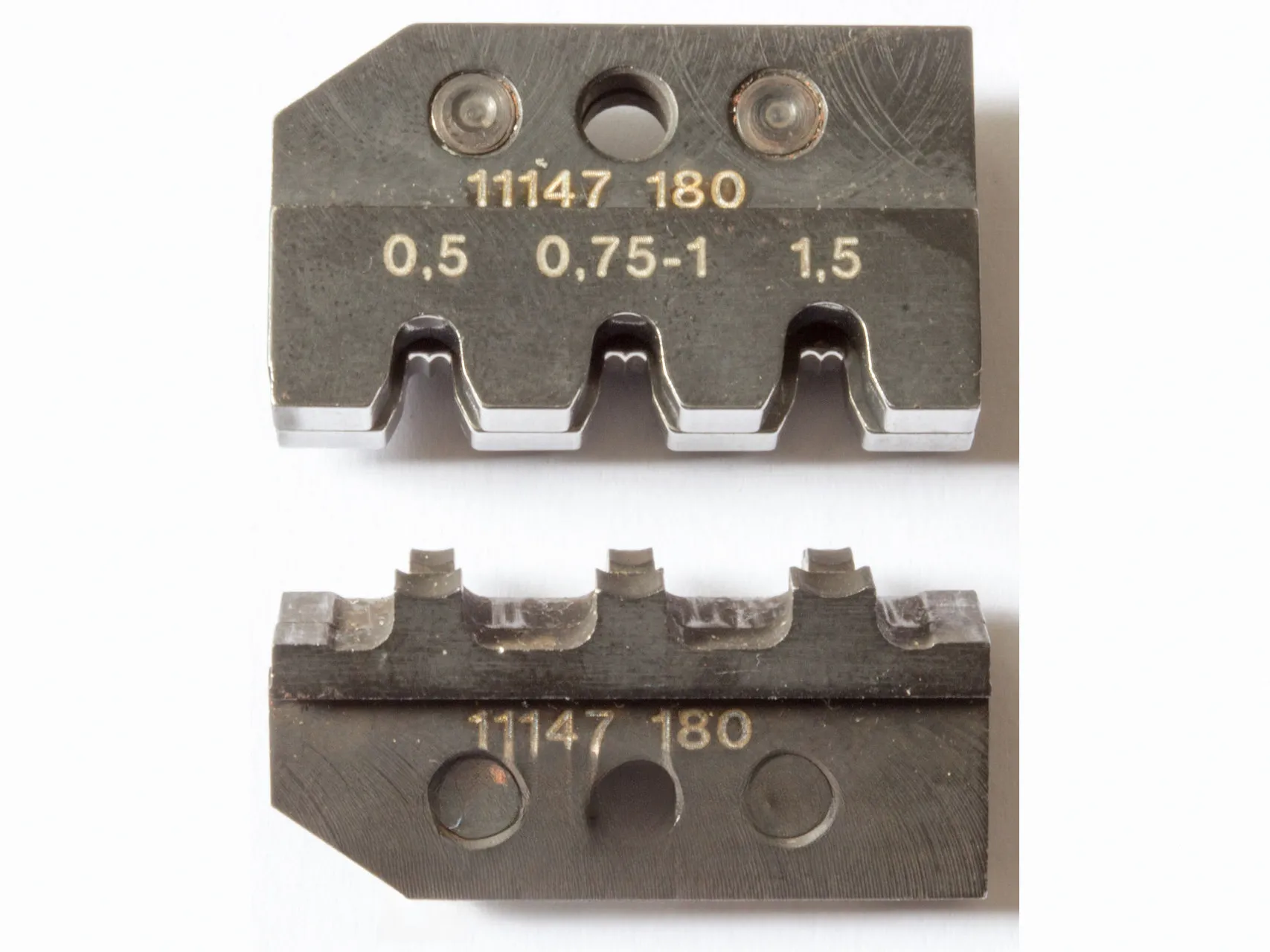
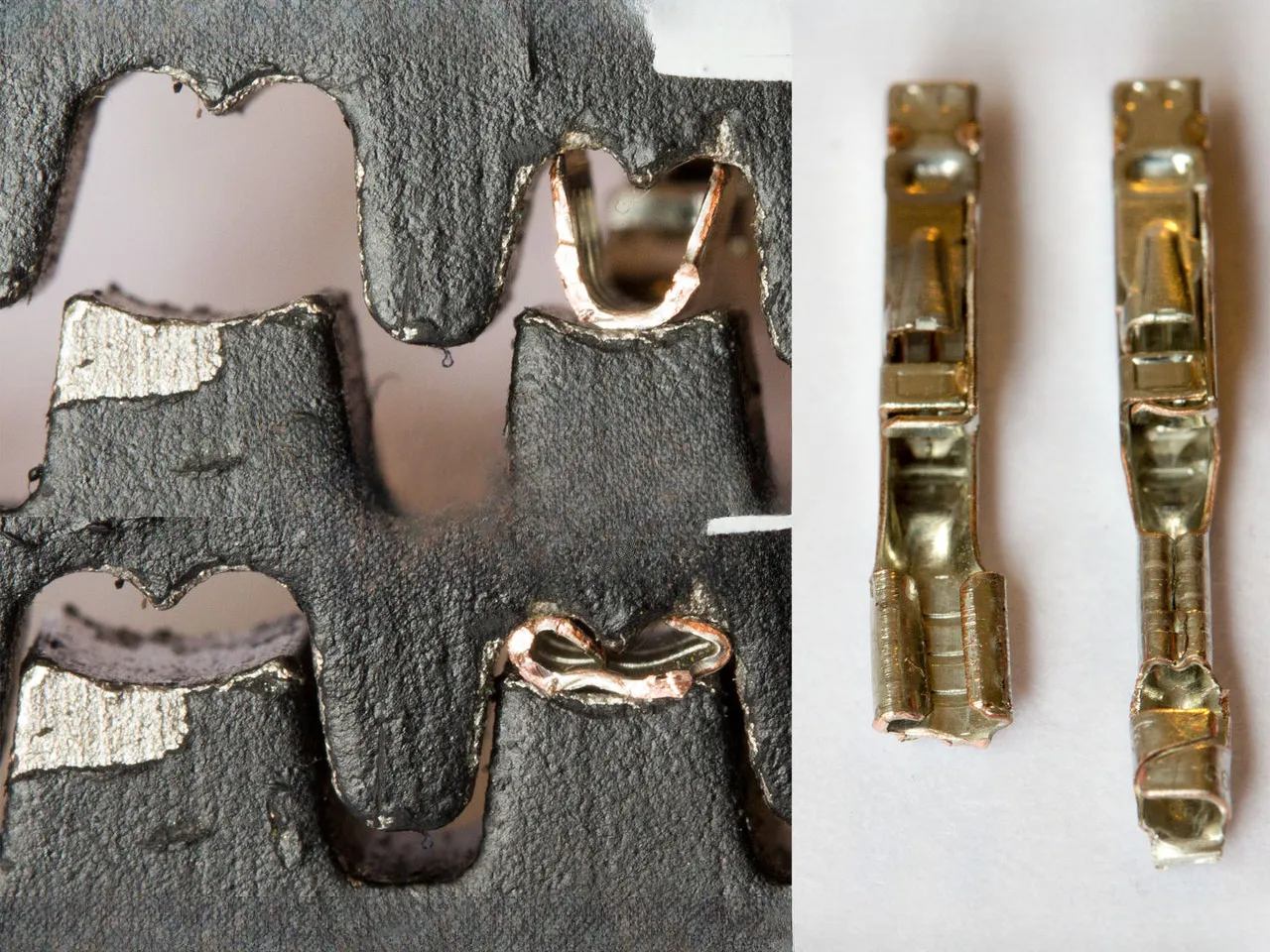
The contact must fill the die nest completely, and the two halves of the die should close parallel. What the photos taught the original authors:
- The simple red Knipex pliers (97 21 215 B) have no ratchet that holds them closed step by step, need a lot of force on larger wires, and their jaws do not close parallel. They are not suitable for MQS contacts.
- The black and red Würth Zebra pliers (0714 107 107, built under licence from the Knipex PreciForce, also sold as Rennsteig PEW 9) also close at an angle, and the contact does not sit well in them: the rests for the wire crimp and the insulation crimp are almost level, so the contact slides forwards or backwards while crimping.
- Pliers with interchangeable dies (the blue ones) are the most versatile. They are sold by Knipex (system pliers), Rennsteig (PEW 12) and TE (Ergocrimp), and work very well even though their jaws do not close perfectly parallel either.
- Only pliers like the yellow ones close fully parallel (Rennsteig PEW 6, Knipex). They crimp beautifully but cover only a narrow range of wire sizes.
Locking, depinning and pinning
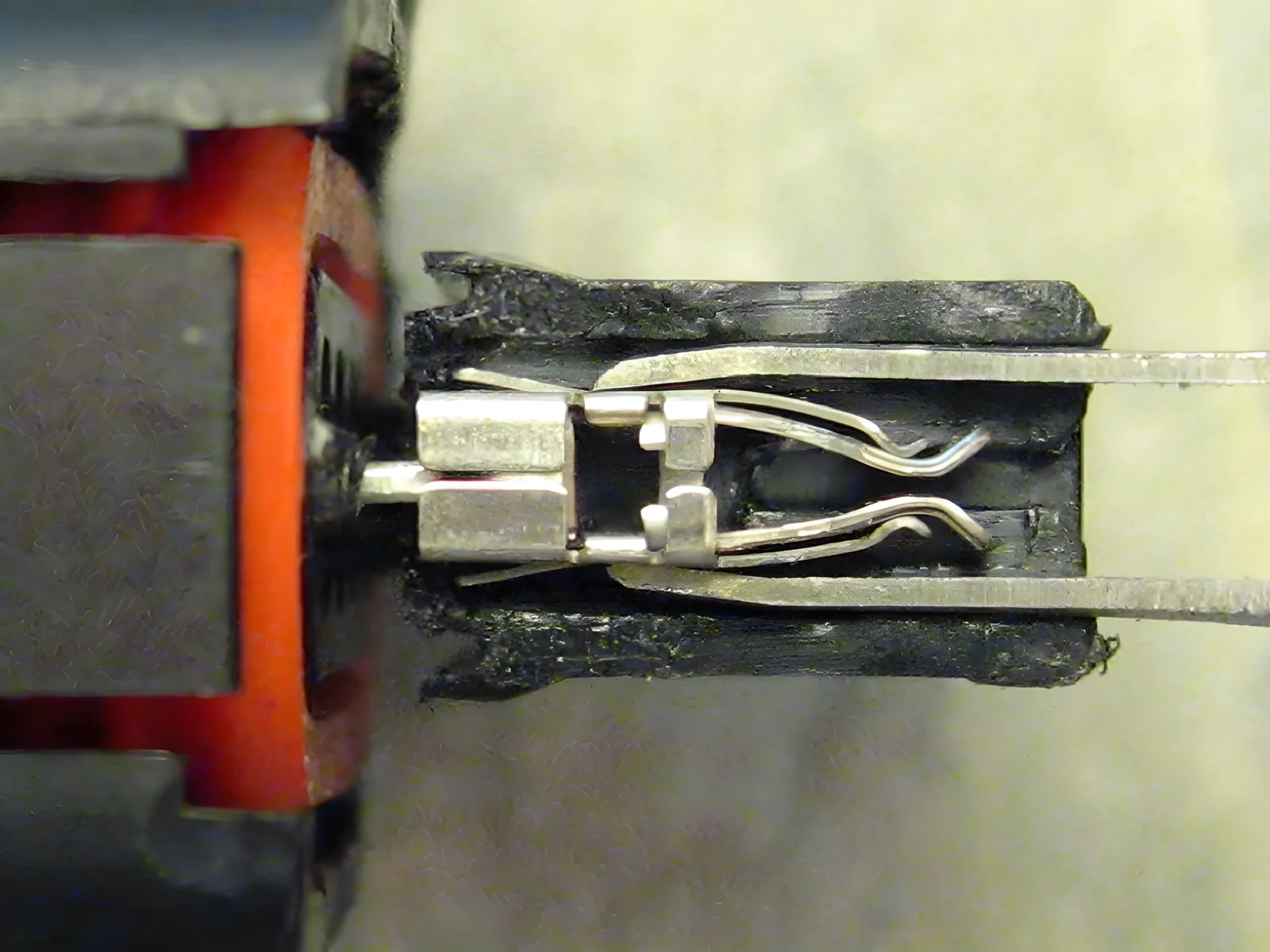
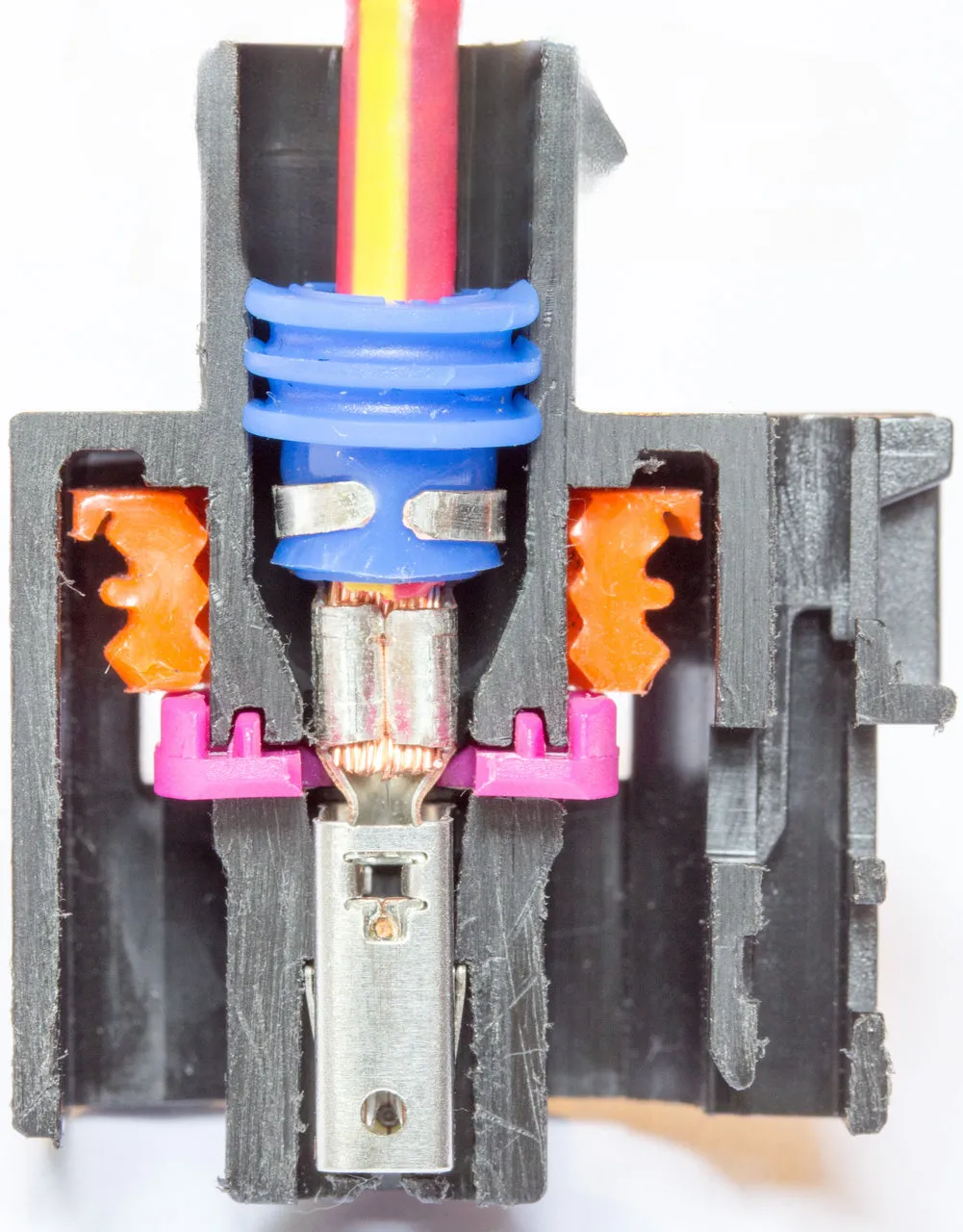
A contact has to stay in its housing despite vibration, so it is held twice. The primary lock is the contact's own locking lance (the spring tab shown under Crimping tools), which catches in the housing; it works on each contact separately. The secondary lock is part of the housing and holds several contacts at once, usually all of them; housings that combine different contact families sometimes have more than one.
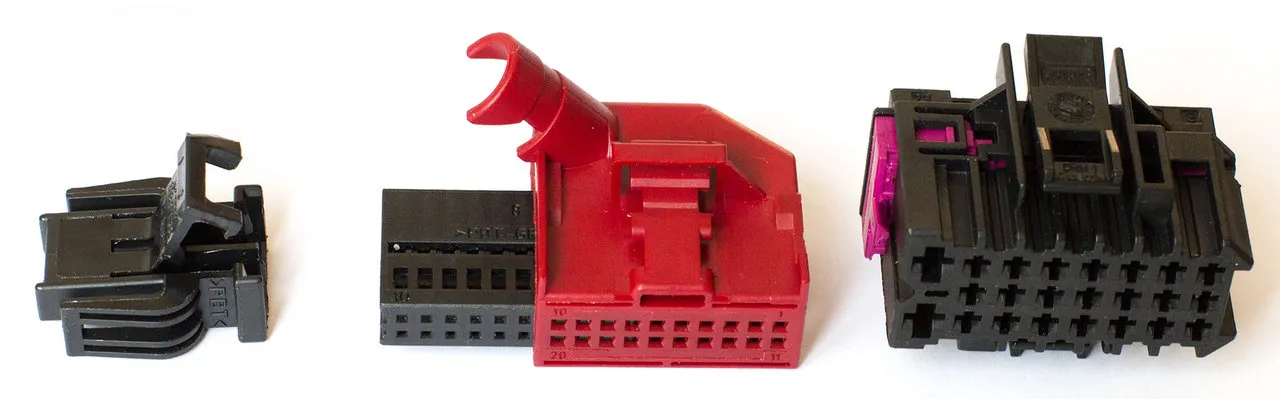
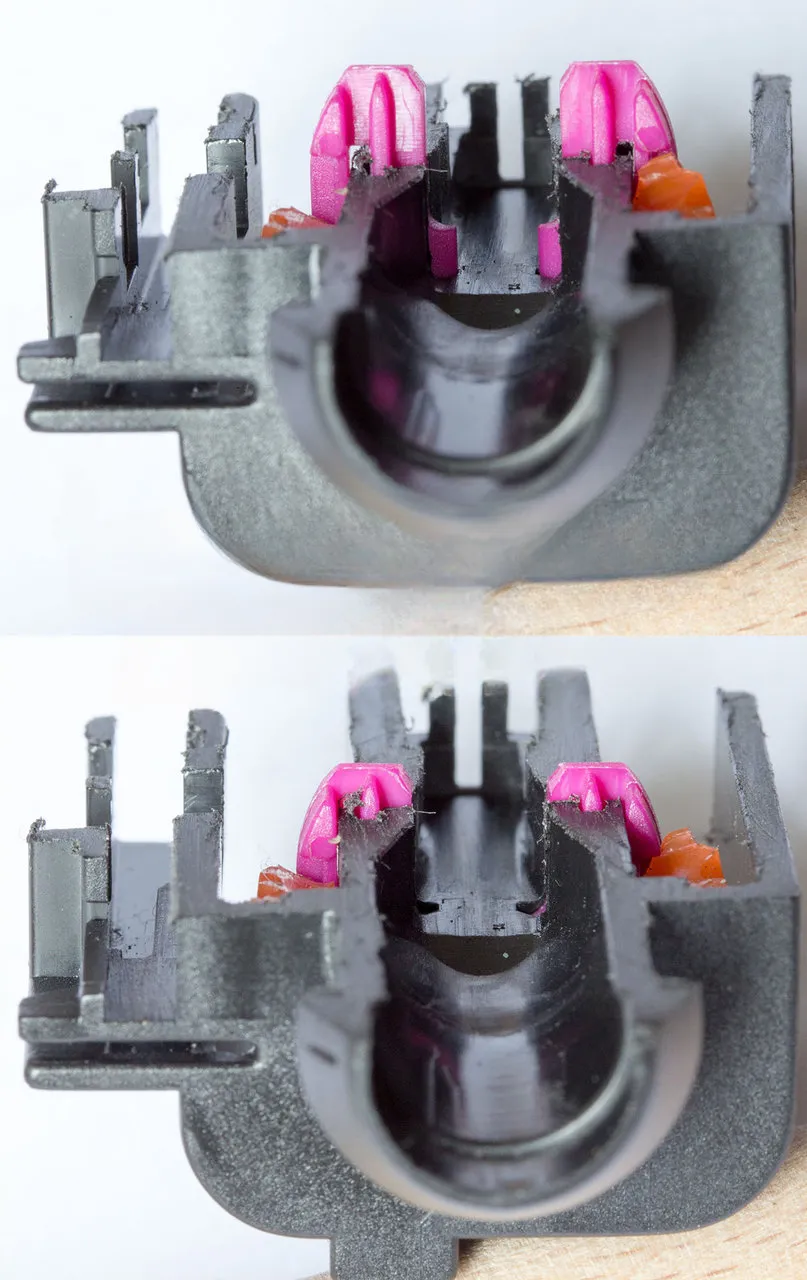
Secondary locks come in many forms. On the socket on the left a flap closes over the contacts. In the red socket in the middle the inner part is pushed fully into the outer one, and a web then blocks the long groove of the inner part. The most common kind is the one on the right: a slide on the side of the housing, often purple, which is moved sideways to lock or unlock, or pulled out completely.
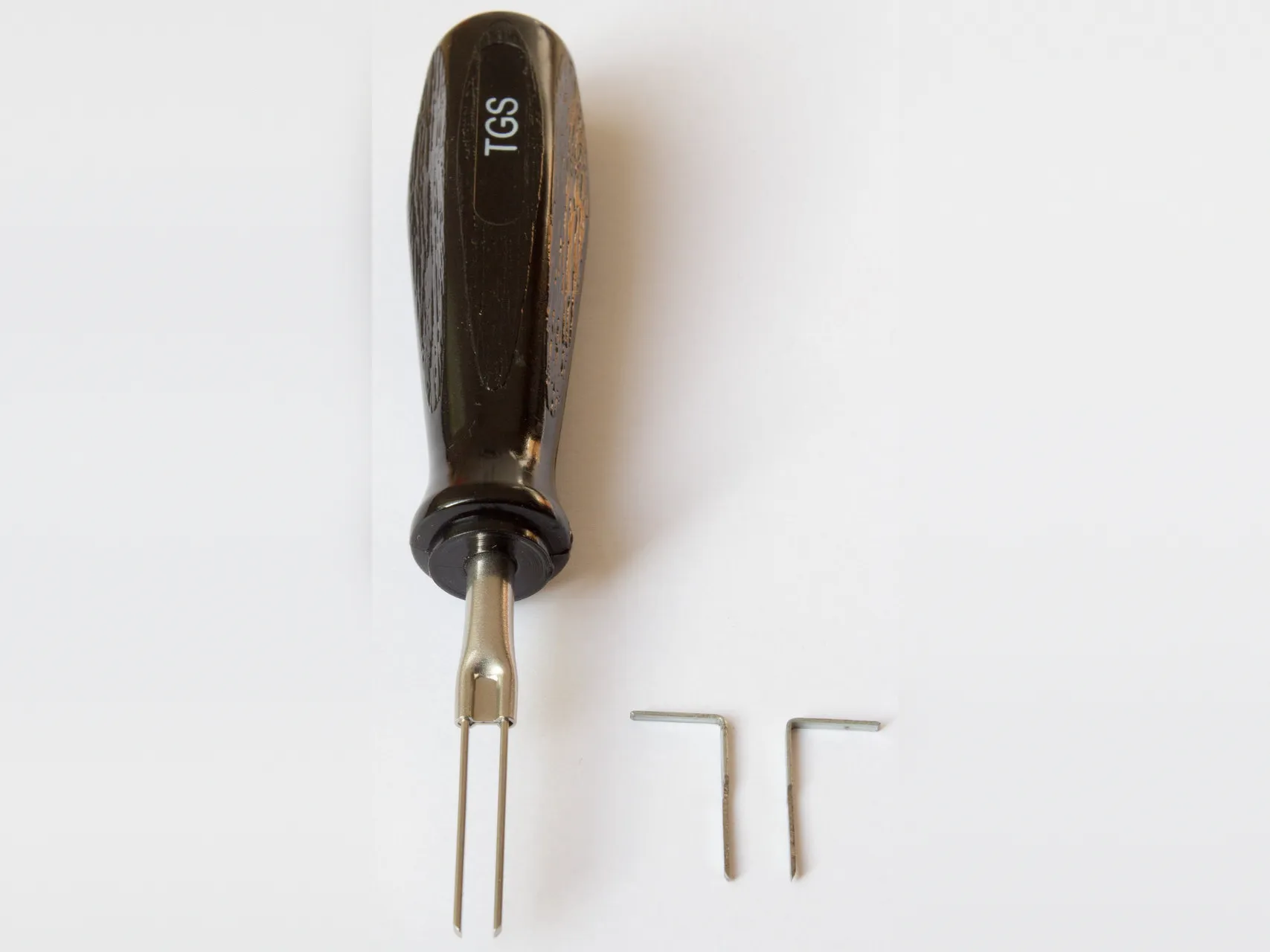
To remove a contact, first open the secondary lock, then release the primary lock. In the red socket with an inner part that only takes a small screwdriver to press the lances down. Other housings need a release tool (depinning tool) pushed in from the front alongside the contact.
As the lances of the different families differ in width and shape, so do the release tools; whole sets are sold online, but they are seldom worth it. A home-made tool from a heavy-duty staple does the job, as long as it is wide enough and thick enough. Pins with a pointed tip slip past the lance, and a bent paper clip is usually too narrow for the curved lances of many contacts. With the right tool a contact comes out with almost no force: if it does not move when you pull the wire gently, it is not released yet.
Seals

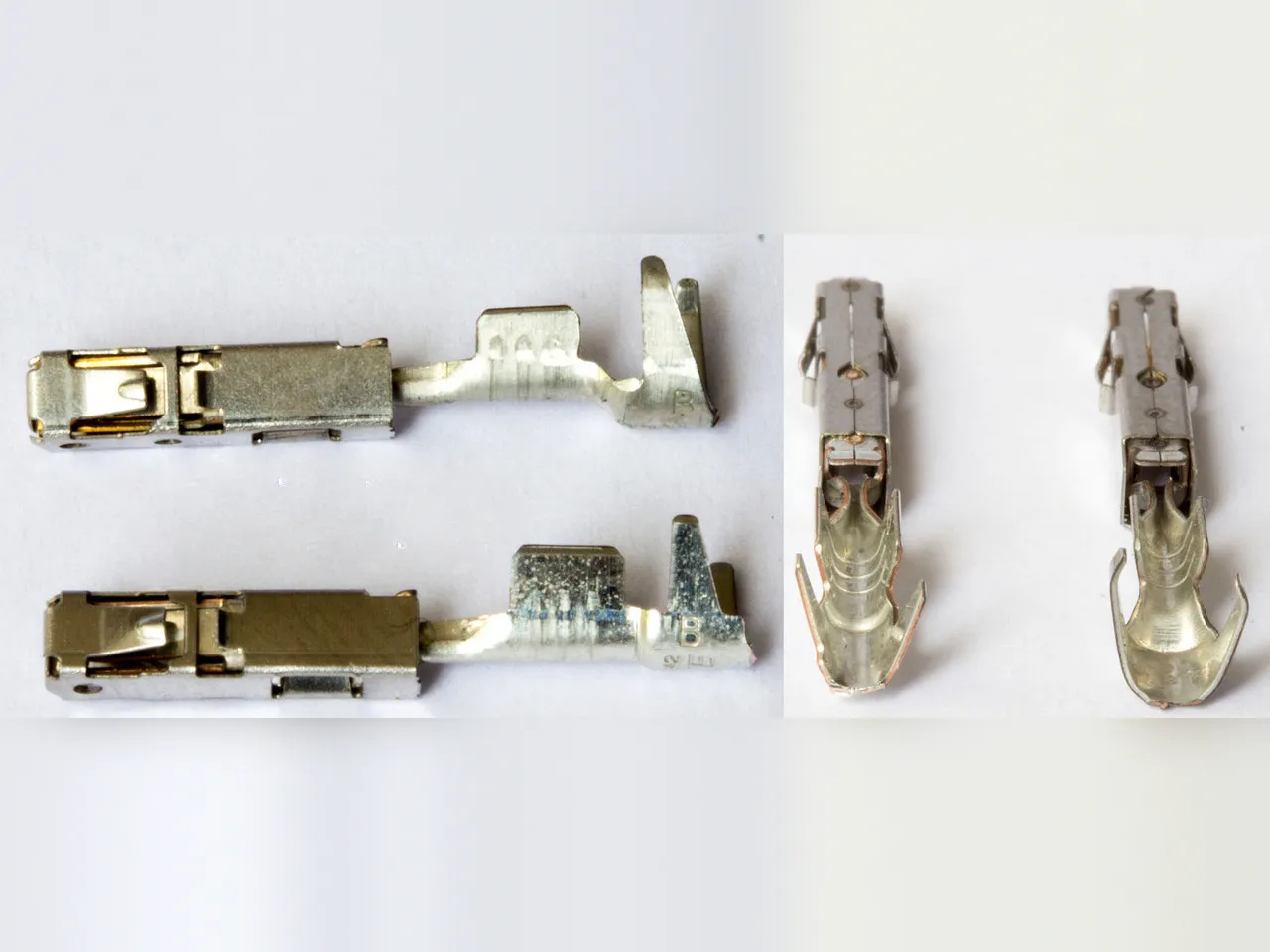
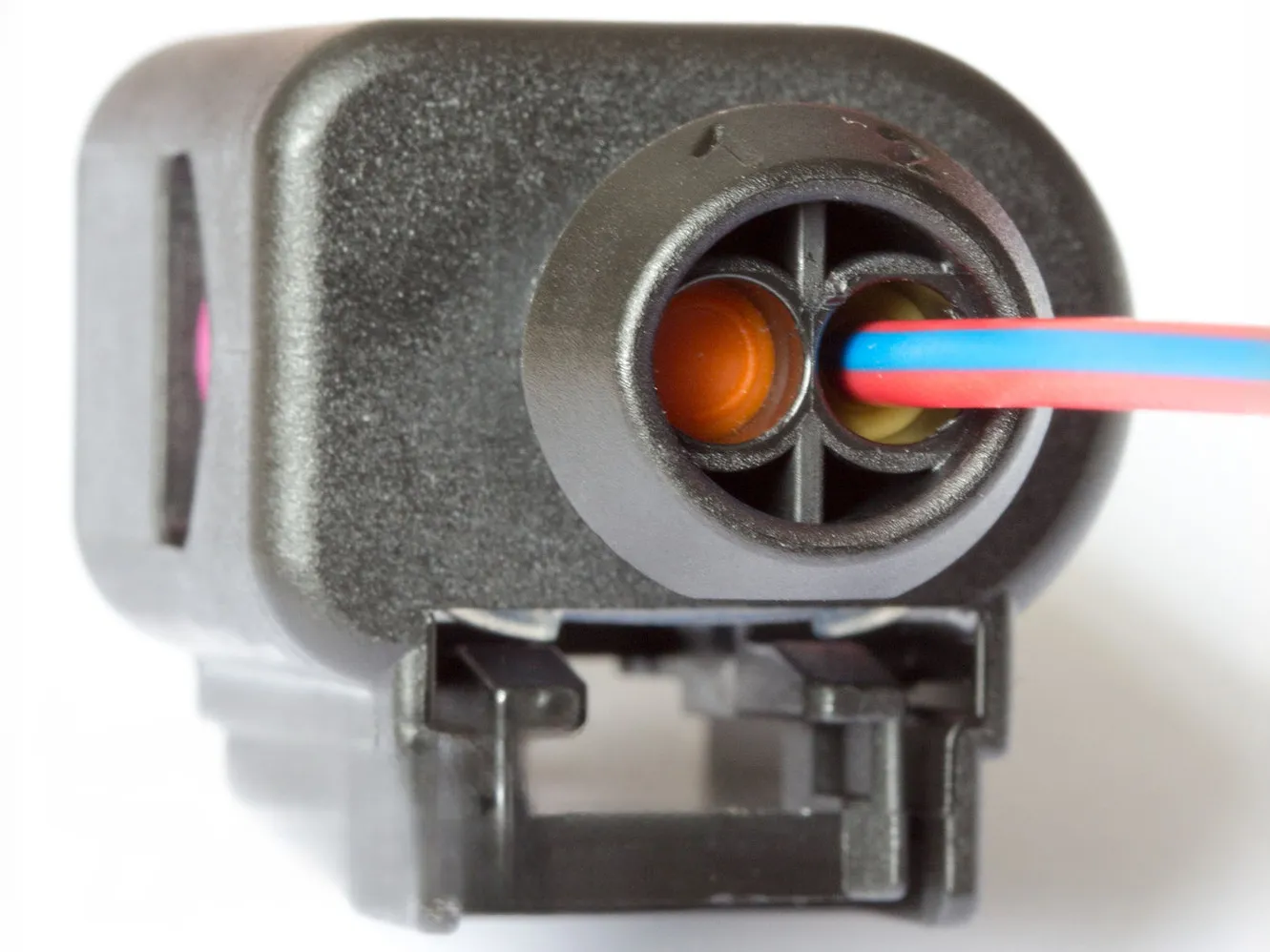
Connections outside the cabin, in the engine bay, behind the bumpers or in the wheel arches, are exposed to water. Besides gold-plated contacts they use sealed housings: a seal between plug and socket, and a single wire seal (SWS) on every wire where it enters the housing. The seal is crimped onto the contact together with the wire, so a contact made for it has a differently shaped insulation crimp.
Seals come in sizes for each contact family and wire cross-section, and unused cavities of a sealed housing are closed with blanking plugs; see Seals and blanking plugs. The catalogues contradict each other in places on the diameter, length and colour of the seals, so treat that table with some care.
VW sells very few single contacts made for seals, and only some of them as repair wires. Rather than leave the seal out, take a standard contact, slide the seal onto the wire and sit it right behind the contact; with some effort it can even go over the insulation crimp.
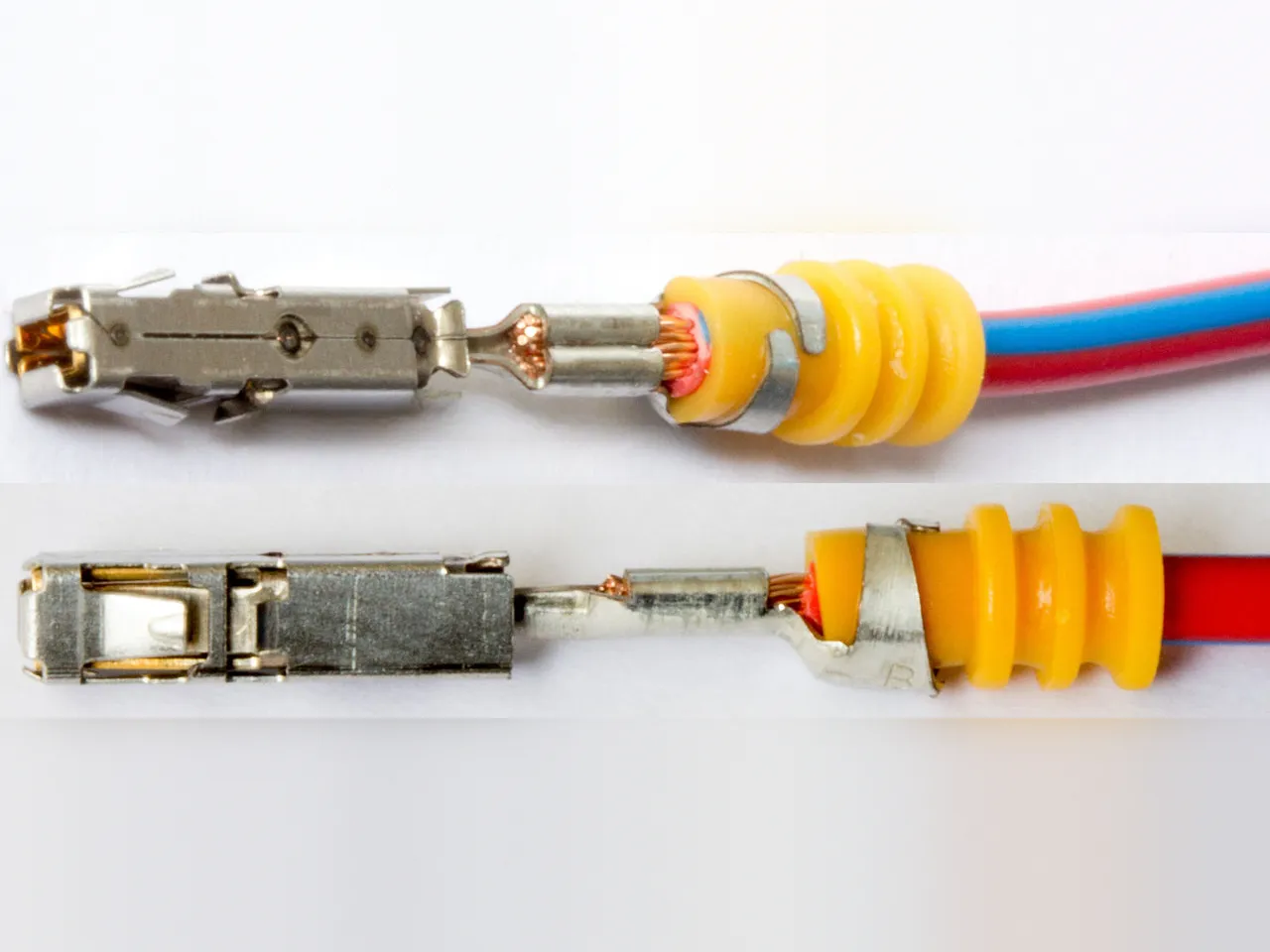

Contacts made for seals strictly need their own dies, which are hard to find and expensive. It is easier with pliers that crimp the wire crimp on its own: then close the insulation crimp around the seal with small flat-nosed pliers.
The parts catalogue seldom says whether a housing is made for seals. Look at its back: a sealed housing has a round opening for each wire.
Contact overview
Each table lists one contact family by its contact width. A row starts with the wire cross-section of the repair wires; next to each repair wire is the single pin that is the same contact. The cross-section given for a single pin is the largest it is made for: smaller wires crimp too, and within limits a slightly larger one.
Where VW has no single pin, the table gives the number of another maker (BMW, Mercedes-Benz, or the contact's maker). A VW dealer orders single pins in bags of 25; some dealers will sell fewer.
Which plug or socket a contact goes into, with its counterpart and coding: VW connector housings.
MQS – Micro Quadlok System (0.63 mm contact width)

| Wire | Male | Female | ||
|---|---|---|---|---|
| Repair wire | Single pin | Single pin | Repair wire | |
| 0.5 mm² | 000 979 012 E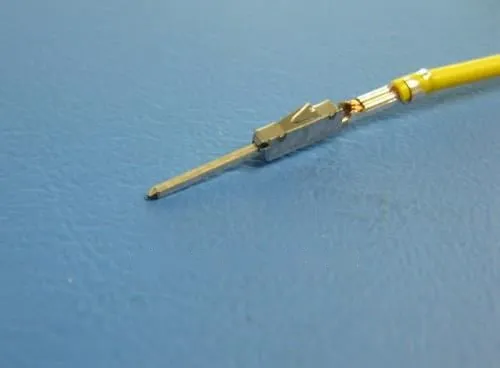 | 61 13 1 383 672 (BMW) 0.25–0.35 mm² | N 907 647 01 0.5 mm² | 000 979 009 E |
| 0.75 mm² | 000 979 165 E | 61 13 1 393 723 (BMW) 0.75 mm² | 61 13 1 393 724 (BMW) 0.75 mm² | 000 979 164 E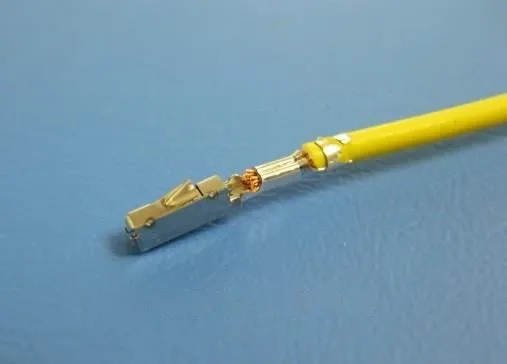 |
AMPMODU MTE / TandemSpring (0.64 mm contact width)

| Wire | Male | Female | ||
|---|---|---|---|---|
| Repair wire | Single pin | Single pin | Repair wire | |
| 0.5 mm² | 000 979 017 E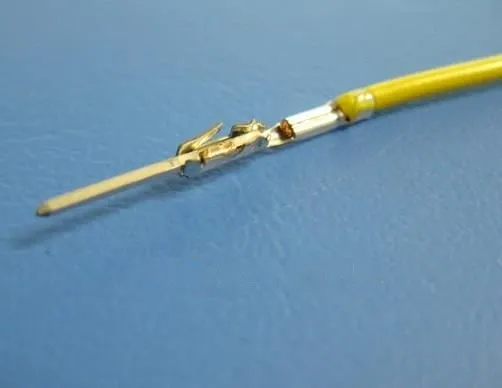 | – | not from VW TE 166500-2 | 000 979 018 E |
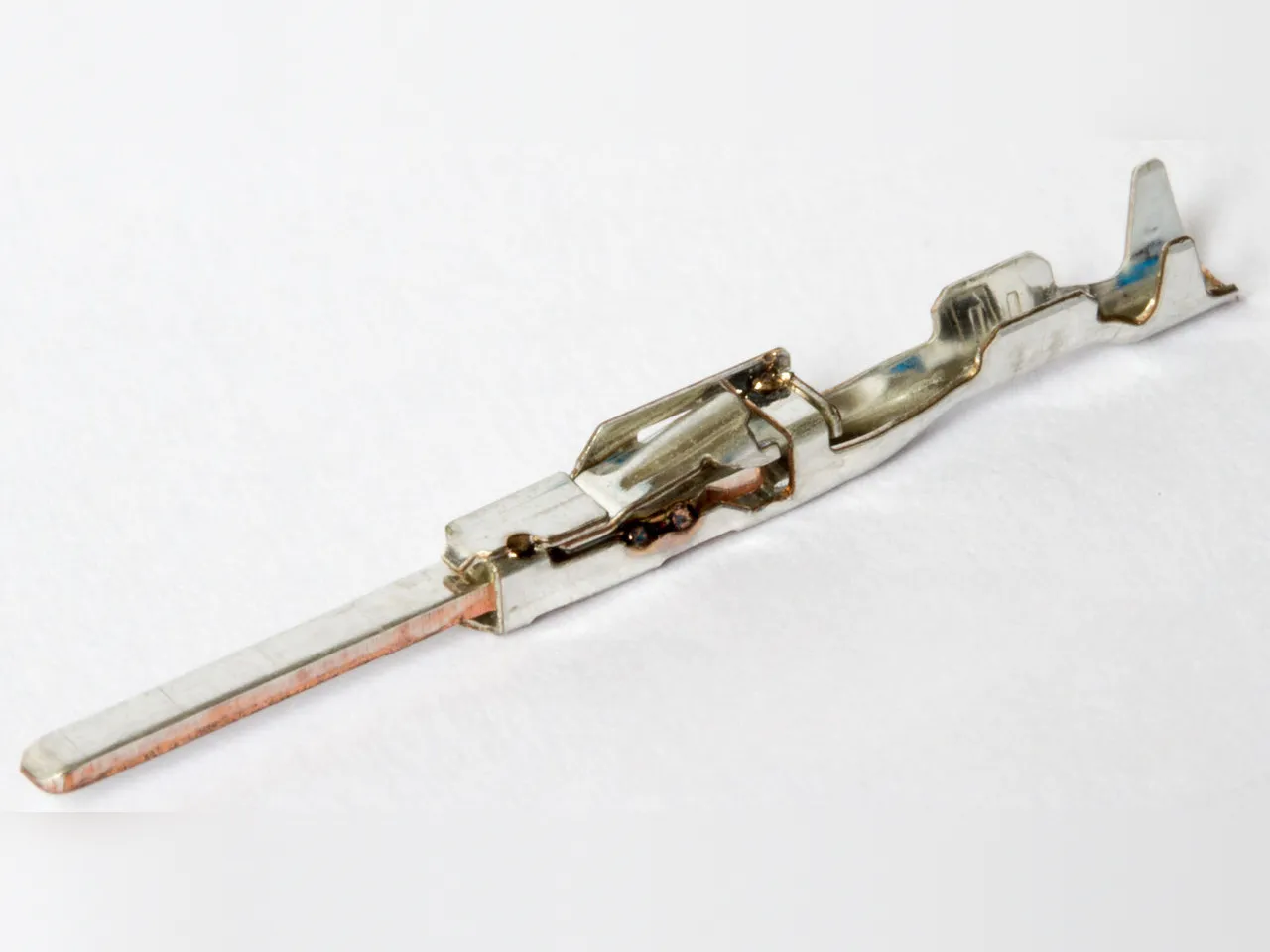
MCON 1.2 (1.2 mm contact width)

| Wire | Male | Female | ||
|---|---|---|---|---|
| Repair wire | Single pin | Single pin | Repair wire | |
| 0.5 mm² | 000 979 035 E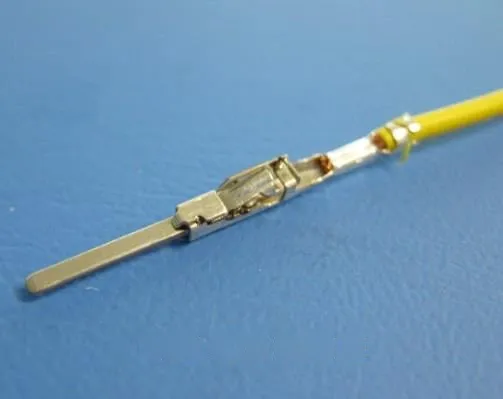 | 12 52 7 512 135 (BMW, MLK) 0.25–0.5 mm² | 12 52 7 510 672 (BMW, MLK) 0.25–0.5 mm² | 000 979 034 E |
| 1.0 mm² | 000 979 160 E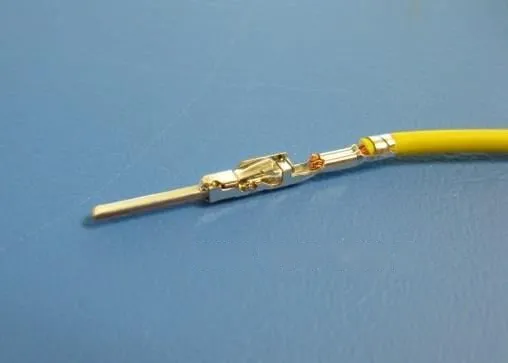 | – | 12 52 7 545 852 (BMW) 0.5–0.75 mm² 12 52 7 510 674 (BMW, MLK) 0.5–1.0 mm² | 000 979 159 E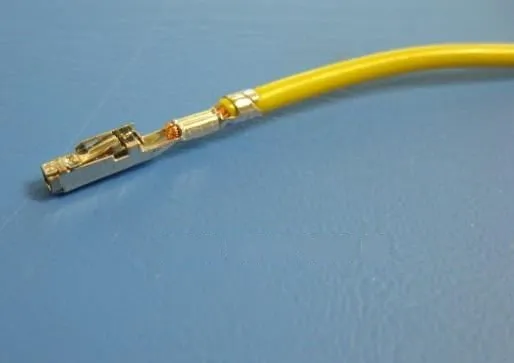 |
MCON is sometimes wrongly called MCP 1.2. It comes in two versions, Locking Lance (LL) and Clean Body (CB); the numbers and photos here are of the LL version.
The BMW contacts marked MLK belong to Kostal's MLK 1.2 family (Mini Lamellen Kontakt), which is almost identical to MCON: they fit TE's MCON housings.

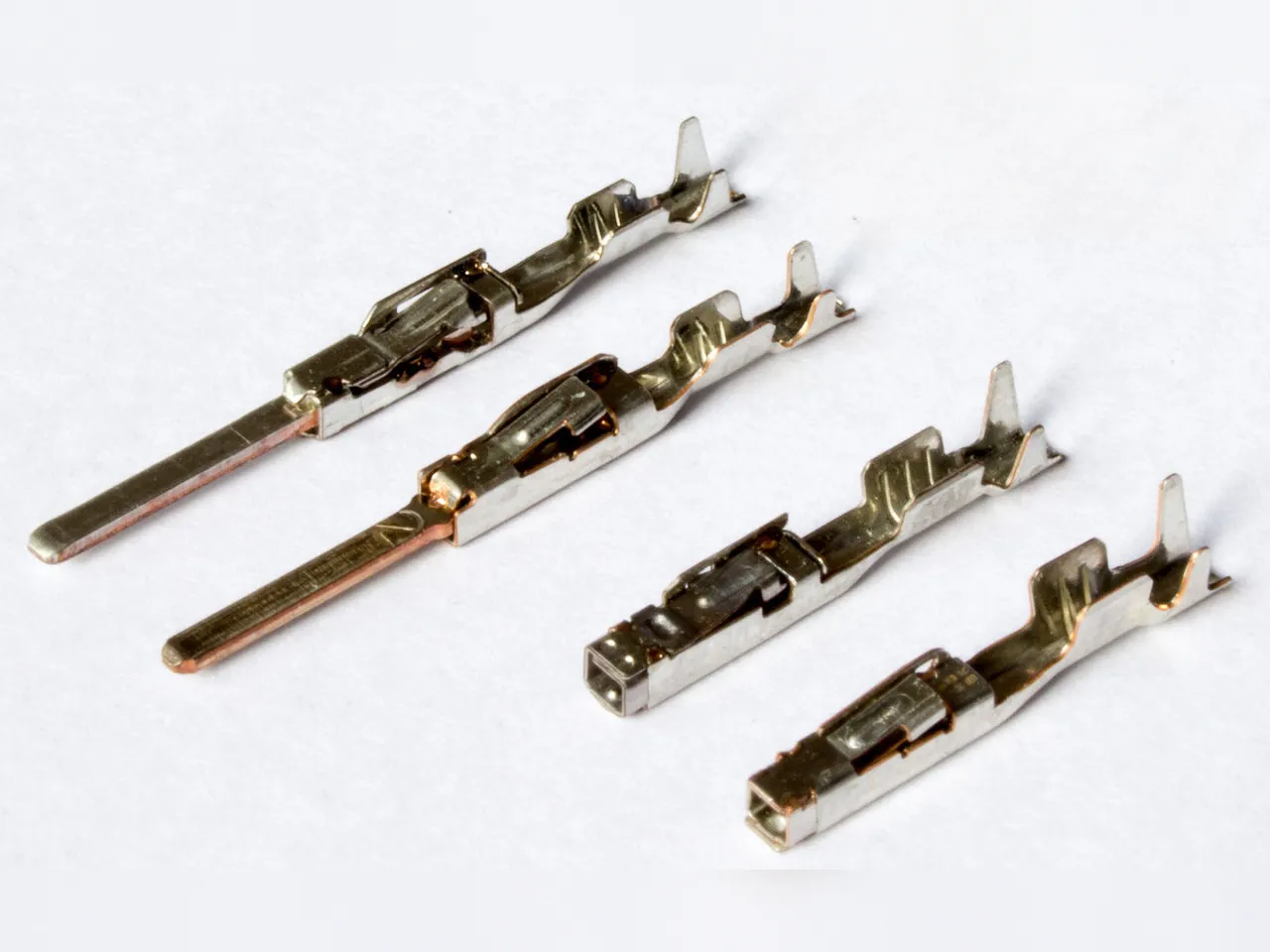
Micro Timer (1.5 mm contact width)
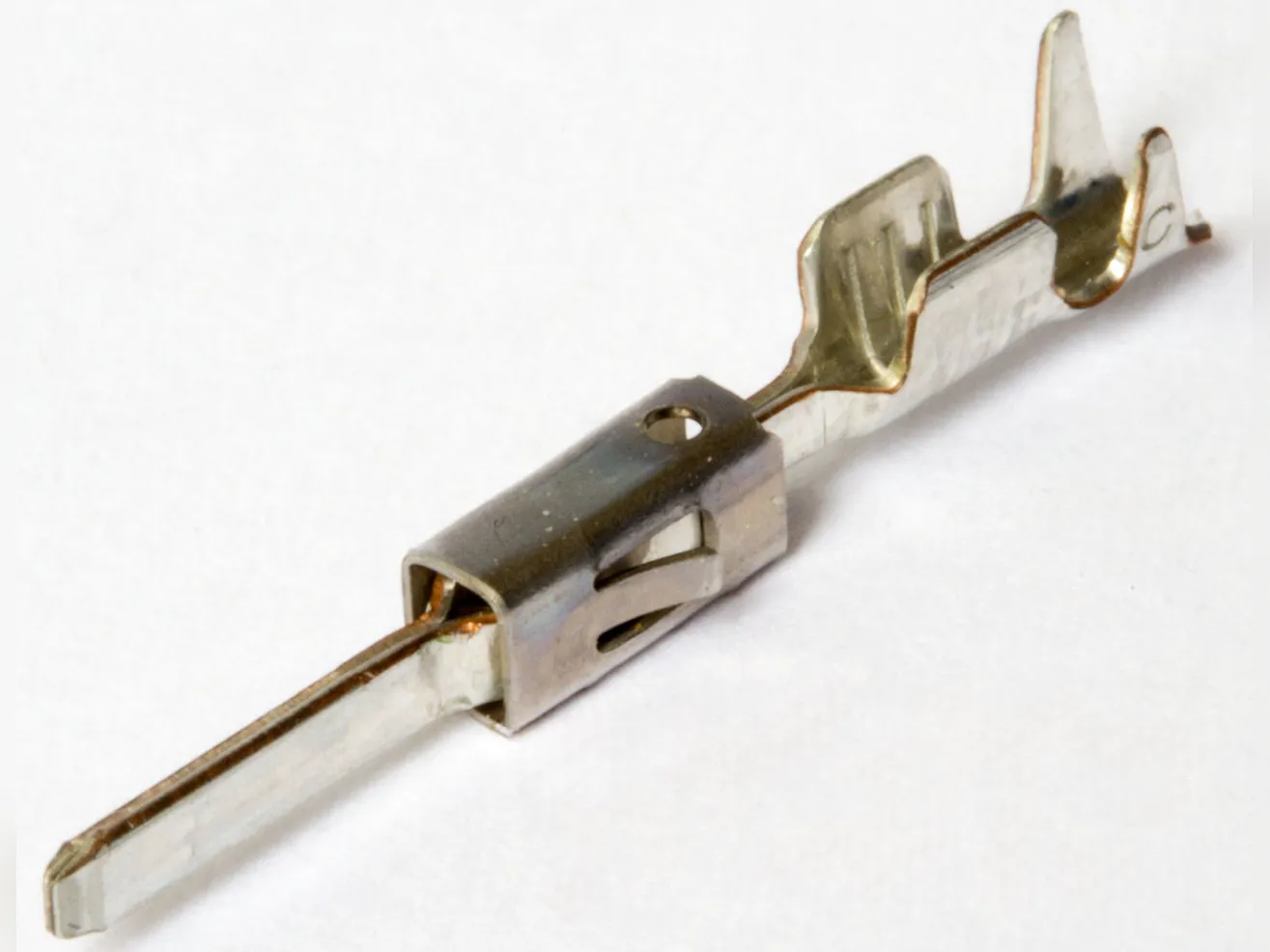
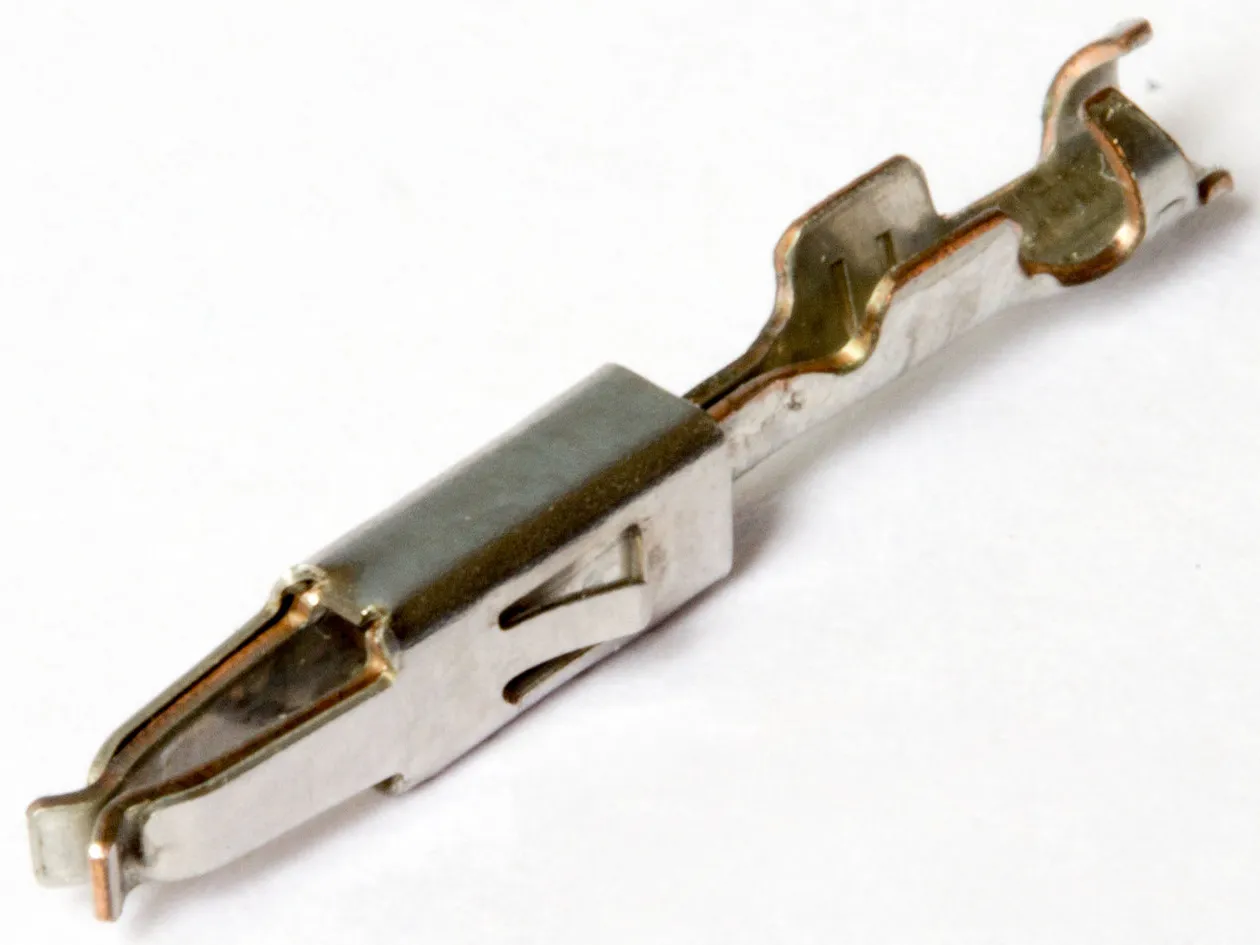
| Wire | Male | Female | ||
|---|---|---|---|---|
| Repair wire | Single pin | Single pin | Repair wire | |
| 0.5 mm² | 000 979 020 E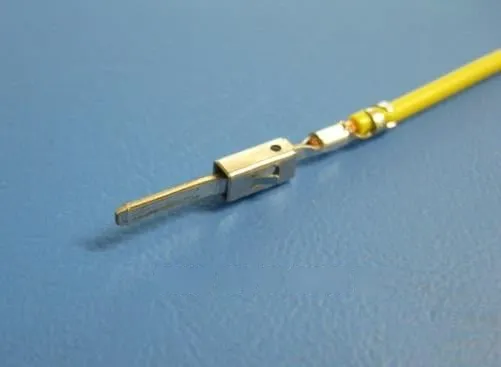 | N 103 360 05 0.35 mm² | N 103 357 06 0.35 mm² | 000 979 019 E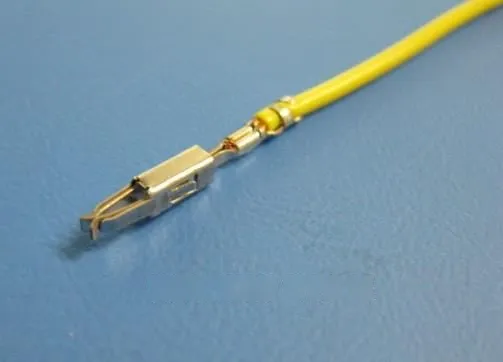 |
| 1.0 mm² | 000 979 132 E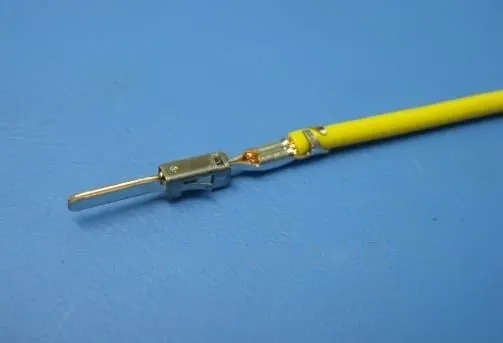 | N 103 361 05 1.0 mm² | N 103 358 07 1.0 mm² | 000 979 131 E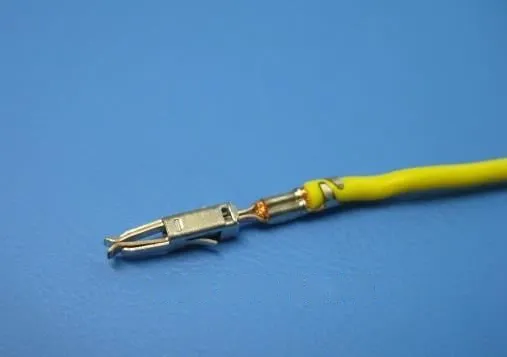 |
| 1.5 mm² | 000 979 254 E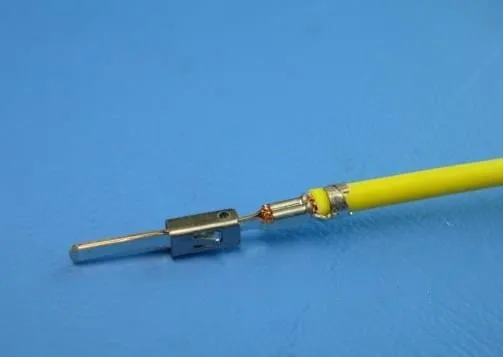 | – | – | 000 979 253 E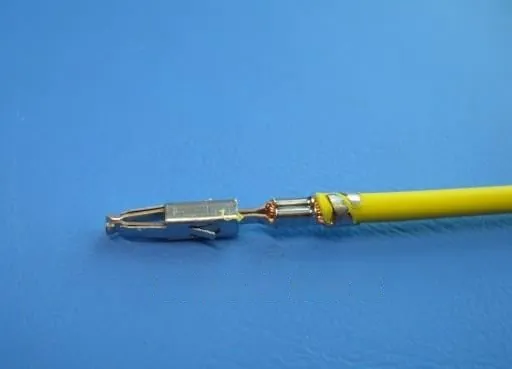 |
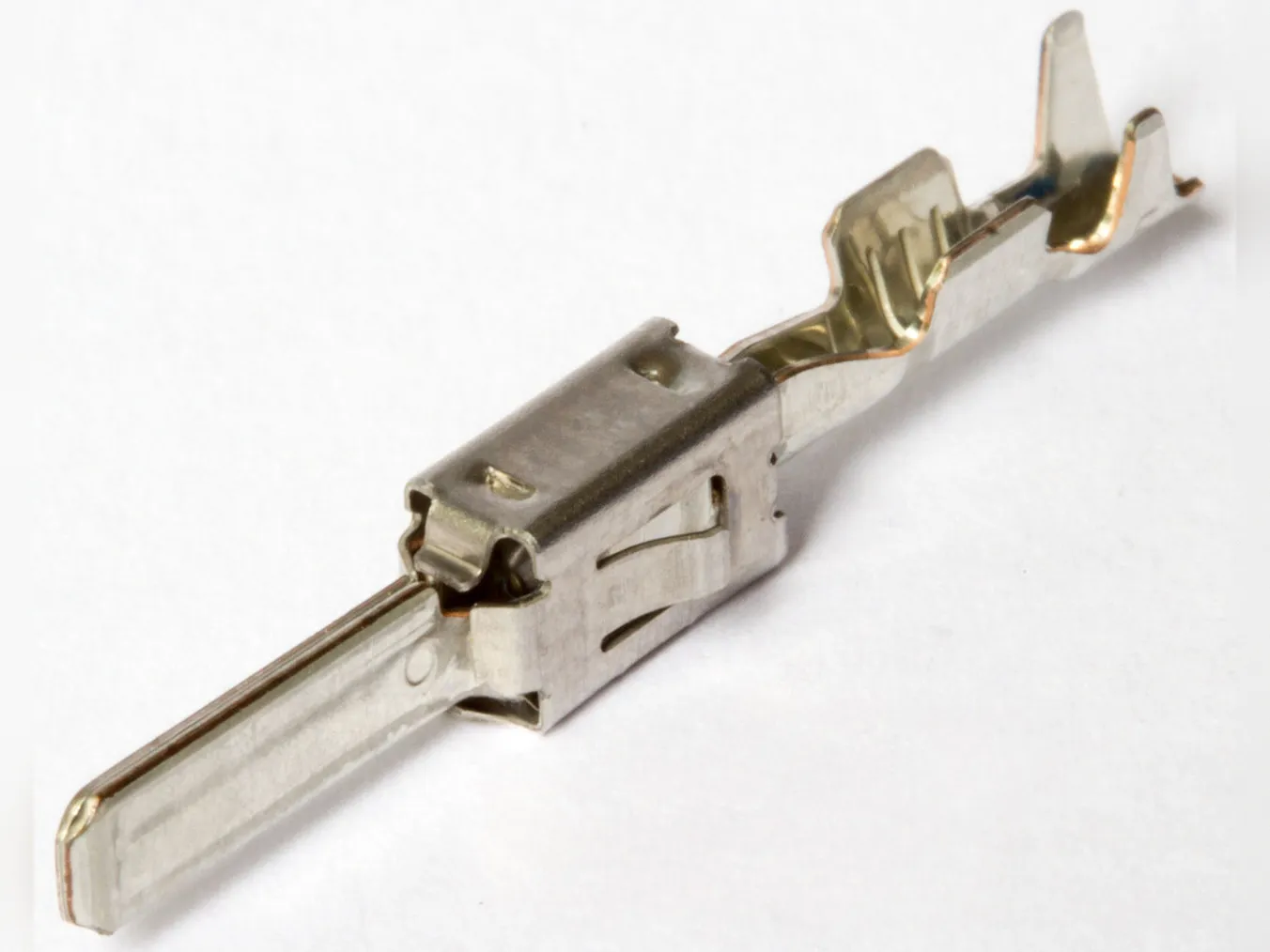
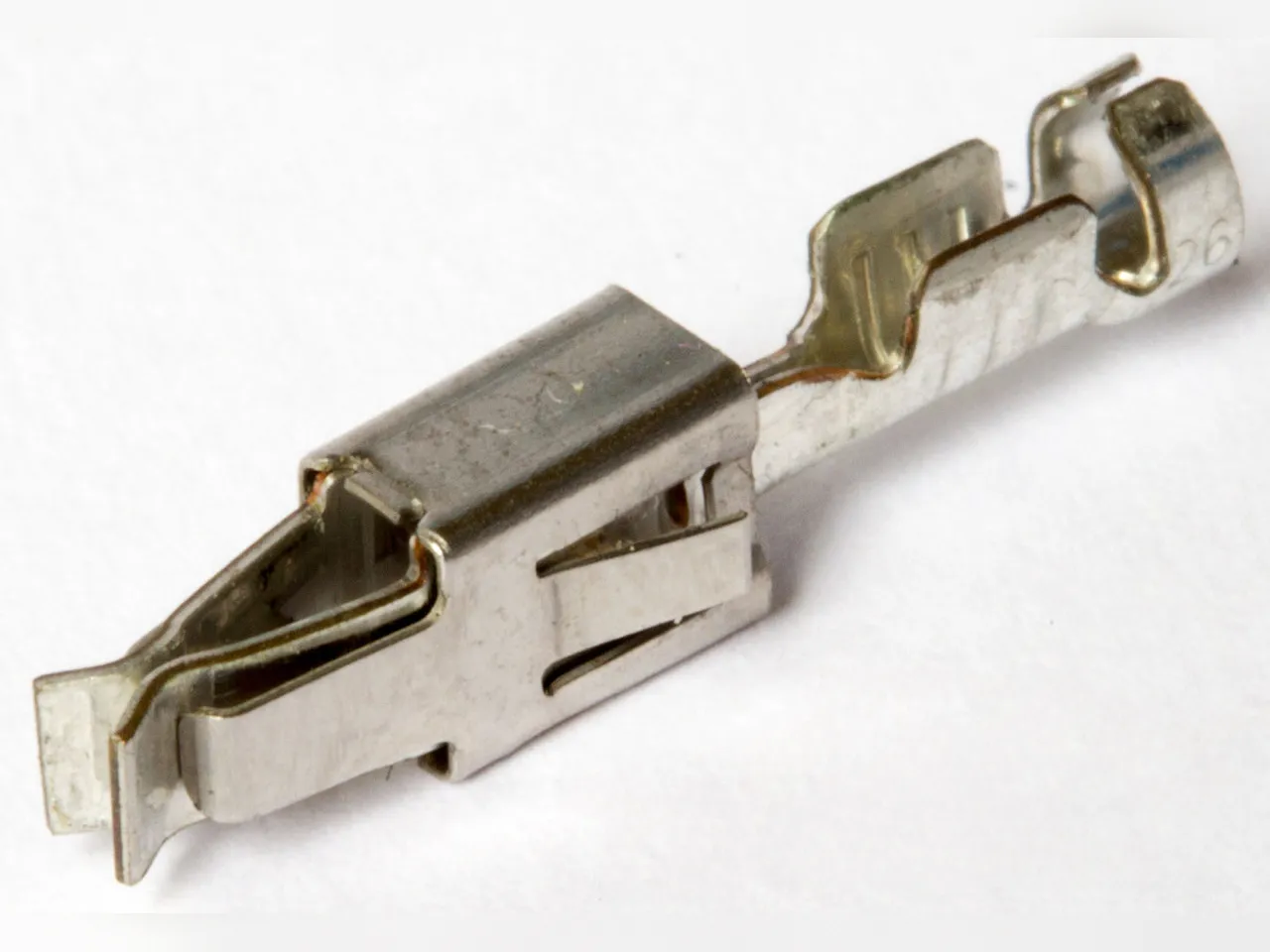
Junior Power Timer (JPT) (2.8 mm contact width)
| Wire | Male | Female | ||
|---|---|---|---|---|
| Repair wire | Single pin | Single pin | Repair wire | |
| 0.5 mm² | 000 979 022 E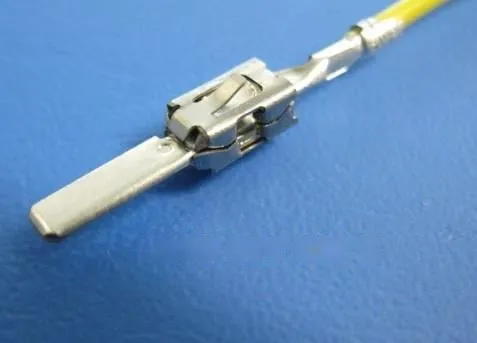 | – | N 906 843 07 (with seal) 0.35 mm² | 000 979 021 E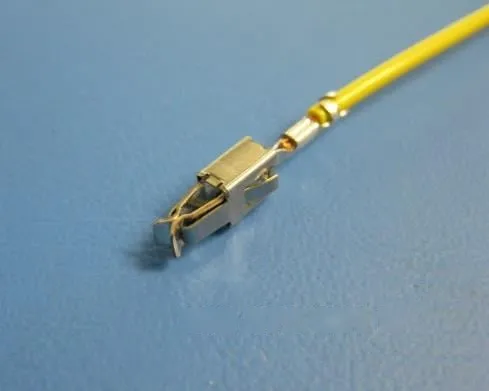 |
| 1.0 mm² | 000 979 134 E | N 103 189 05 1.0 mm² | N 906 844 05 1.0 mm² | 000 979 133 E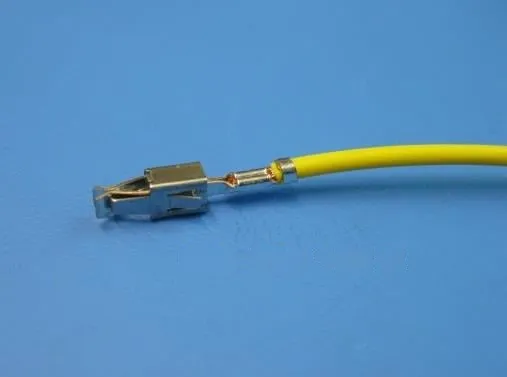 |
| 2.5 mm² | 000 979 226 E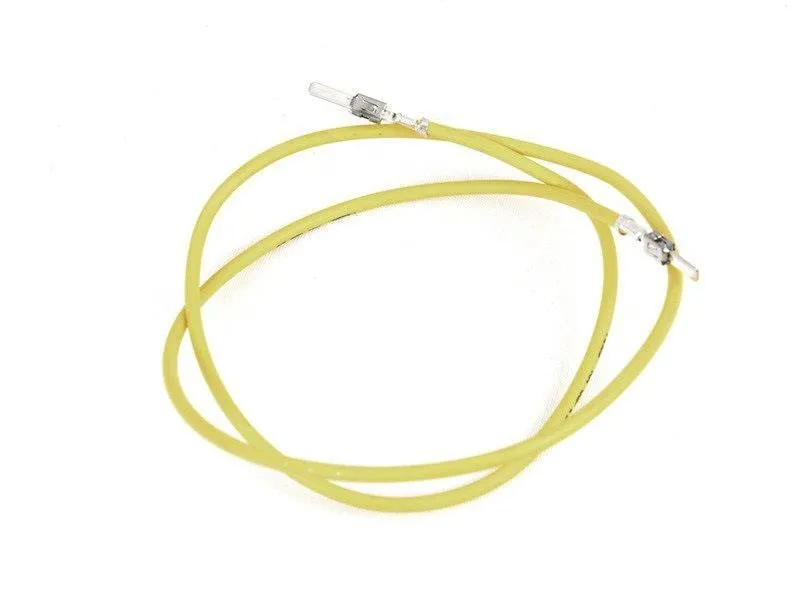 | N 103 190 05 2.5 mm² | N 906 845 05 2.5 mm² | 000 979 225 E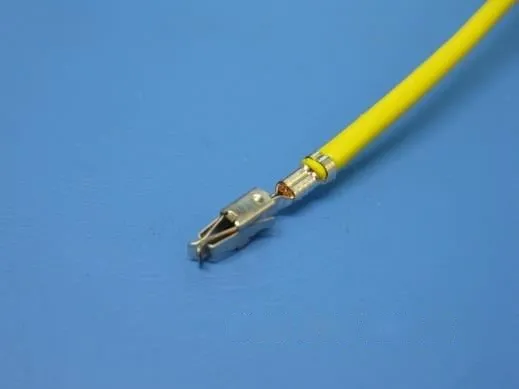 |
N 906 843 07 is made for a single wire seal.
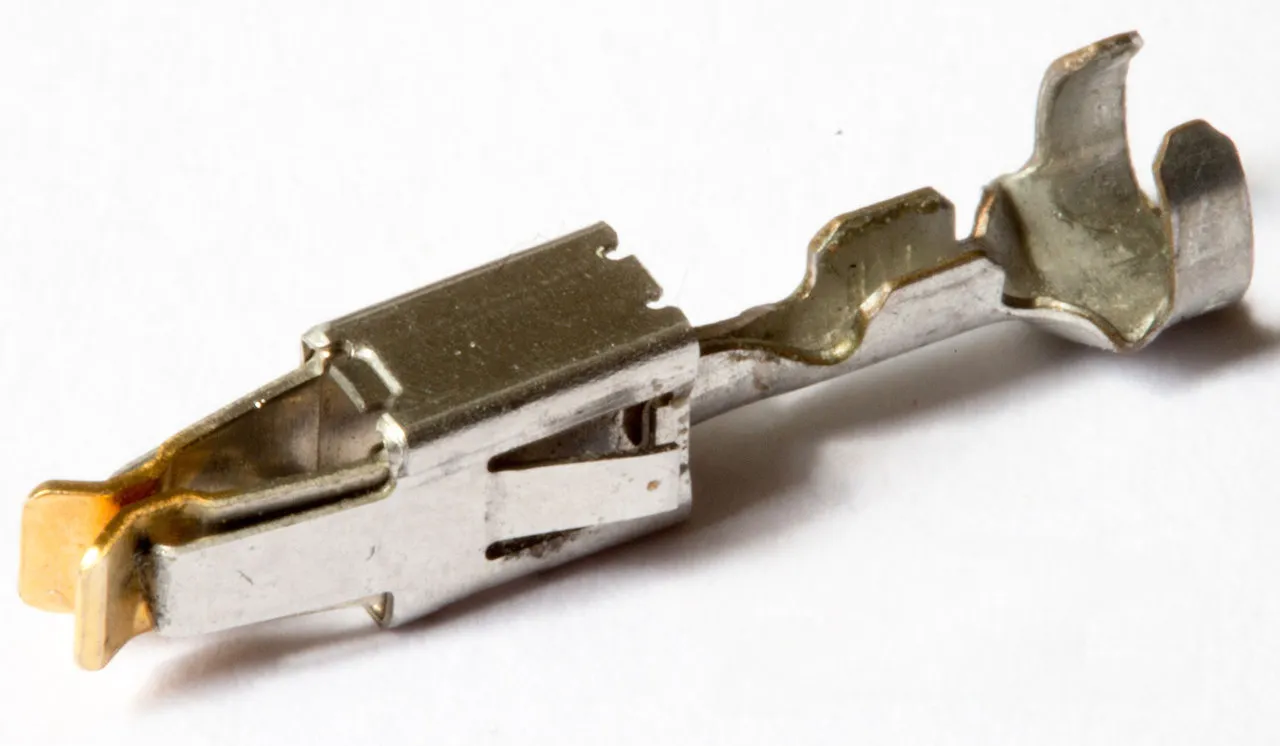
Standard Power Timer (SPT) (5.8 mm contact width)
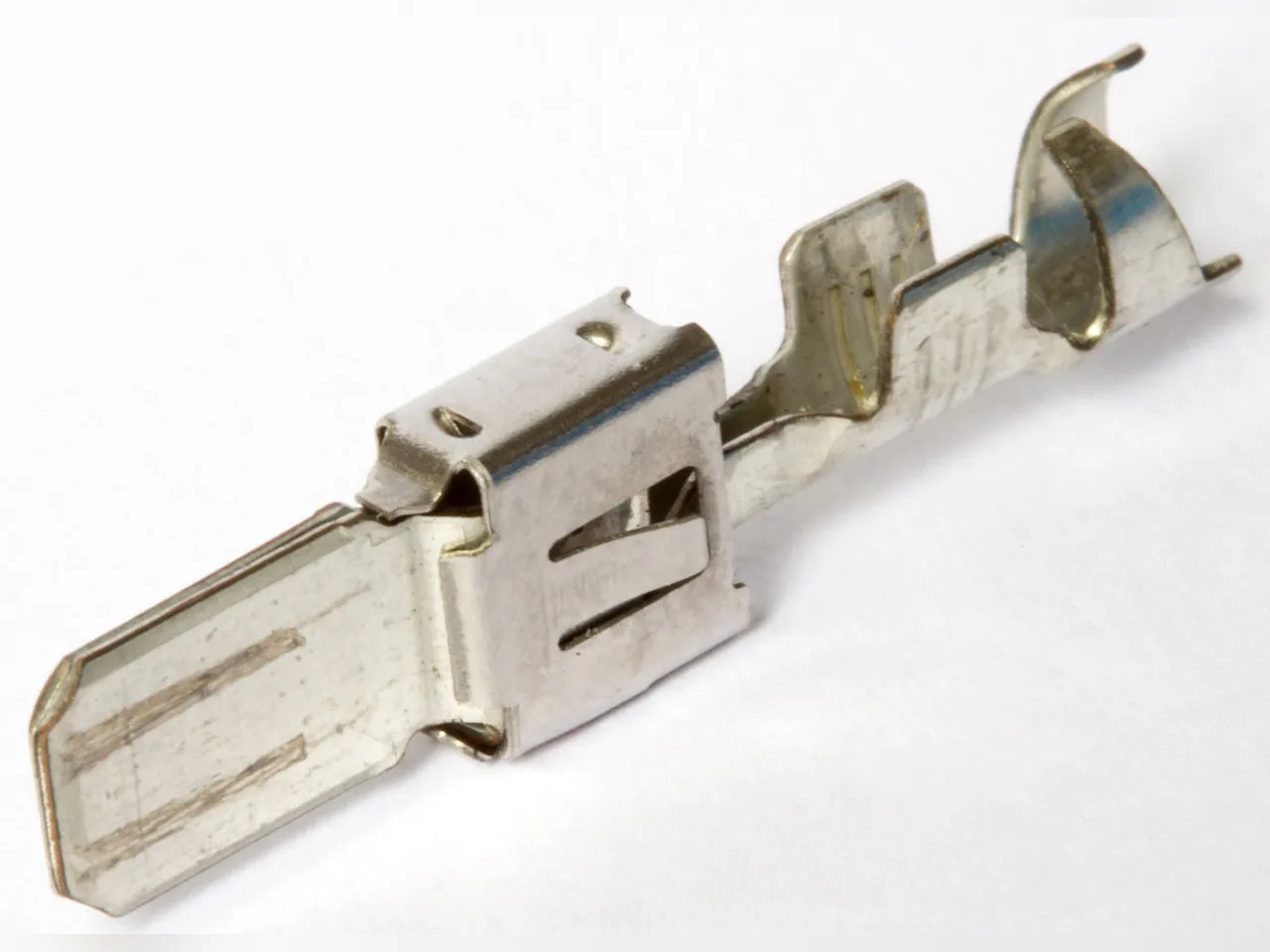

| Wire | Male | Female | ||
|---|---|---|---|---|
| Repair wire | Single pin | Single pin | Repair wire | |
| 0.5 mm² | 000 979 024 E | – | – | 000 979 023 E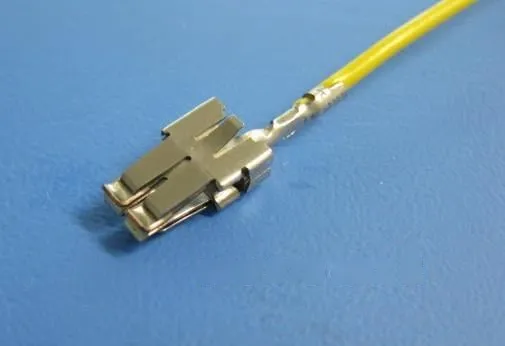 |
| 1.0 mm² | 000 979 136 E | N 103 191 03 1.0 mm² | N 907 326 03 1.0 mm² | 000 979 135 E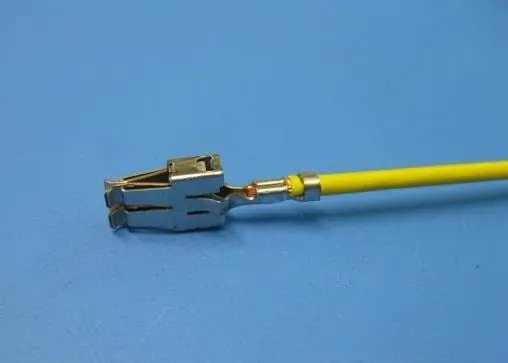 |
| 2.5 mm² | 000 979 228 E | N 103 192 03 2.5 mm² | N 907 327 03 2.5 mm² | 000 979 227 E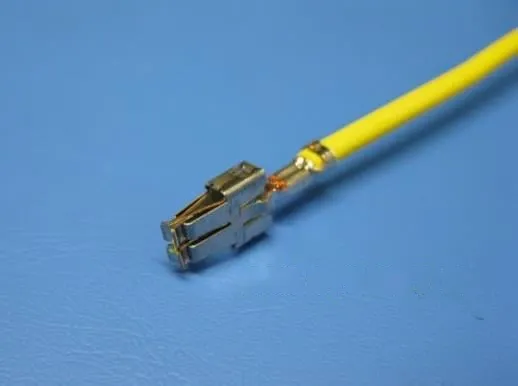 |
| 4.0 mm² | 000 979 307 E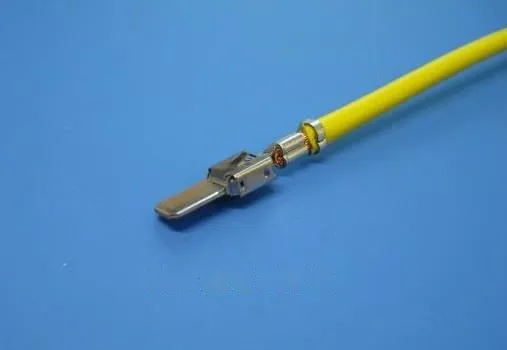 | N 103 193 03 4.0 mm² | N 906 966 03 4.0 mm² | 000 979 306 E |
The female contacts also take male blades 4.8 mm and 6.3 mm wide. The VW parts catalogue gives the male contacts as 4.8 mm wide, but they measure 5.8 mm; asymmetric 4.8 mm male Standard Power Timer contacts exist as well.
MCP 1.5 – Multiple Contact Point (1.5 mm contact width)
| Wire | Male | Female | ||
|---|---|---|---|---|
| Repair wire | Single pin | Single pin | Repair wire | |
| 0.5 mm² | 000 979 020 E | N 103 360 05 0.35 mm² | A 018 545 87 26 (Mercedes) 0.2–0.35 mm² | 000 979 025 E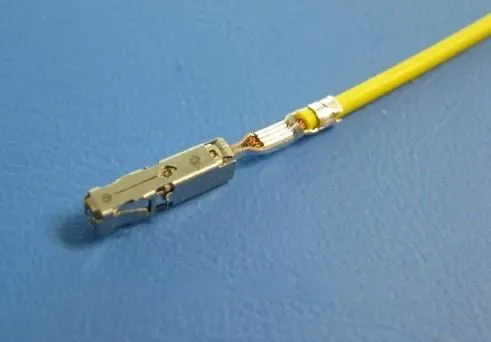 |
| 1.0 mm² | 000 979 132 E | N 103 361 05 1.0 mm² | A 018 545 86 26 (Mercedes) 0.5–1.0 mm² | 000 979 150 E |
| 1.5 mm² | 000 979 254 E | – | A 018 545 85 26 (Mercedes) 1.5–2.5 mm² | 000 979 255 E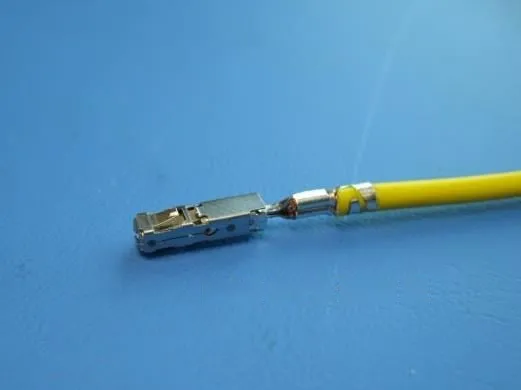 |
The male contacts of the MCP family are the Timer contacts of the same width (Micro Timer, Junior Power Timer, Standard Power Timer).
MCP 2.8 – Multiple Contact Point (2.8 mm contact width)
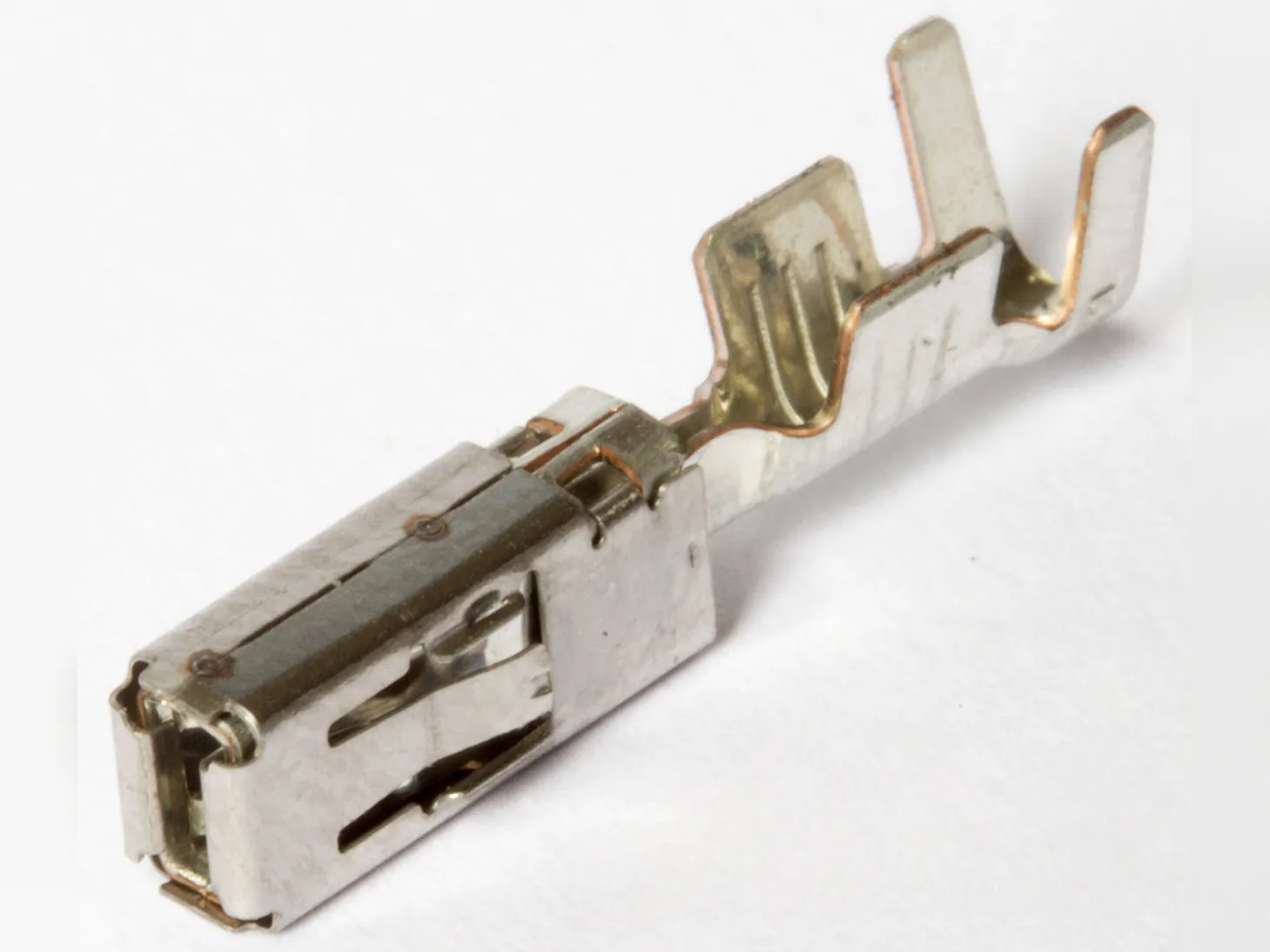
| Wire | Male | Female | ||
|---|---|---|---|---|
| Repair wire | Single pin | Single pin | Repair wire | |
| 0.5 mm² | 000 979 022 E | – | A 015 545 04 26 (Mercedes) 0.2–0.35 mm² | 000 979 026 E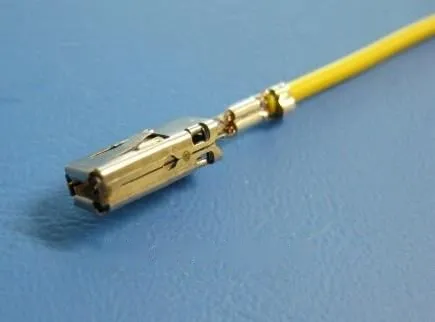 |
| 1.0 mm² | 000 979 134 E | N 103 189 05 1.0 mm² | A 013 545 76 26 (Mercedes) 0.5–1.0 mm² | 000 979 151 E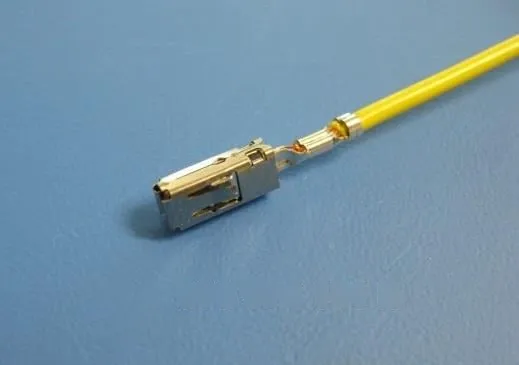 |
| 2.5 mm² | 000 979 226 E | N 103 190 05 2.5 mm² | A 013 545 78 26 (Mercedes) 1.5–2.5 mm² | 000 979 242 E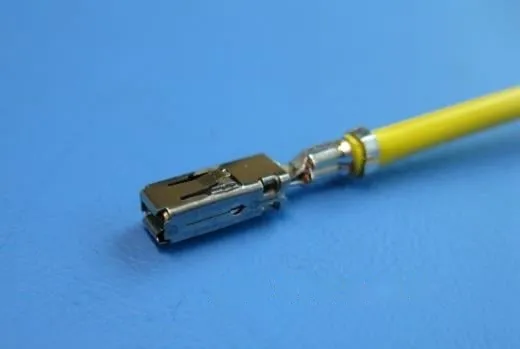 |
The male contacts of the MCP family are the Timer contacts of the same width (Micro Timer, Junior Power Timer, Standard Power Timer).
MCP 6.3/4.8 – Multiple Contact Point (5.8 mm contact width)
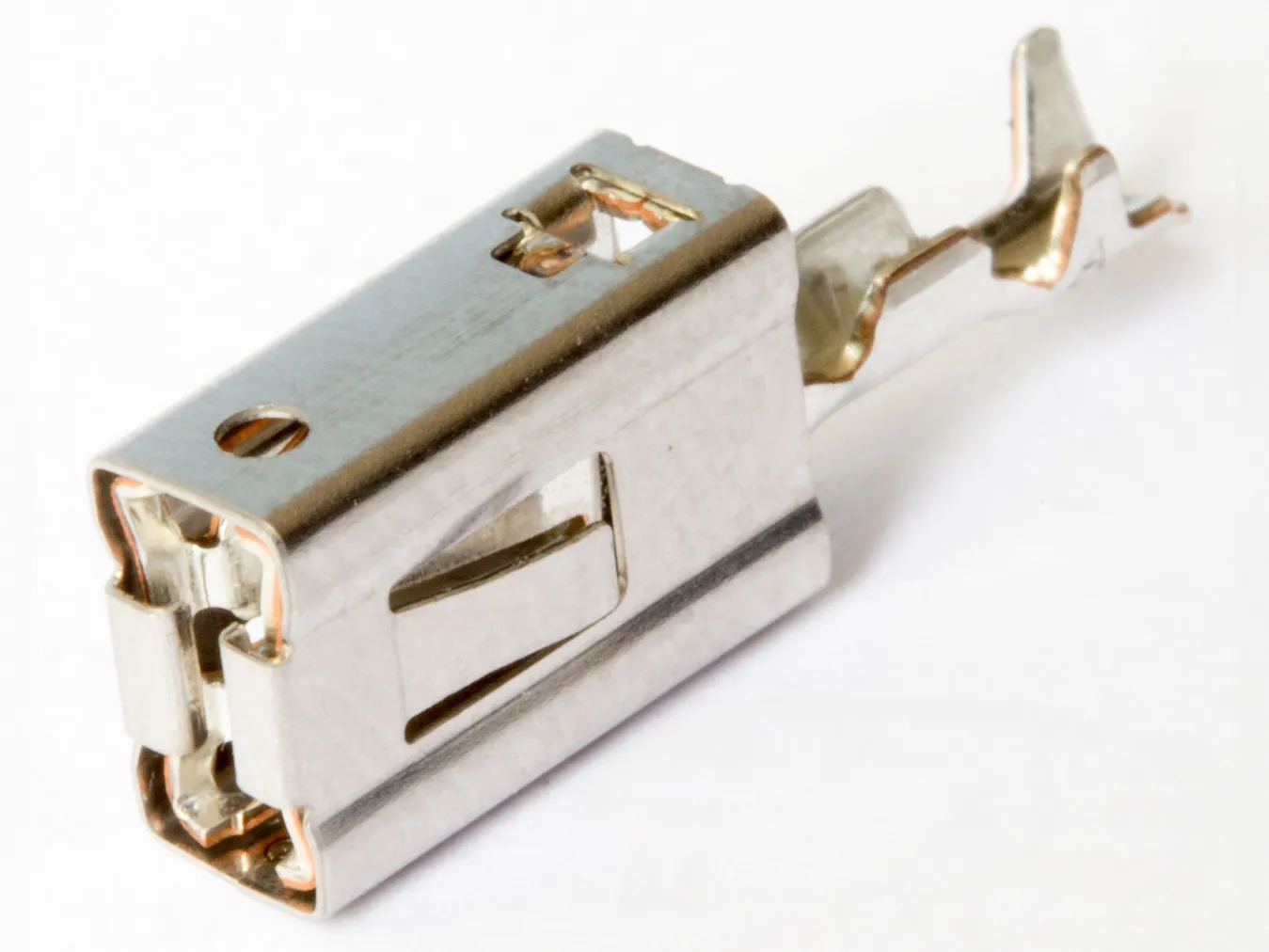
| Wire | Male | Female | ||
|---|---|---|---|---|
| Repair wire | Single pin | Single pin | Repair wire | |
| 0.5 mm² | 000 979 024 E | – | – | 000 979 027 E |
| 1.0 mm² | 000 979 136 E | N 103 191 03 1.0 mm² | A 018 545 47 26 (Mercedes) 0.5–1.0 mm² | 000 979 152 E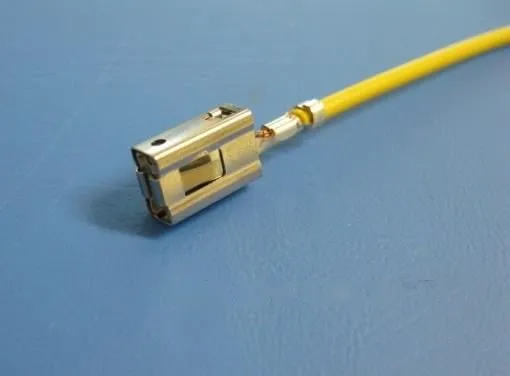 |
| 2.5 mm² | 000 979 228 E | N 103 192 03 2.5 mm² | A 018 545 49 26 (Mercedes) 1.5–2.5 mm² | 000 979 243 E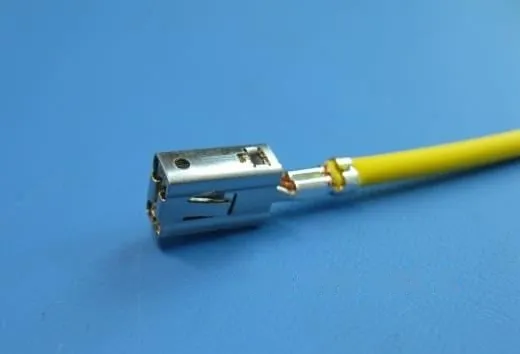 |
| 4.0 mm² | 000 979 307 E | N 103 193 03 4.0 mm² | A 018 545 51 26 (Mercedes) 2.5–4.0 mm² | 000 979 308 E |
The male contacts of the MCP family are the Timer contacts of the same width (Micro Timer, Junior Power Timer, Standard Power Timer).
The female contacts also take male blades 4.8 mm and 6.3 mm wide. The VW parts catalogue gives the male contacts as 4.8 mm wide, but they measure 5.8 mm; asymmetric 4.8 mm male Standard Power Timer contacts exist as well.
Lear SIKO 1 (6.3 mm contact width)
| Wire | Male | Female | ||
|---|---|---|---|---|
| Repair wire | Single pin | Single pin | Repair wire | |
| 2.5 mm² | – | – | N 103 197 01 Lear 26818.213.178 1.5–2.5 mm² | 000 979 236 E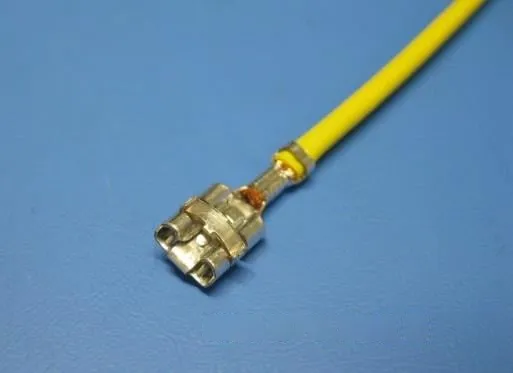 |
Often used in VW relay carriers.

TE Positive Lock 250 (6.3 mm contact width)
| Wire | Male | Female | ||
|---|---|---|---|---|
| Repair wire | Single pin | Single pin | Repair wire | |
| 2.5 mm² | – | – | not from VW TE 154717 2.5–4.0 mm² | 000 979 212 E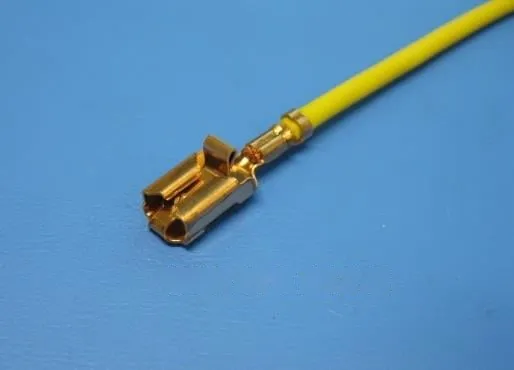 |
Used in older VW relay carriers. TE's part number is 154717-X, where X gives the size.
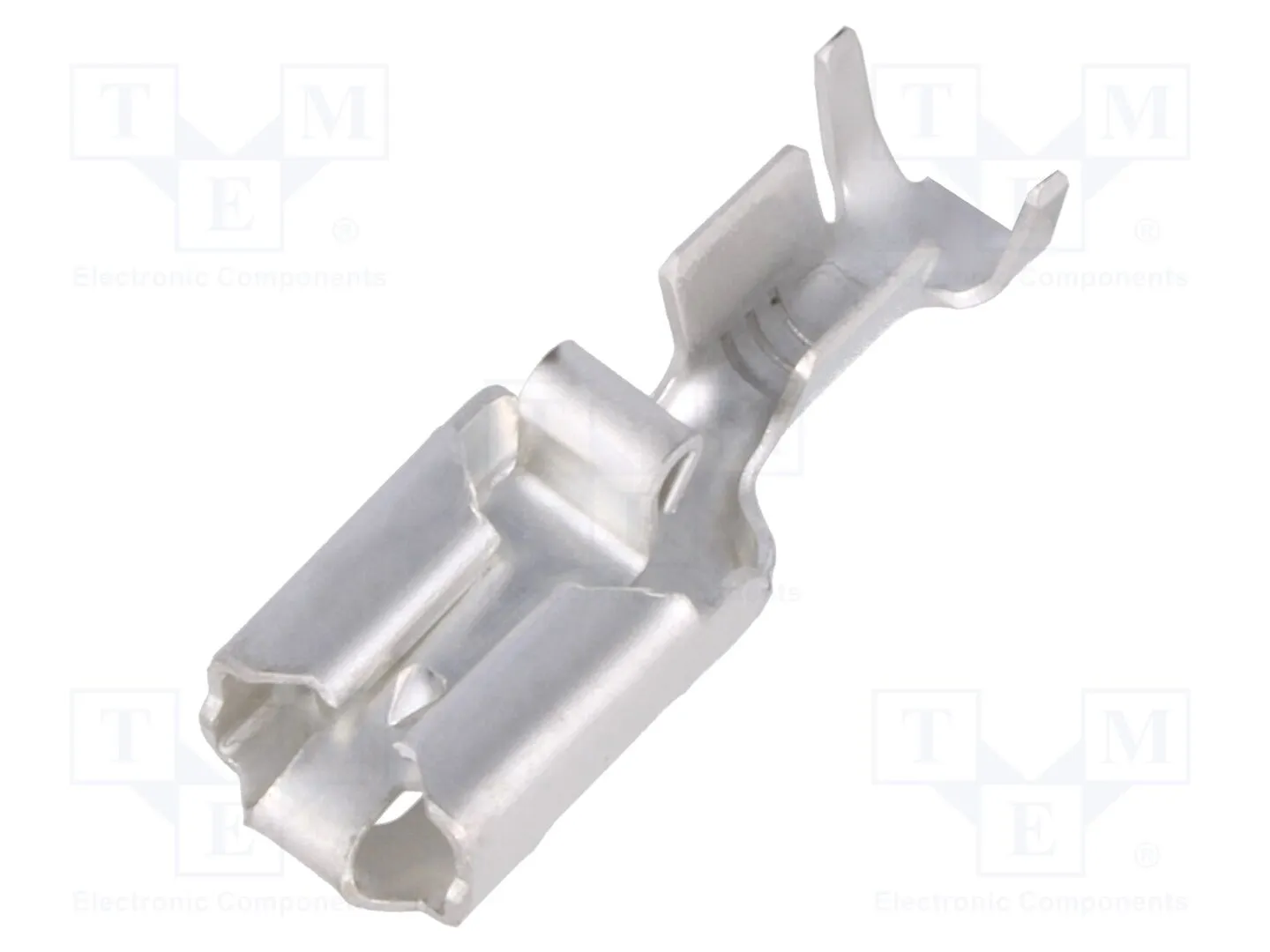
Delphi Ducon 9.5 (9.5 mm contact width)
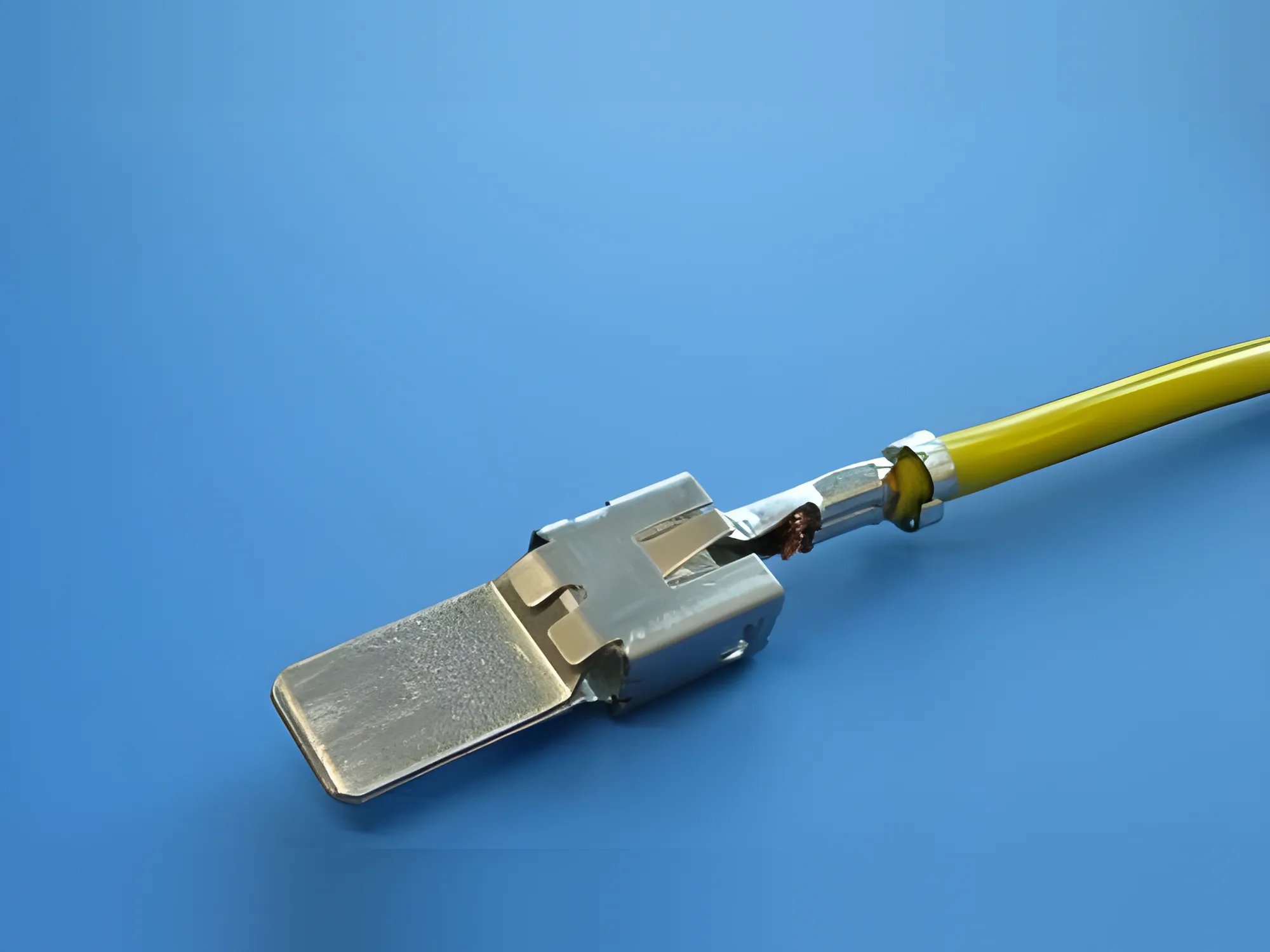
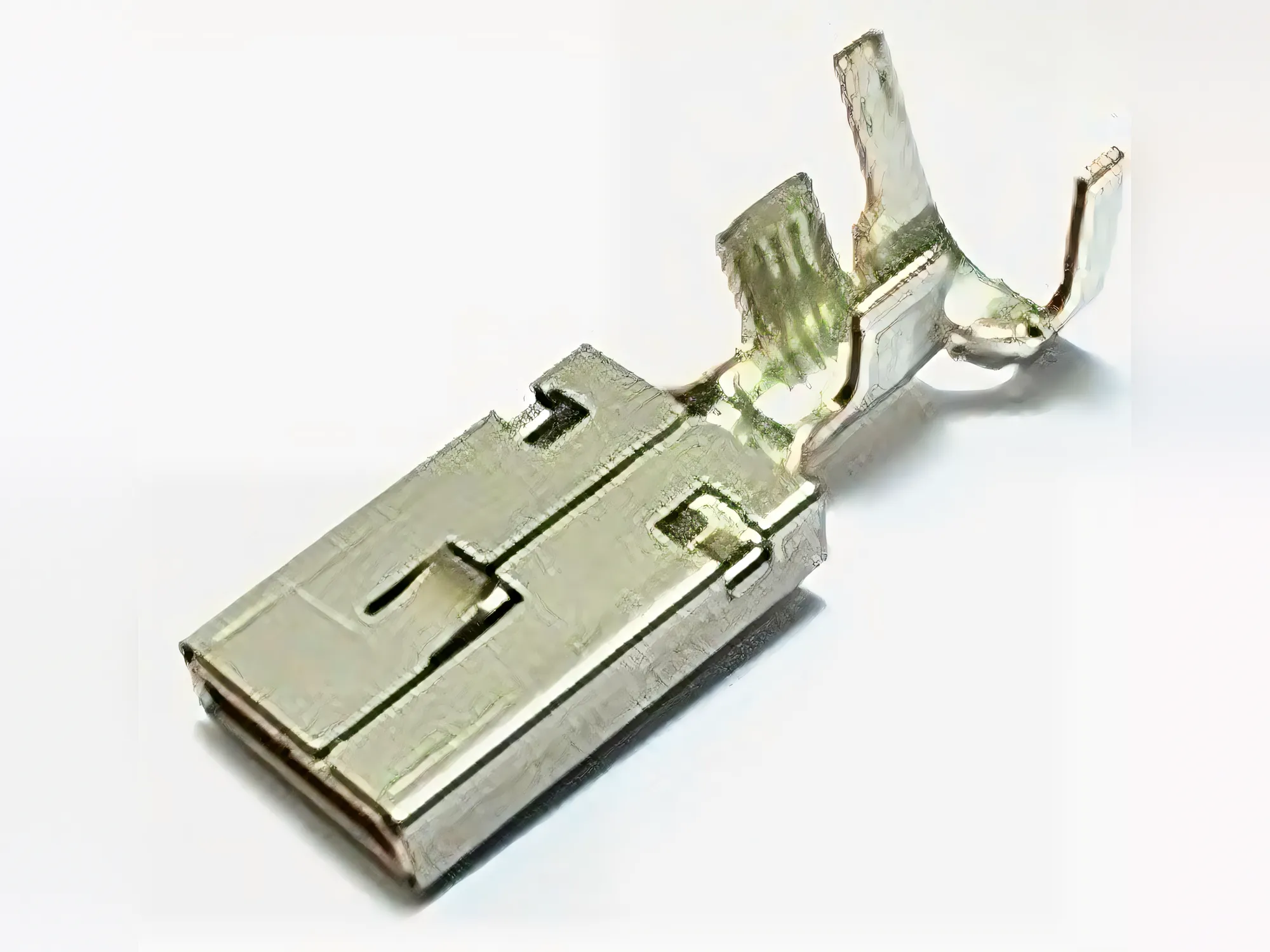
| Wire | Male | Female | ||
|---|---|---|---|---|
| Repair wire | Single pin | Single pin | Repair wire | |
| 6.0 mm² | 000 979 416 E | – | N 907 572 02 Delphi 15327010 4.0–6.0 mm² | 000 979 411 E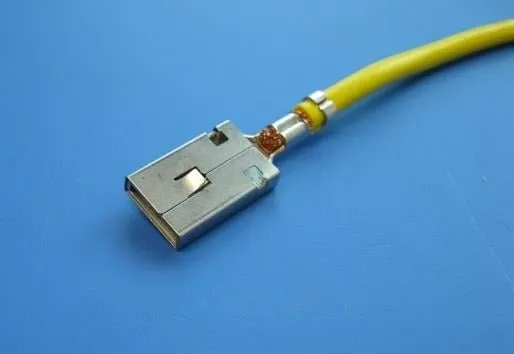 |
Often used in VW relay carriers.
Seals and blanking plugs
For what seals do and how to fit them without the special dies, see Seals.
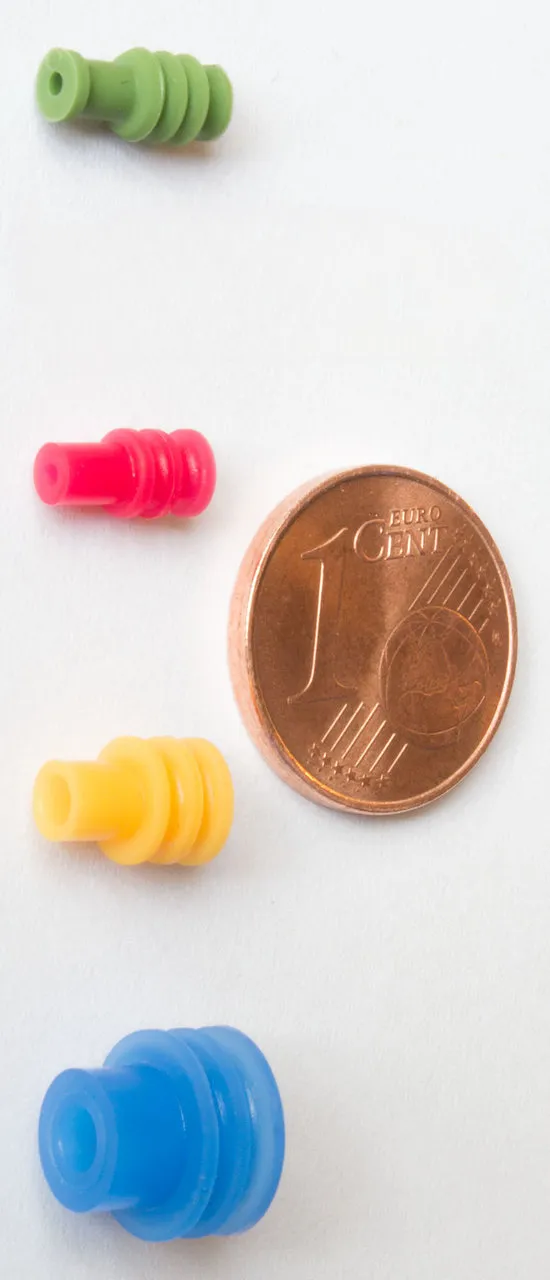
| Contact system | Ø × length (mm) | Wire (mm²) | Colour | Part number |
|---|---|---|---|---|
| MQS MCON | 4.1 × 8.5 | 0.35 | yellow | 3B0 972 742 B |
| 0.5–0.75 | green | 3B0 972 742 C | ||
| Blanking plug | blue | 3B0 972 840 | ||
| MCP 1.5 Micro Timer | 3.9 × 7.8 | 0.35–0.5 | red | 357 972 740 E |
| 0.5–1.0 | grey | 357 972 740 D | ||
| 1.0 | yellow | 357 972 740 F | ||
| Blanking plug | orange | 3C0 972 841 | ||
| MCP 2.8 Junior Power Timer | 5.65 × 7.8 | 0.35–1.0 | blue | 357 972 741 |
| 1.5 | reddish brown | 1J0 972 741 A | ||
| 1.5–2.5 | yellowish orange | 357 972 741 B | ||
| Blanking plug | green | 357 972 841 | ||
| MCP 6.3/4.8 Standard Power Timer | 9.0 × 7.8 | 0.35–1.0 | yellow | 357 972 742 |
| 0.5–1.5 | white | 357 972 742 A | ||
| 1.5–2.5 | red | 357 972 742 B | ||
| 2.5–4.0 | blue | 357 972 742 E | ||
| 4.0–6.0 | green | 357 972 742 C | ||
| 6.0 | grey | 357 972 742 D | ||
| Blanking plug | black | 357 972 842 |
Superseded part numbers
Part numbers found online are often no longer valid. The table lists numbers of single pins, seals and repair wires that VW has withdrawn, with what replaced them.
At some point every repair wire got the index E: 000 979 009 became 000 979 009 E, and 000 979 019 A became 000 979 019 EA.
| Withdrawn number | Replaced by |
|---|---|
| 357 972 741 A | 1J0 972 741 A |
| 357 972 840 | 3C0 972 841 |
| N 103 358 03 | 000 979 131 EA |
| N 105 111 01 | 000 979 025 E |
| N 105 111 02 | 000 979 025 EA |
| N 105 111 03 | 000 979 025 E |
| N 105 111 04 | 000 979 025 EA |
| N 105 113 03 | 000 979 026 E |
| N 105 114 03 | 000 979 026 E |
| N 105 115 03 | 000 979 242 E |
| N 105 116 01 | 000 979 027 E |
| N 105 117 01 | 000 979 152 E |
| N 105 118 01 | 000 979 243 E |
| N 105 119 01 | 000 979 308 E |
| N 105 974 01 | 000 979 034 E |
| N 105 975 04 | 000 979 034 EA |
| N 105 981 01 | 000 979 035 E |
| N 105 982 03 | 000 979 035 EA |
| N 907 647 02 | 000 979 009 E |
| N 907 647 03 | 000 979 009 EA |
| N 907 647 04 | 000 979 009 EA |
| N 907 648 01 | 000 979 012 E |
| N 907 648 02 | 000 979 012 E |
| N 907 648 03 | 000 979 012 EA |
| N 907 648 04 | 000 979 012 EA |
Where to buy
Single pins are cheaper at VW than repair wires, but these are cent parts that cost far less elsewhere:
- TME: contacts and connector housings by the maker's part number (TE and others).
- DeyTrade Connecting: housings, contacts and seals for German cars.
- TGS: contacts, connectors and release tools.
- Mouser Electronics: the widest choice of TE contacts. Look up the contact's TE part number in TE's catalogue and search for it; mind the shipping costs.
- Conrad.