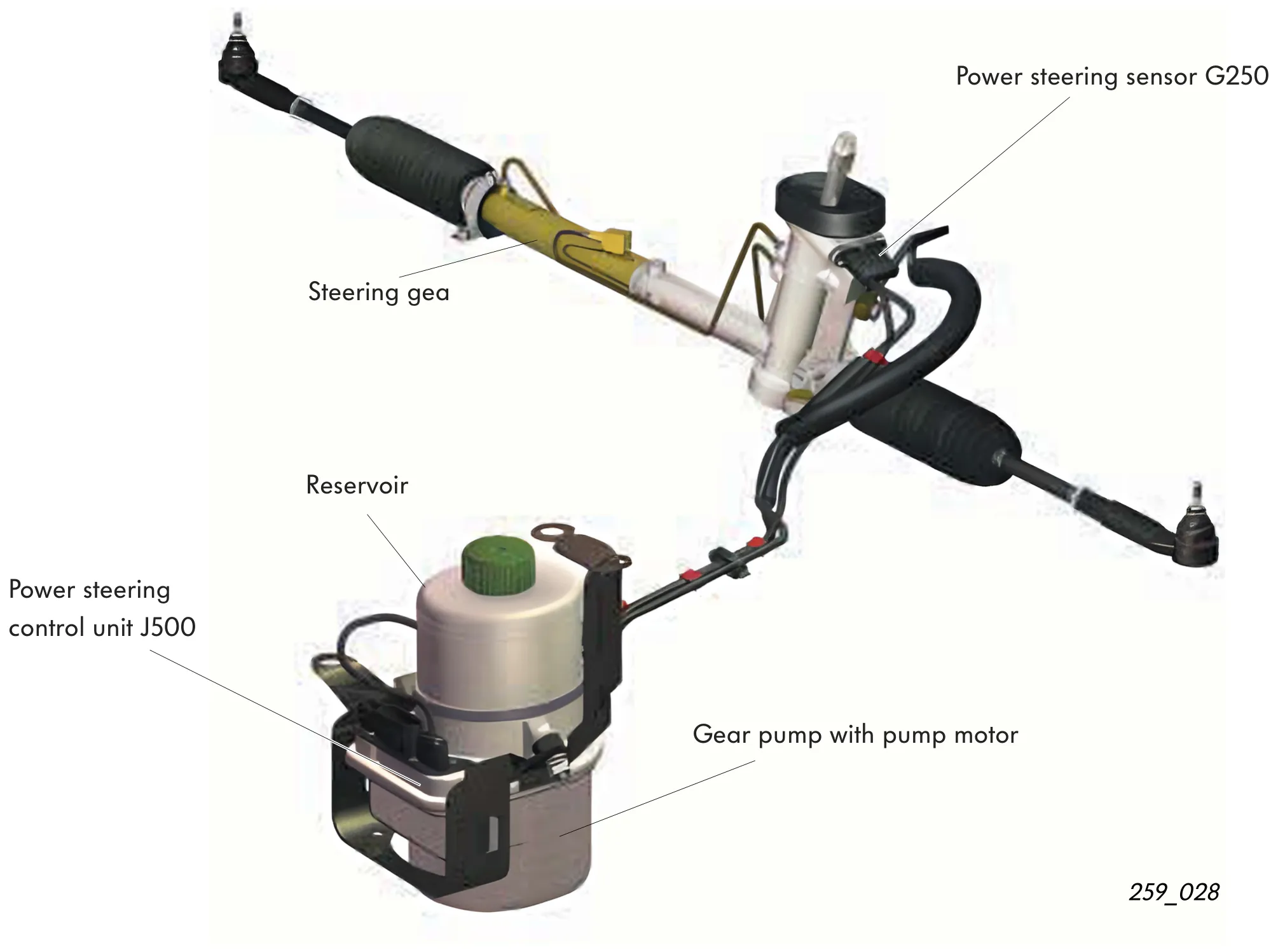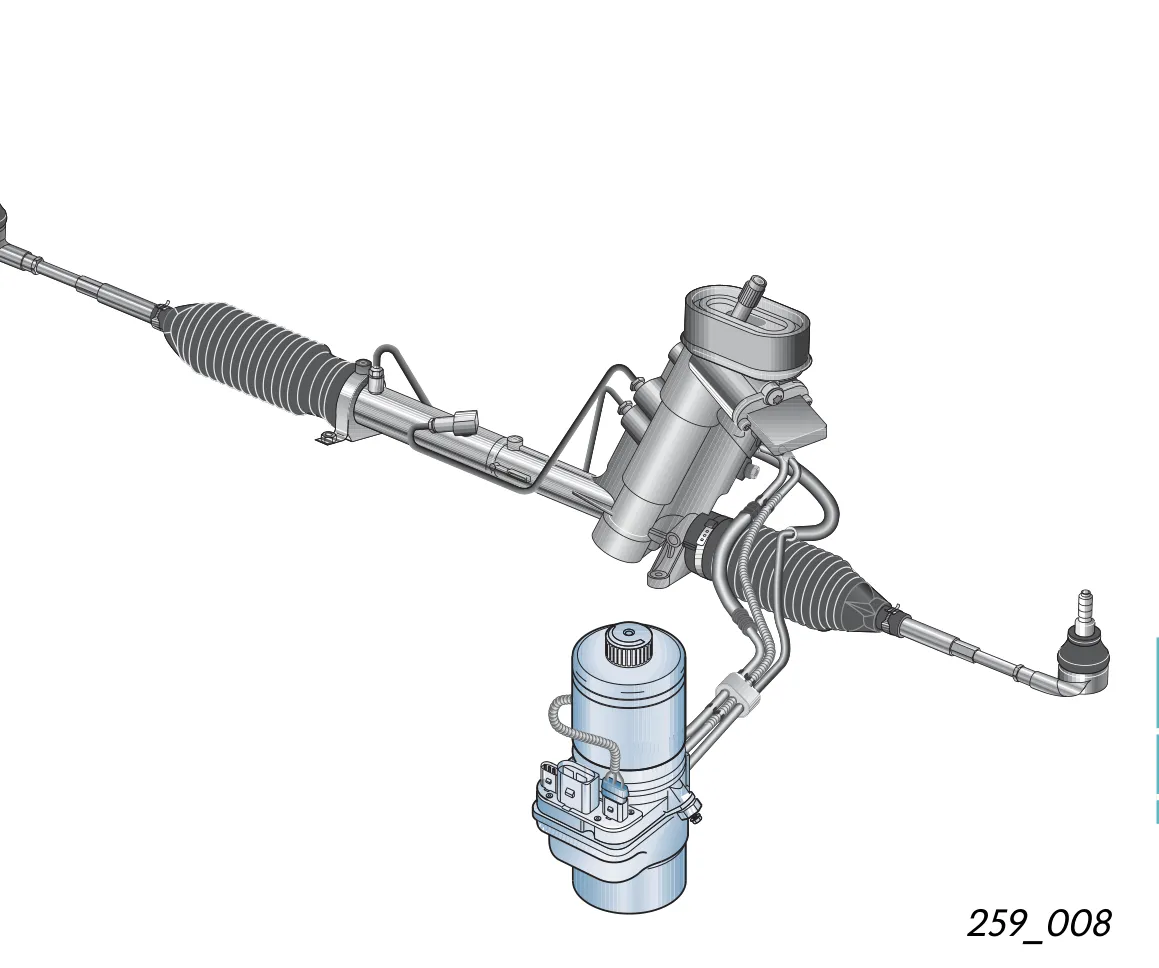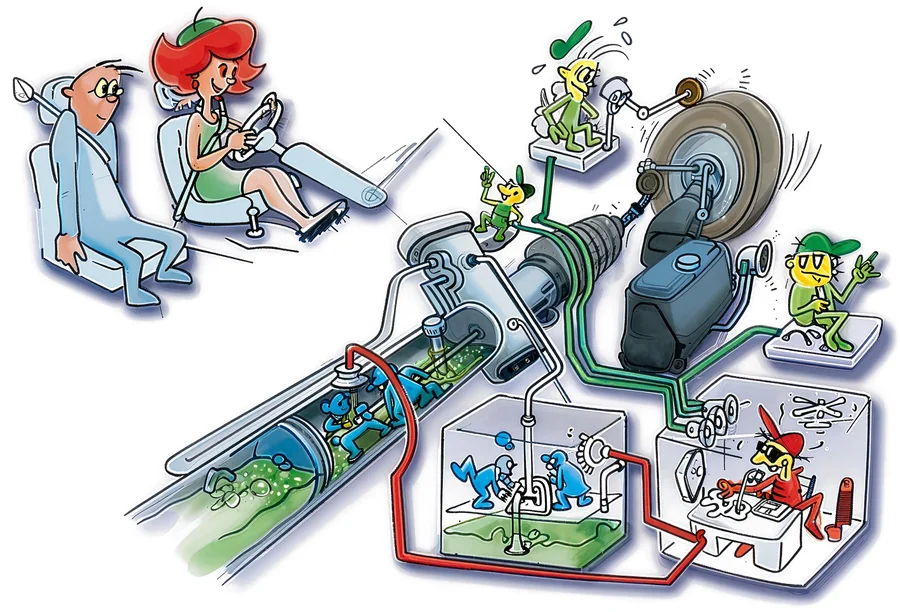
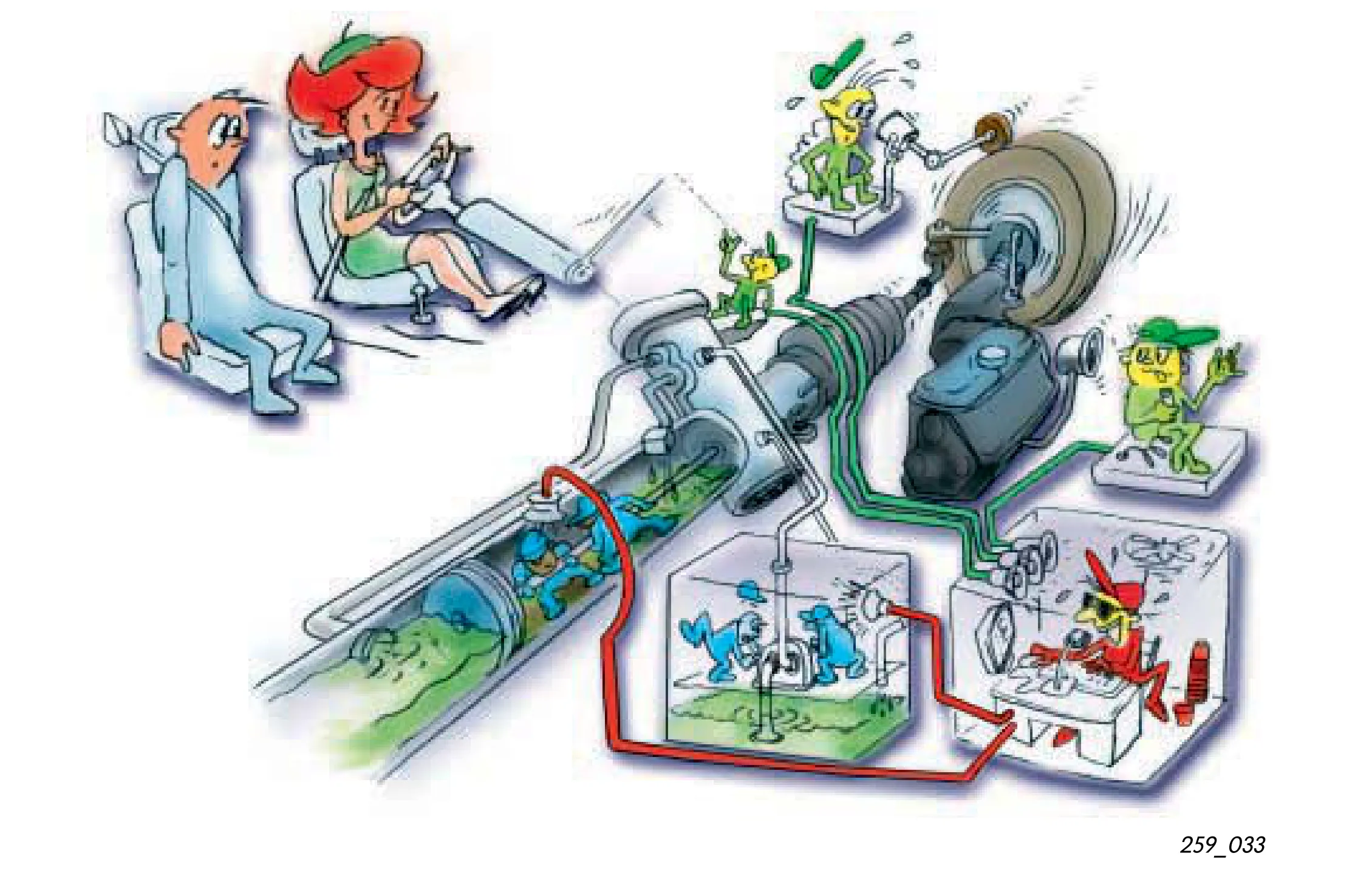
The EPHS = Electrically Powered Hydraulic Steering is familiar from the Lupo FSI. This system is supplied by TRW and by KOYO.
The new steering system offers a wide range of advantages while at the same time retaining the excellent steering properties of the conventional hydraulic power-assisted steering.
Advantages of the EPHS:
- Improvement in comfort, easy to operate when parking, but steering firm at high speeds (safety factor).
- Fuel savings, as the energy consumption is based on demand – irrespective of the operating state of the internal combustion engine.
Chapters
- IntroductionHow the electro-hydraulic power steering differs from conventional power steering: TRW and KOYO versions, warning lamp K92, sensors G250, G85, unit J500.
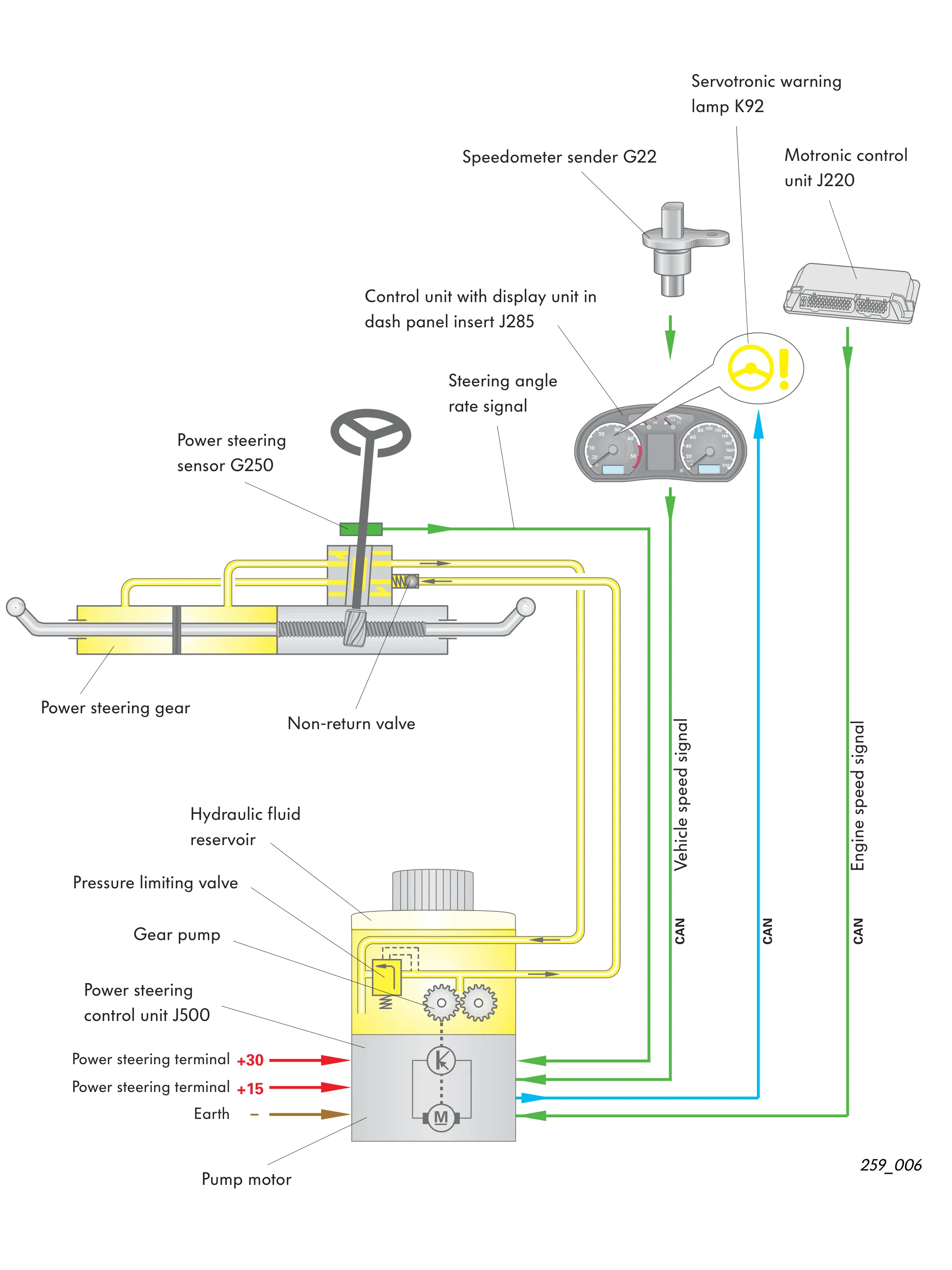
- System OverviewSchematic diagram of the EPHS and its advantages: energy savings of up to 85 % and about 0.2 l/100 km less fuel.
- Design and FunctionEngine pump assembly, control unit J500, the TRW capacitive and KOYO Hall sensors G250, steering angle sender G85, restart protection, hydraulic control unit.
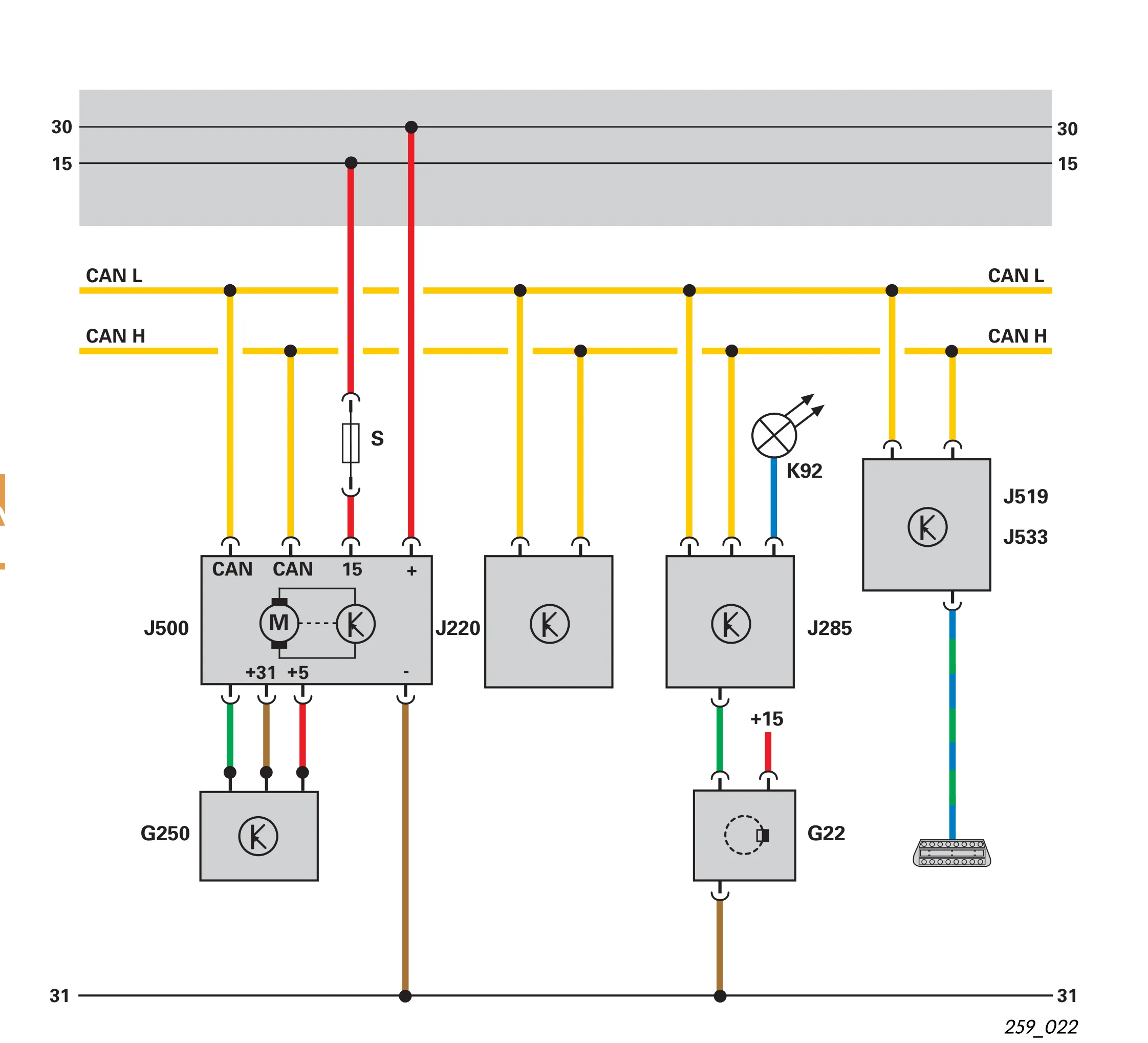
- Function DiagramFunction diagram of the EPHS with control units J500, J220, J285, J519 and J533, sensors G250 and G22, warning lamp K92 and the CAN lines.
- ServiceChecking the hydraulic fluid level of TRW and KOYO steering, warning lamp K92, self-diagnosis with address word 44, recognising the steering version.
- Test Your KnowledgeNine questions on the EPHS with the answers: pump, input signals, TRW and KOYO, warning lamp K92, restart protection, Hall sensor.
- Subject IndexGlossary: map, calibration, capacitor and capacitance, semiconductor, CAN databus, gateway and the Hall effect.