SSP 390 The 7-speed Double-clutch Gearbox 0AM
Shifting the gears
As in the case of conventional manual gearboxes, the gears are shifted using selector forks. Each selector fork shifts two gears.
The selector forks are mounted on both sides in the gearbox housing.
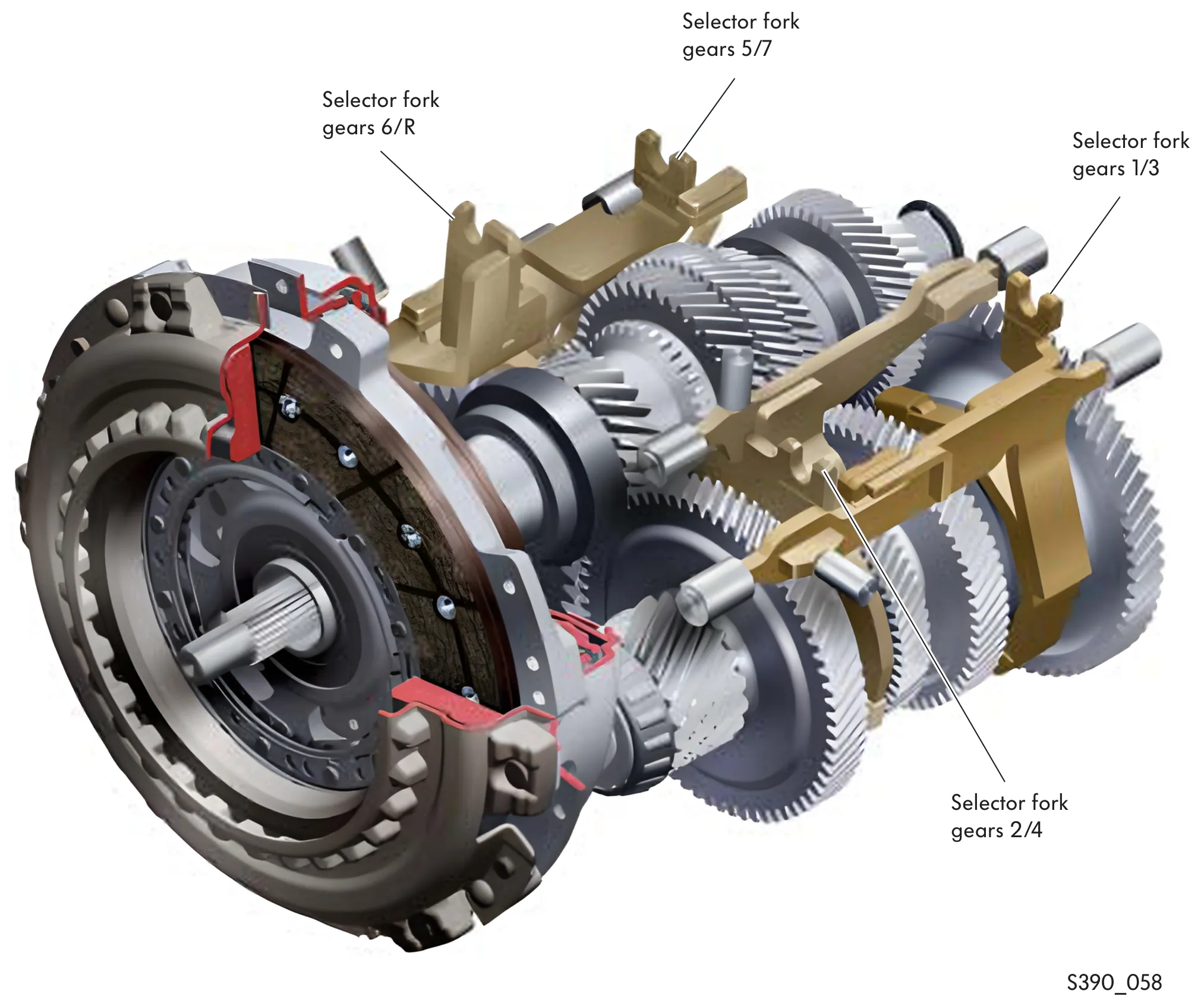
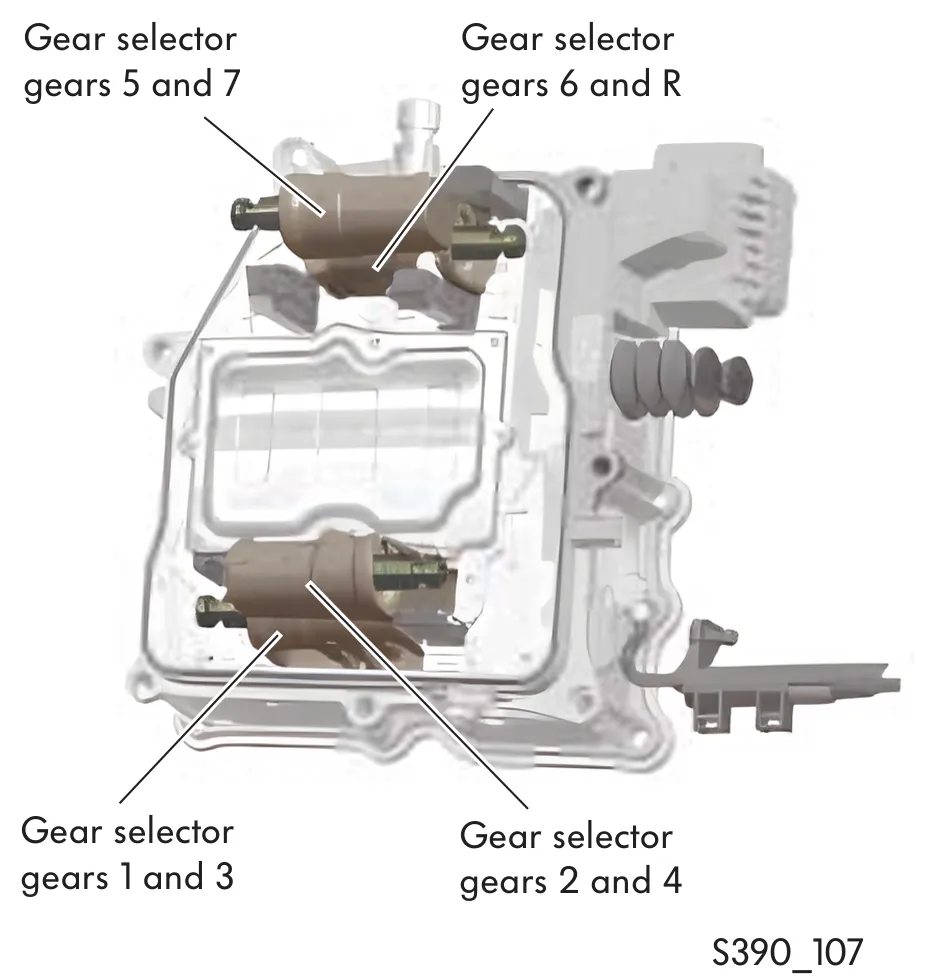
When changing gears, the selector forks are moved via the gear selectors integrated into the mechatronic unit.
Gear selectors and selector forks
The gear selector piston is connected to the selector fork. To change gears, oil pressure is applied to the gear selector piston, thereby moving it. When it moves, it also moves the selector fork and the sliding sleeve. The sliding sleeve actuates the synchronising hub and the gear is engaged.
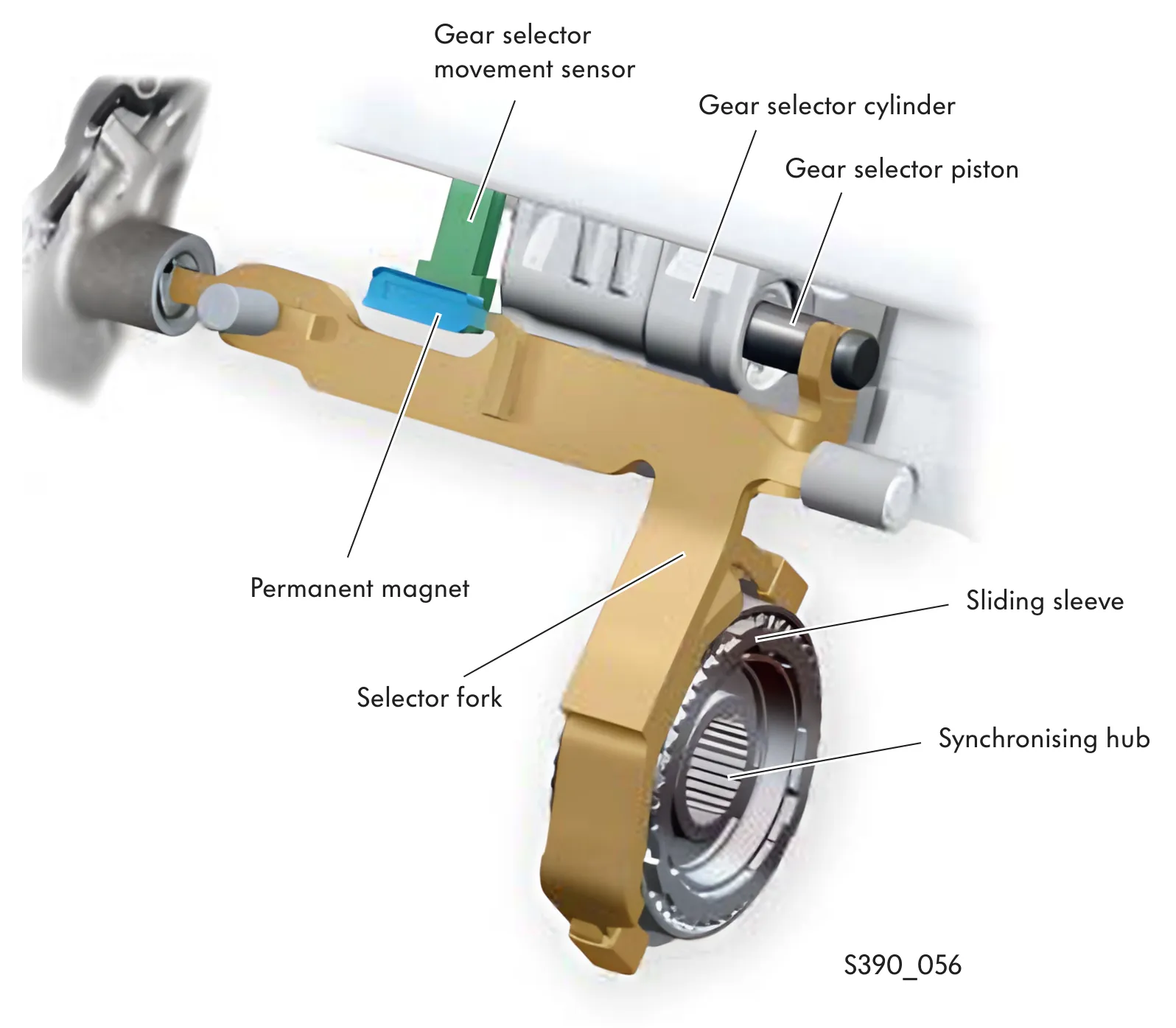
Via the permanent magnet and the gear selector movement sensor, the mechatronic unit detects the new position of the selector fork.
Gear changes
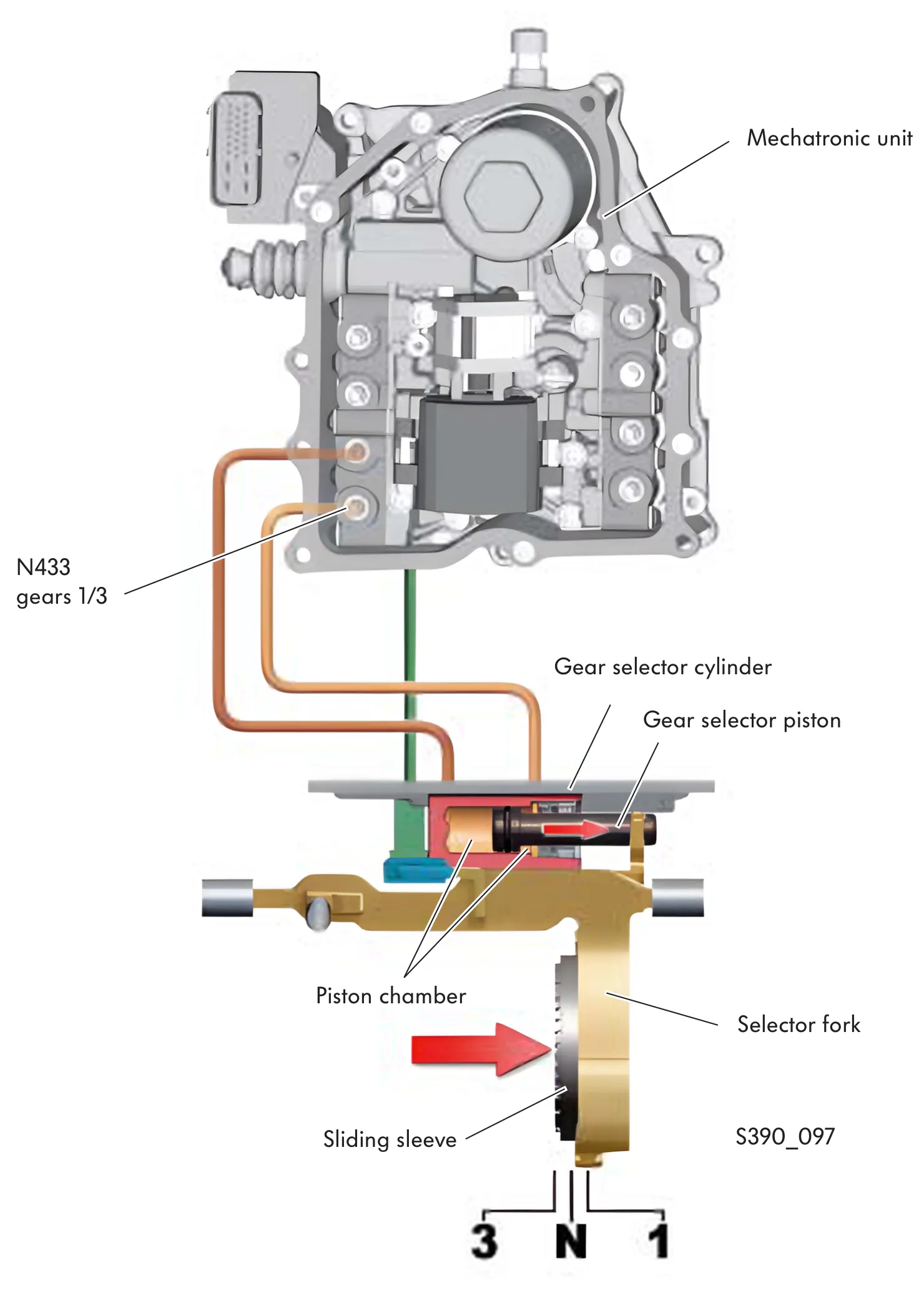
As in the case of the direct shift gearbox 02E, the selector forks are actuated hydraulically. To change the gears, the mechatronic electronic control unit actuates the corresponding gear selector solenoid valve.
How it works
Changing to 1st gear is shown here as an example.
Initial position
The gear selector piston is held in neutral position "N" via the oil pressure controlled by gear selector solenoid valve N433 for gears 1 and 3. No gear is engaged. Valve 4 in gear train half 1 N436 controls the oil pressure in gear train half 1.
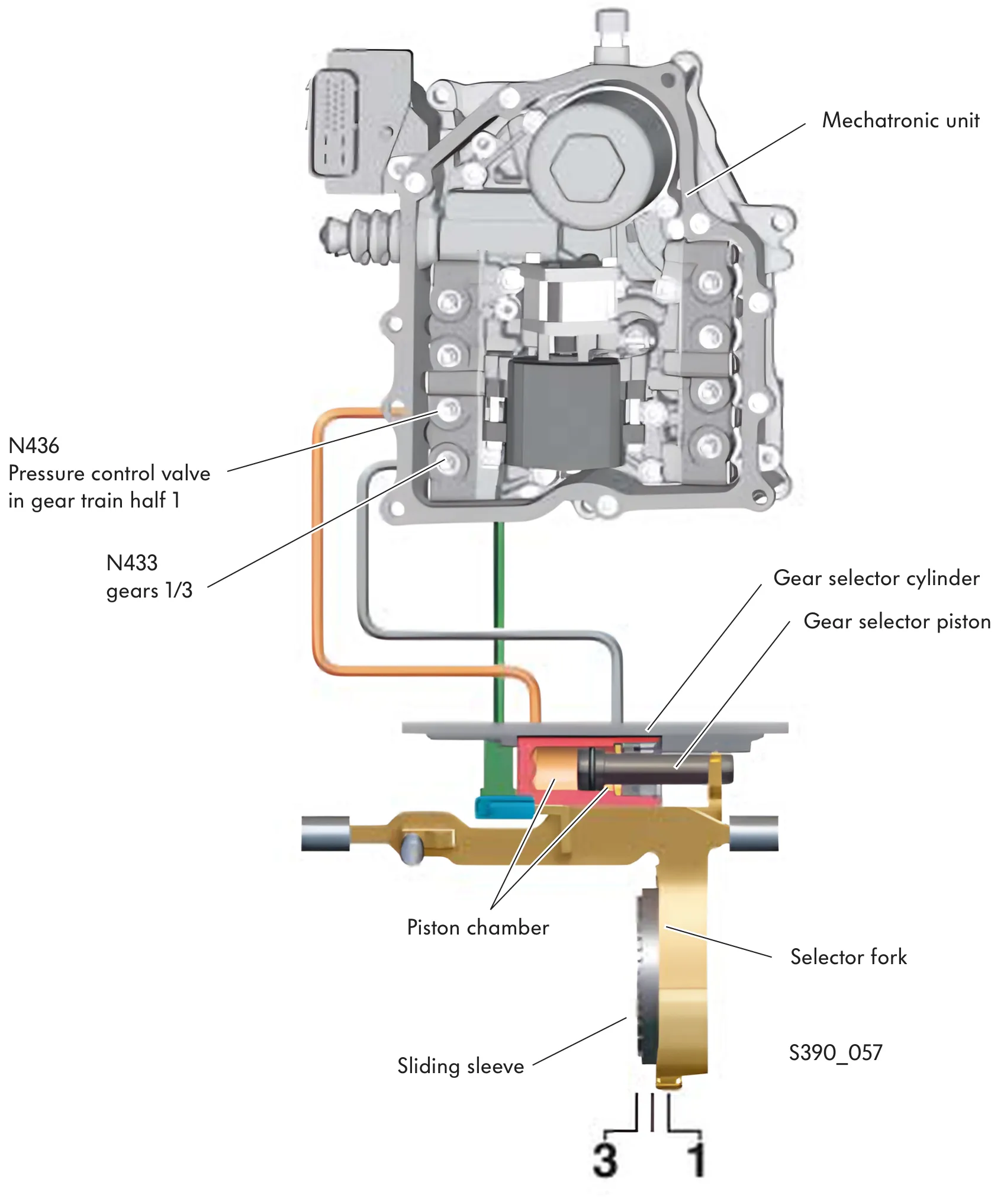
Changing to 1st gear
To change to 1st gear, the gear selector valve increases the oil pressure in the left piston chamber. As a result of this, the gear selector piston is pushed to the right. As the selector fork and the sliding sleeve are connected to the gear selector piston, they also move to the right. Due to the sliding sleeve's movement, 1st gear is engaged.