SSP 390 The 7-speed Double-clutch Gearbox 0AM
Clutch actuators
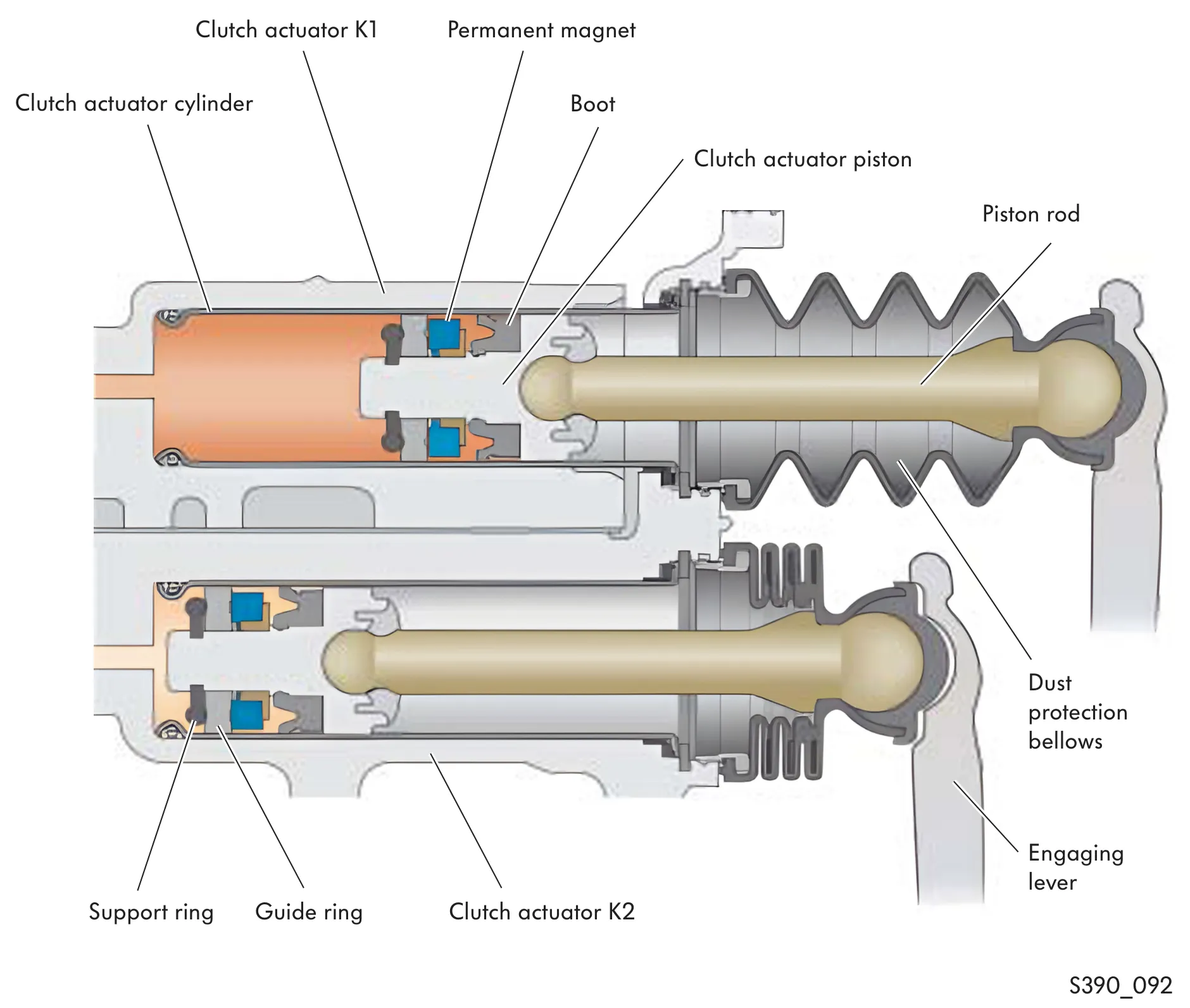
Clutches K1 and K2 are actuated hydraulically. To achieve this, the mechatronic unit contains a clutch actuator for each clutch.
A clutch actuator consists of a clutch actuator cylinder and a clutch actuator piston. The clutch actuator piston actuates the clutch engaging lever. The clutch actuator piston is equipped with a permanent magnet, which is required by the clutch travel sender to detect the piston position. To prevent detection of the piston position from being impaired, the actuator cylinder and the actuator piston must not be magnetic.
Clutch operation
To actuate the clutches, the mechatronic electronic control unit actuates the solenoid valve
- N435 valve 3 in gear train half 1 for clutch K1 and
- N439 valve 3 in gear train half 2 for clutch K2.
How it works
Actuation of K1 is shown here as an example.
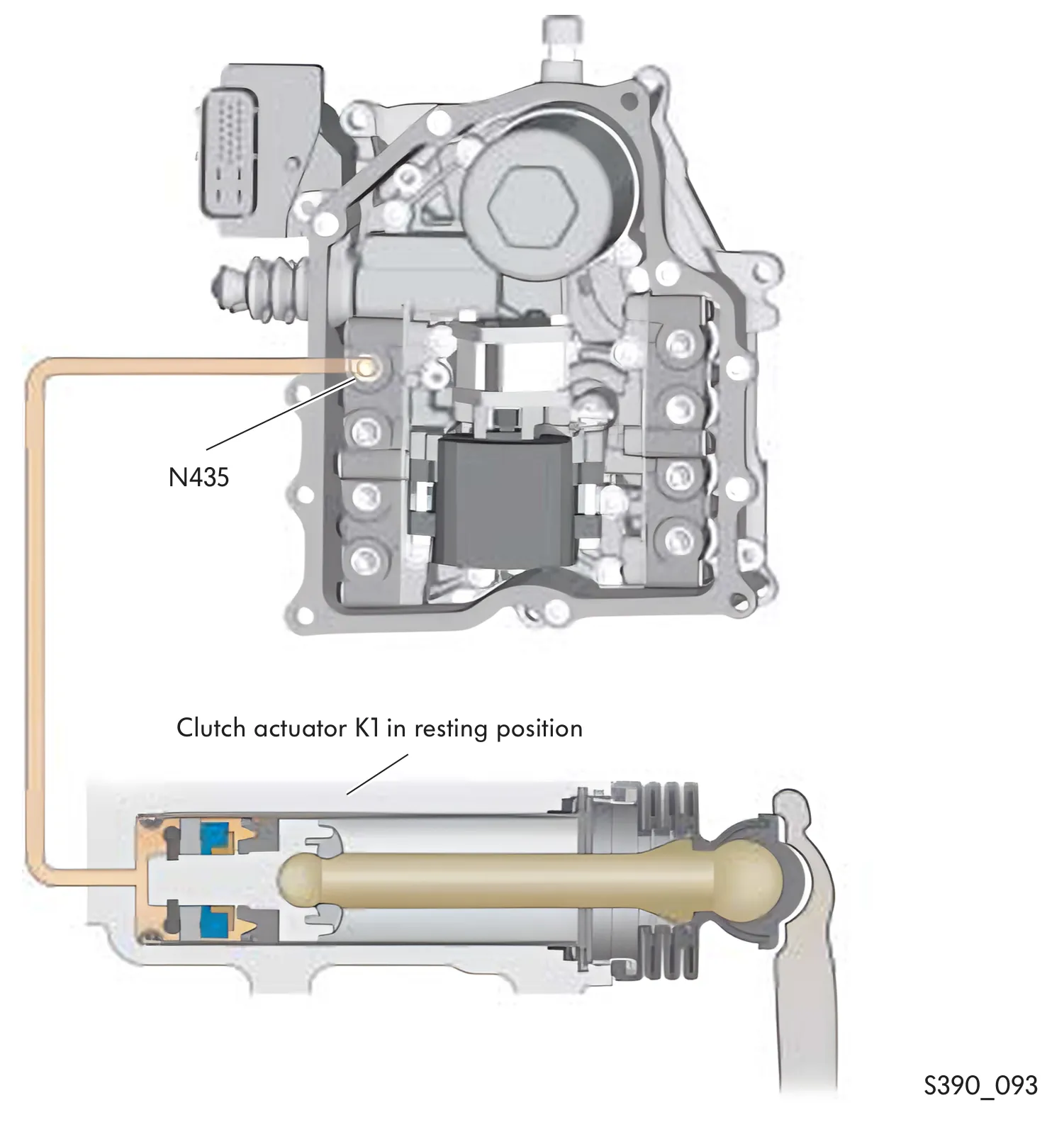
Clutch not actuated
The clutch actuator piston is in the resting position. The solenoid valve N435 is open in the return flow direction. The oil pressure from the gear train half pressure control valve N436 flows into the mechatronic unit's oil reservoir.
Clutch actuated
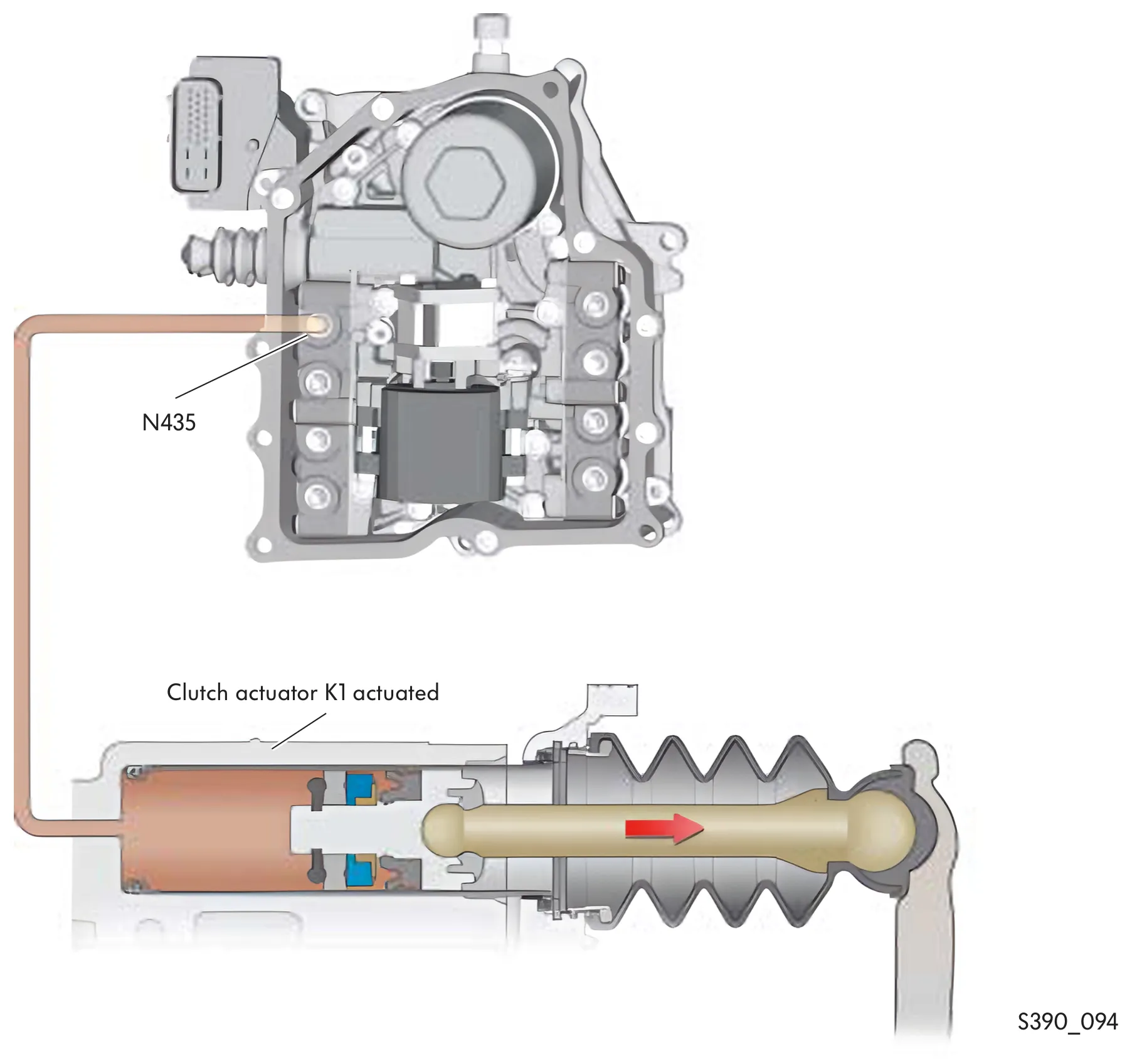
If clutch K1 is to be actuated, the solenoid valve N435 is actuated by the electronic control unit. When actuated, it opens the oil channel to the clutch actuator, and oil pressure is built up at the rear of the clutch actuator piston. The clutch actuator piston moves and thereby actuates the K1 clutch engaging lever. Clutch K1 is closed. The control unit receives a signal regarding the precise position of the clutch via clutch travel sender 1 G617.
Clutch slip, the speed difference between the gearbox input speed and drive shaft speed, is achieved by solenoid valve N435 by controlling the oil pressure between the clutch actuator and the return flow.