
Brake systems · Brakes – mechanism · Repairing front brakes
Removing and installing brake pads, brake caliper FN 3
Special tools and workshop equipment required

- Torque wrench - V.A.G 1331-
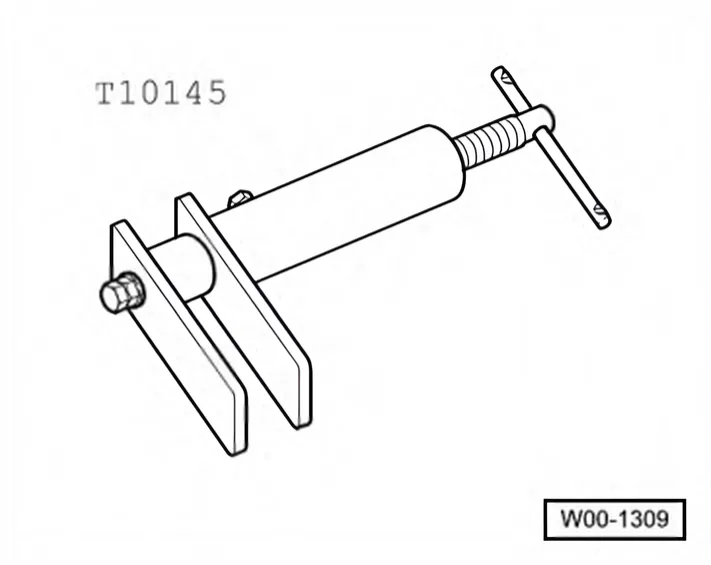
- Piston resetting appliance - T10145-
1.5.1 Removing
Mark brake pads/linings when removing if they are to be reused. Fit in same position when installing, or braking will be uneven.
- Remove wheels.
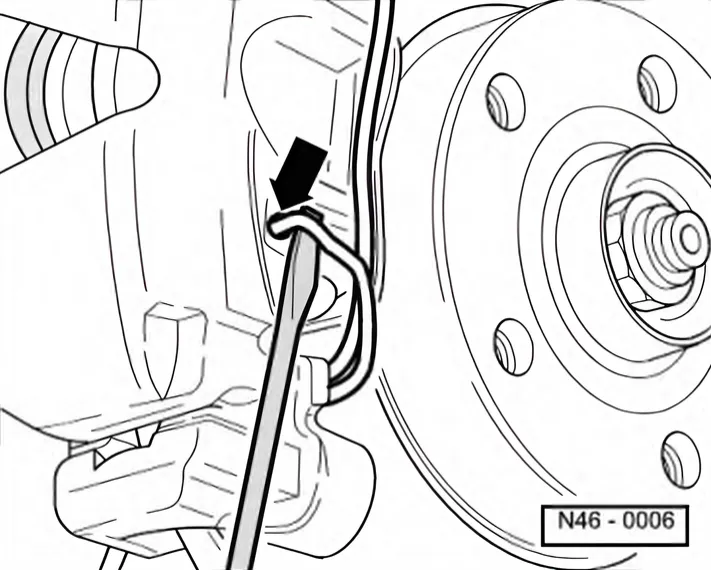
- Lever brake pad retaining spring out from brake caliper -arrow- with a screwdriver and remove.
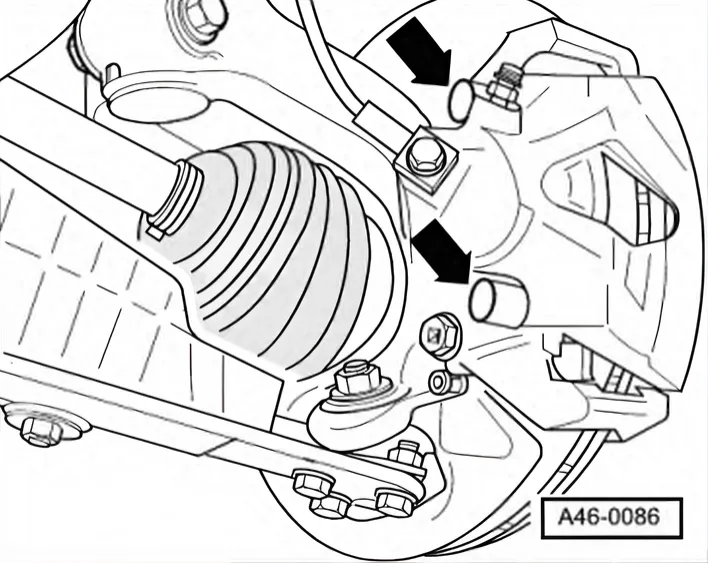
- Remove cover caps -arrows-.
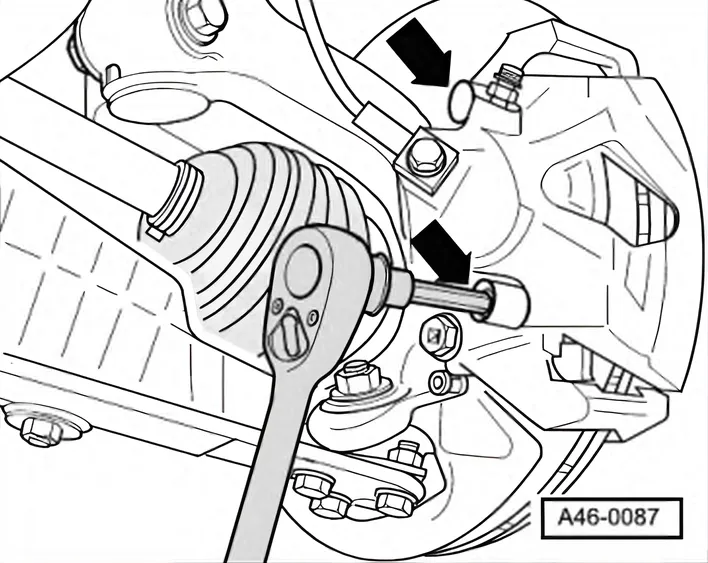
- Unscrew both guide pins -arrows- and remove from brake caliper.
- Remove brake caliper and secure with wire so that weight of brake caliper does not strain or damage brake hose.
- Take brake pad out of brake caliper or from brake carrier.
Cleaning:
- Thoroughly clean brake carrier and contact surfaces for brake pads and remove corrosion.
- Clean brake caliper, in particular the bonding surface for the brake pad. It must be free of adhesive and grease residues.
Use only methylated spirits for cleaning the brake caliper housing.
1.5.2 Installing
Before pressing piston back into cylinder with piston resetting tool, draw off brake fluid from brake fluid reservoir. Otherwise, particularly if reservoir has been topped up, fluid will overflow and cause damage.
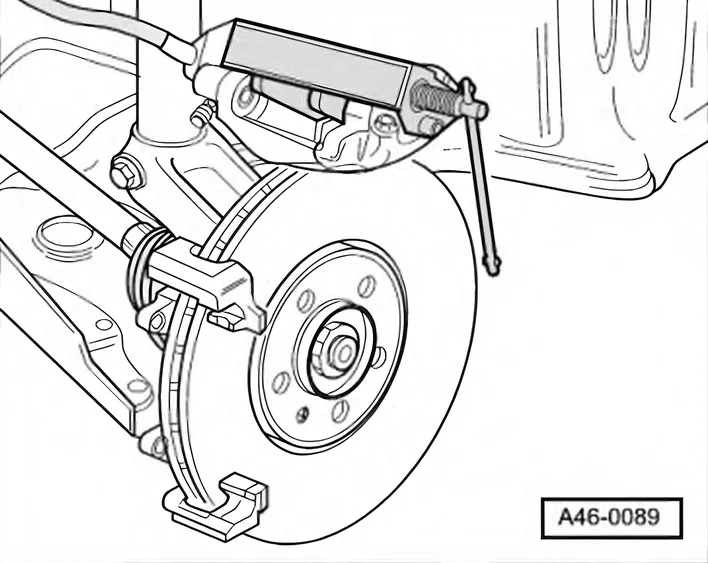
- Press piston back.
- Pull protective foil off outer brake pad backplate.
- Fit outer brake pad to brake carrier.
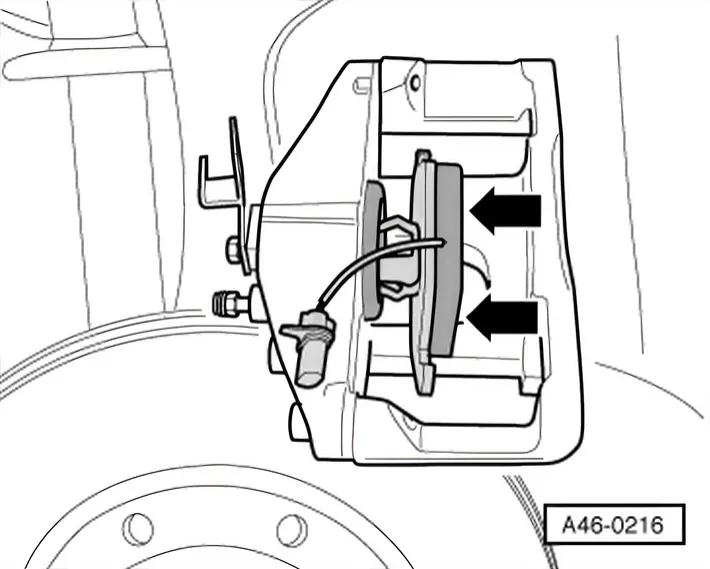
- Insert inner brake pad with retaining spring into brake caliper (piston).
When positioning the brake caliper, ensure that the brake pad does not stick to the brake caliper housing before it is positioned correctly.
Do not damage adhesive surface.

- Bolt brake caliper to brake carrier with both guide pins -arrow-.
- Fit both cover caps.
- Insert retaining spring into brake caliper.
- Fit wheels.
Specified torque of wheel bolts ⇒ Running gear, axles, steering; Rep. gr. 44; Specified torques of wheel bolts.
Specified torque:
Guide pin to brake carrier
30 Nm