
Body
Body structure
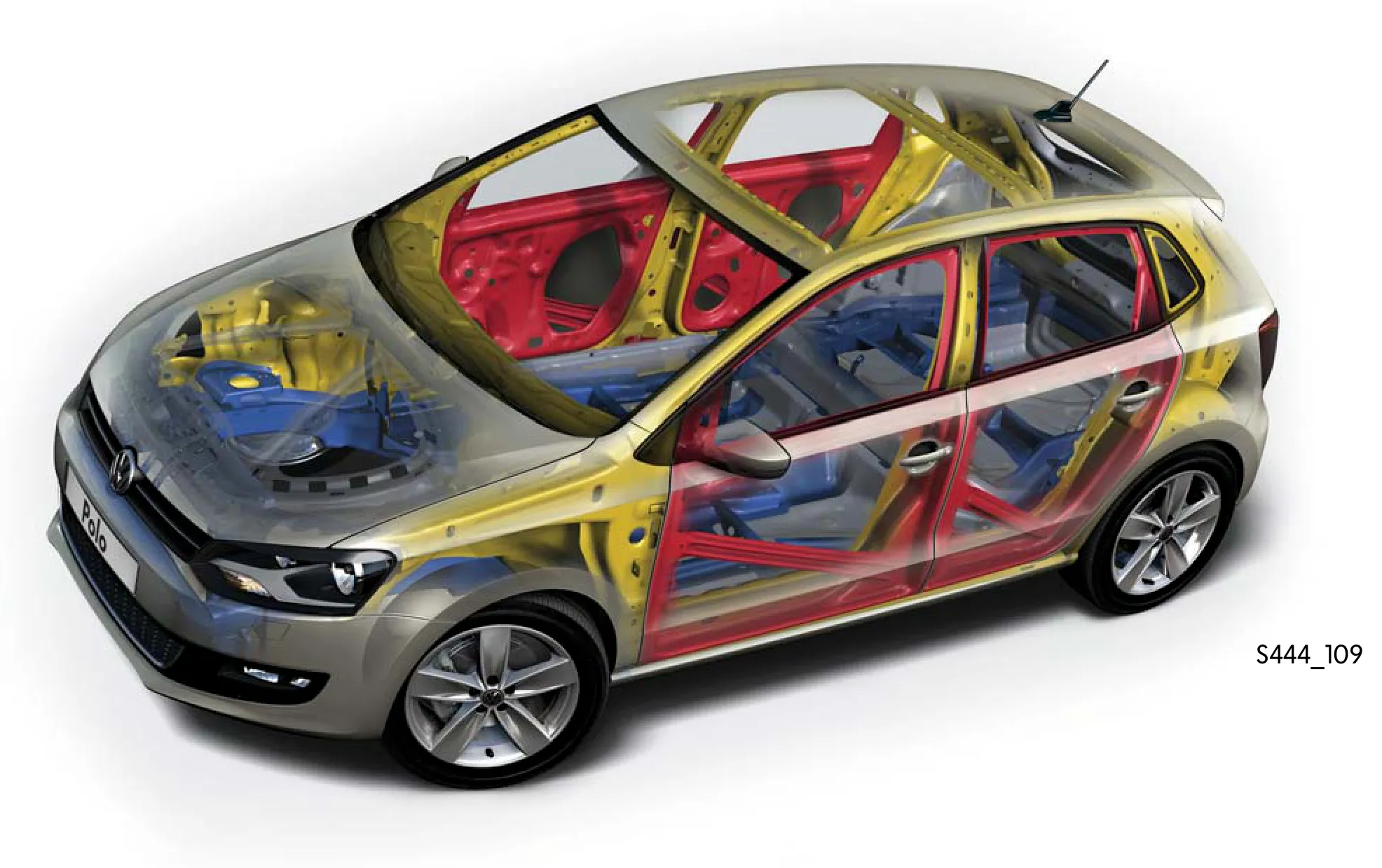
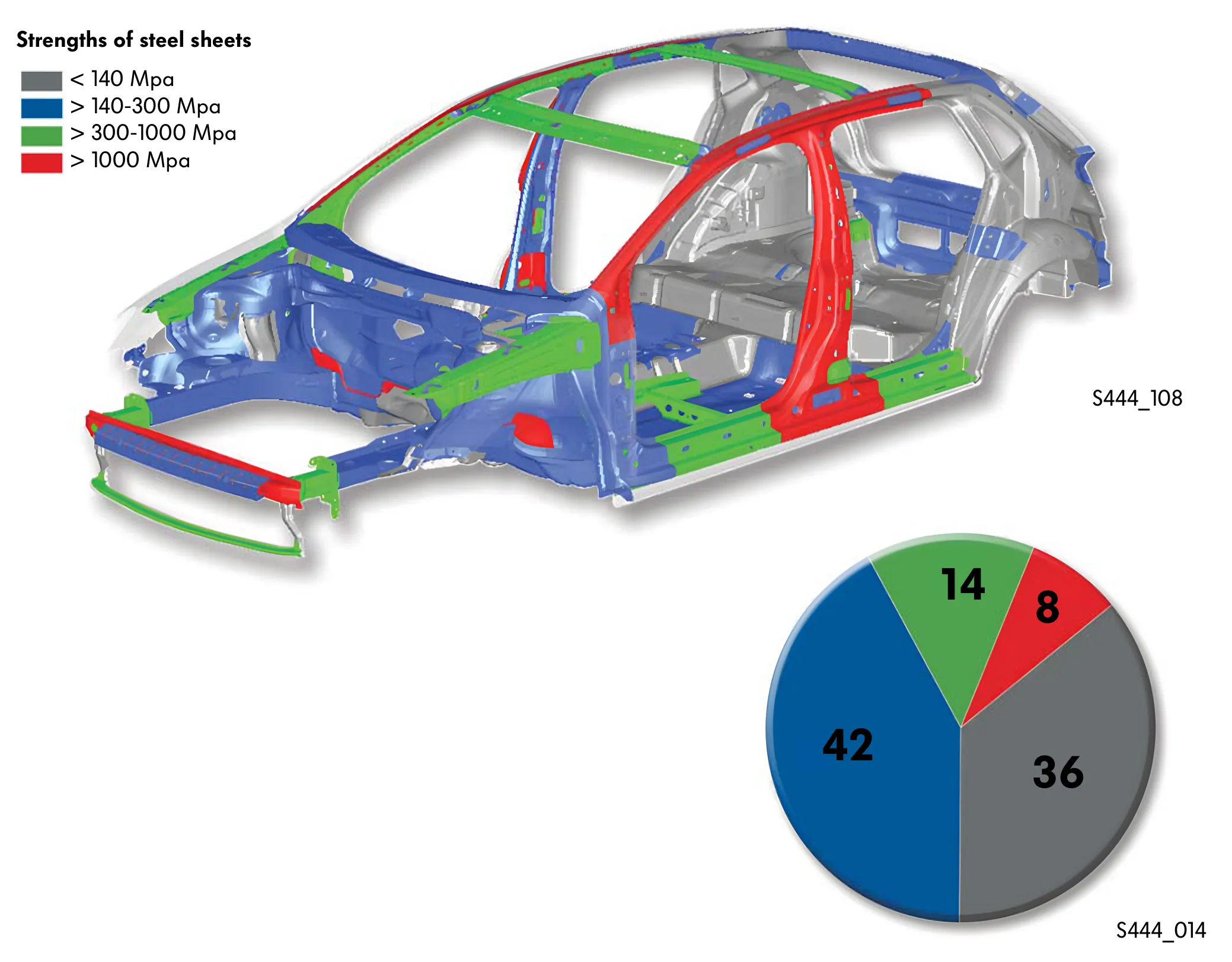
High- and ultra-high-strength steels are used to meet the requirements for a stable vehicle structure. For the first time, the B-pillar on the Polo is made from die-quenched steel as it is on the Golf, for example. This has increased the strength of the passenger cell without gaining weight. The passenger cell represents the survival space for the occupants.
Frontal crash
The impact cross member is made from die-quenched steel to achieve a stable connection between the front longitudinal members. As a result, both longitudinal members absorb the energy in a front collision.
Pedestrian protection
Deformation elements in the area of the impact cross member ensure pedestrian protection.
Side collision
In a side collision, the B-pillar and the doors are the most important structural components which together absorb the main load in a side collision.
Die-quenched steels are used to obtain an efficient construction in terms of weight and component size. This allows the highest level of occupant protection without additional reinforcements. Being the central load distributor, the B-pillar transfers the forces acting on the sill and roof frame. The seat cross member ensures additional stability in the passenger cell by providing support against the opposite side of the vehicle. In conjunction with the doors, which are reinforced with diagonal impact members, the crash energy is reduced at an extremely high force level.
In this way, both low penetration speeds and also small penetrations into the passenger compartment are achieved.
Rear-end collision
The rear-end crash requirements for the vehicle relate to the stability of the passenger cell and the rear-end structure.
The rear-axle geometry, the shape of the tank filler neck and the position of the tank in front of the rearaxle mounting protect the fuel system in a rear-end collision.
Doors
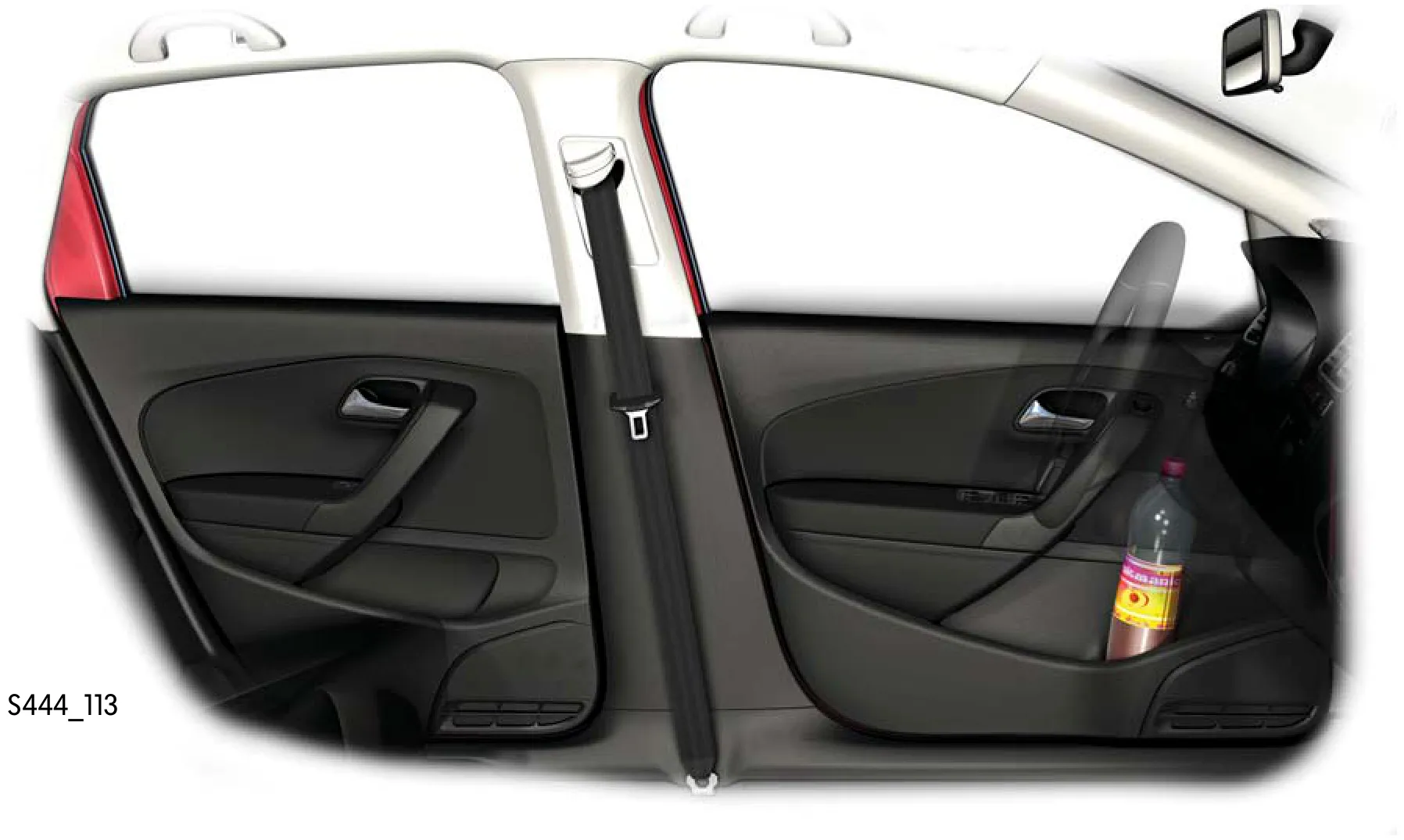

The basic door unit has been designed as a single part. Impact members are fitted in the doors.
The window regulator can be accessed once a plastic cover is removed.
Front light concept
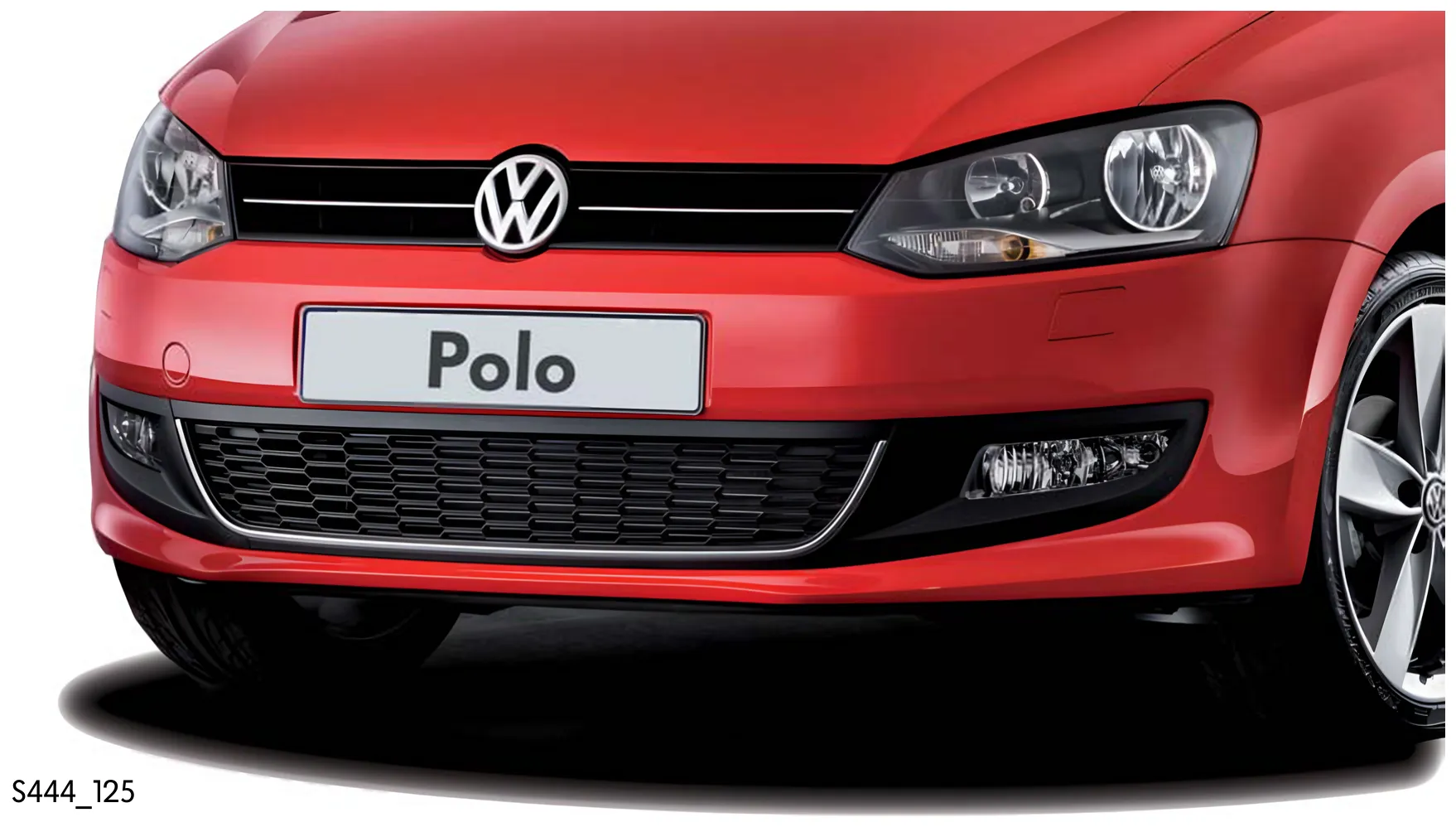
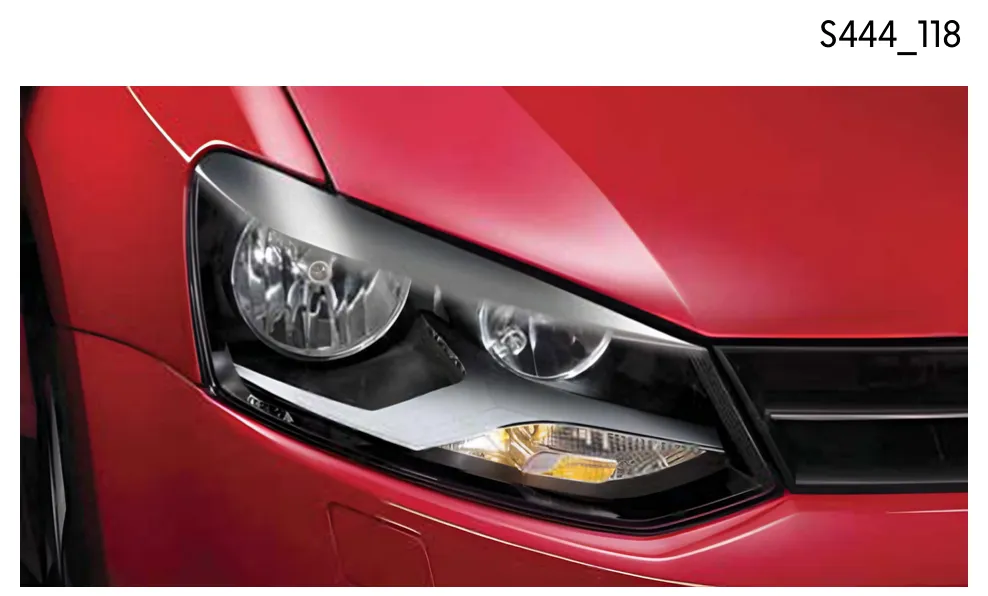
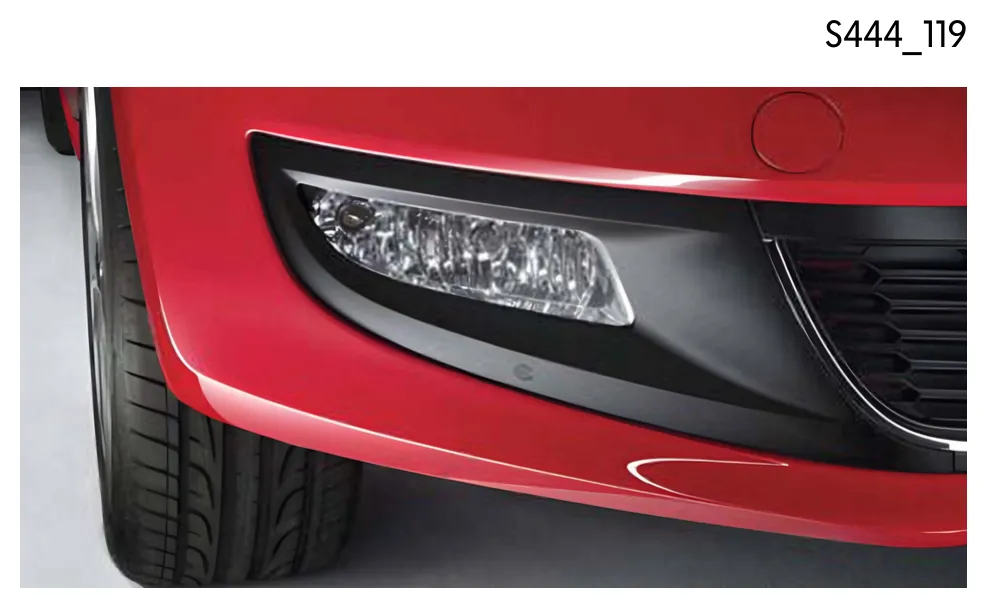
The front light concept of the Polo 2010 has two light modules on each side of the vehicle:
- The headlight module and
- an additional front light module in the front spoiler.
The headlight module contains the turn signal, side light, dipped beam light and main beam light.
The additional front light module contains the fog light and the optional daytime running light.
H7 headlight module
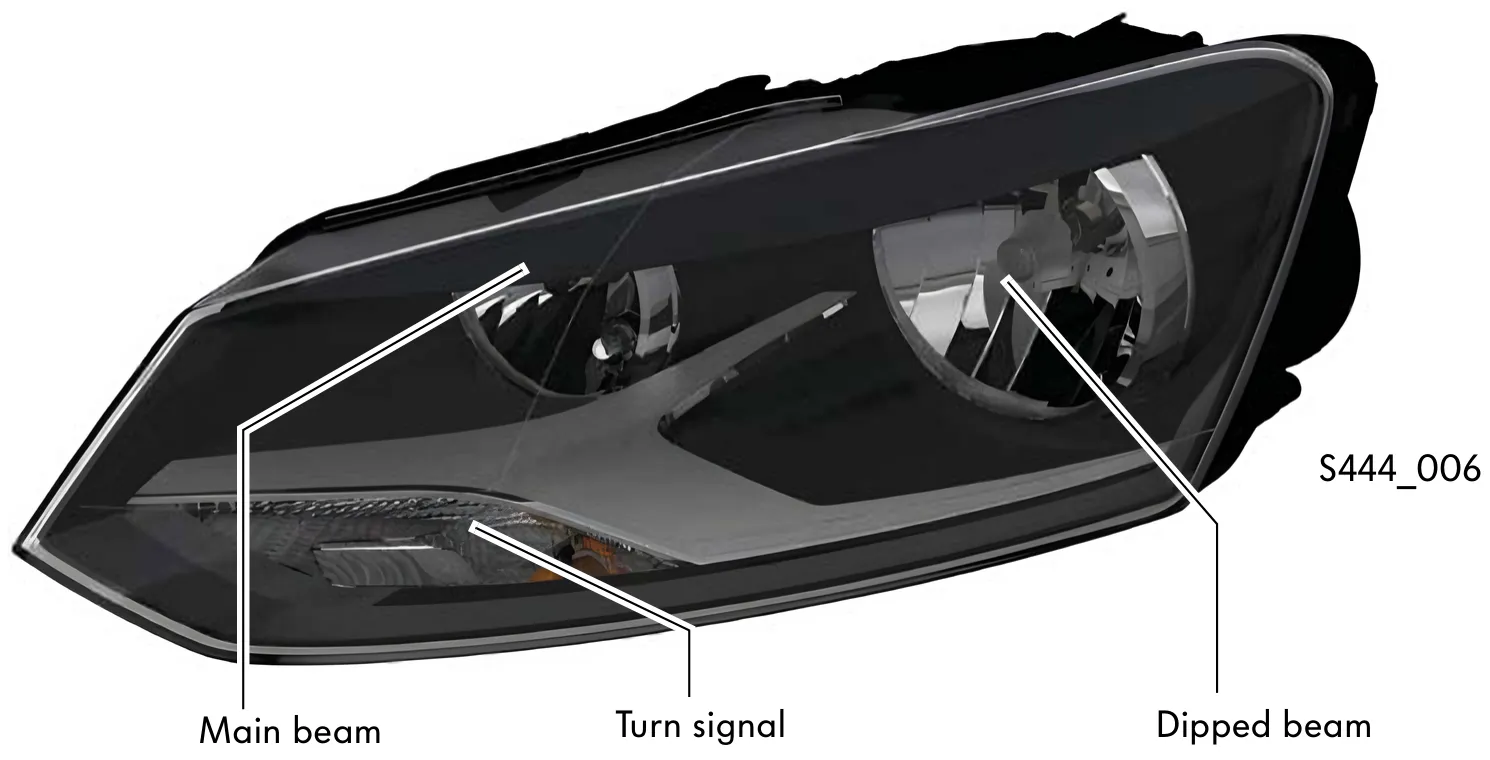
The headlights on the Polo 2010 can be removed with the vehicle’s tool set. This is necessary as the bulbs can only be replaced when the unit is removed. H4 headlights are included in the standard equipment. An H7 headlight with separate reflectors for dipped beam and full beam is available as an option. In Comfortline and above, the H7 headlights come as standard.
Functions of the H7 headlight
Side lights
When the side lights are on, only the side light bulb is illuminated.
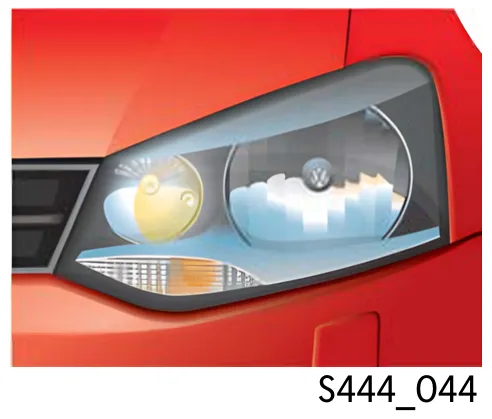
Dipped beam
When the dipped beam is switched on, the dipped beam bulb and the side light bulb are illuminated.
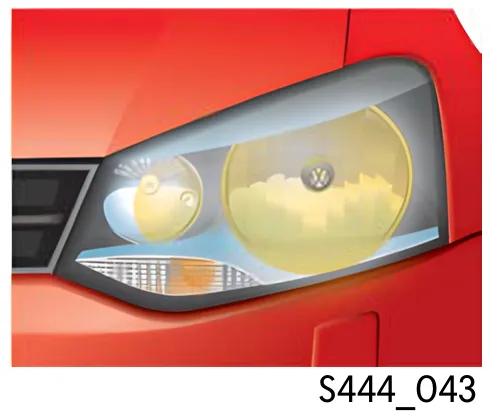
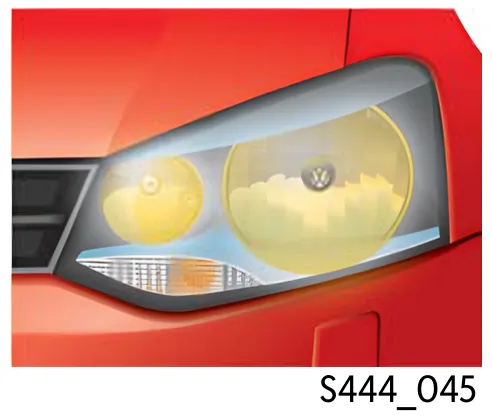
Main beam
When the full beam is switched on, the full beam bulb, the dipped beam bulb and the side light bulb are illuminated.
Additional front light module
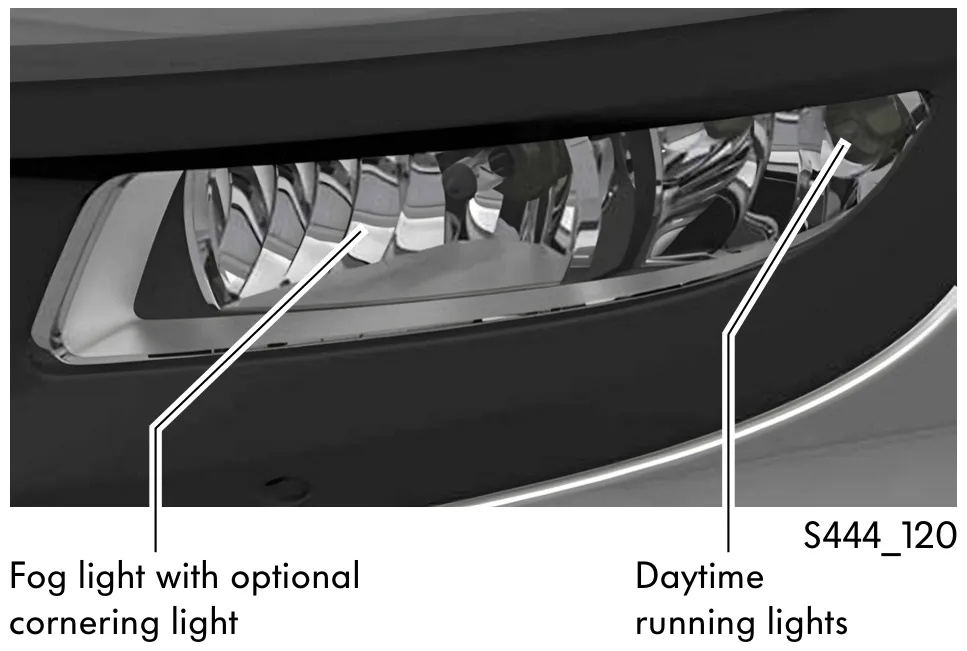
In the additional front light module, the following lights can be fitted:
- Fog light with optional cornering light
- Daytime running lights
Rear lights
The rear lights on the Polo 2010 have been designed as one unit. The tail light, brake light, turn signal, rear fog light, reversing light and reflector are integrated in this unit. The rear fog light is in the left-hand rear light and the reversing light is in the right-hand rear light.
On the tail light, the light beams from a 5W bulb are aligned parallel via a reflector and diffused widthways by a vertical tubular-look pattern on the inside of the intermediate lens.
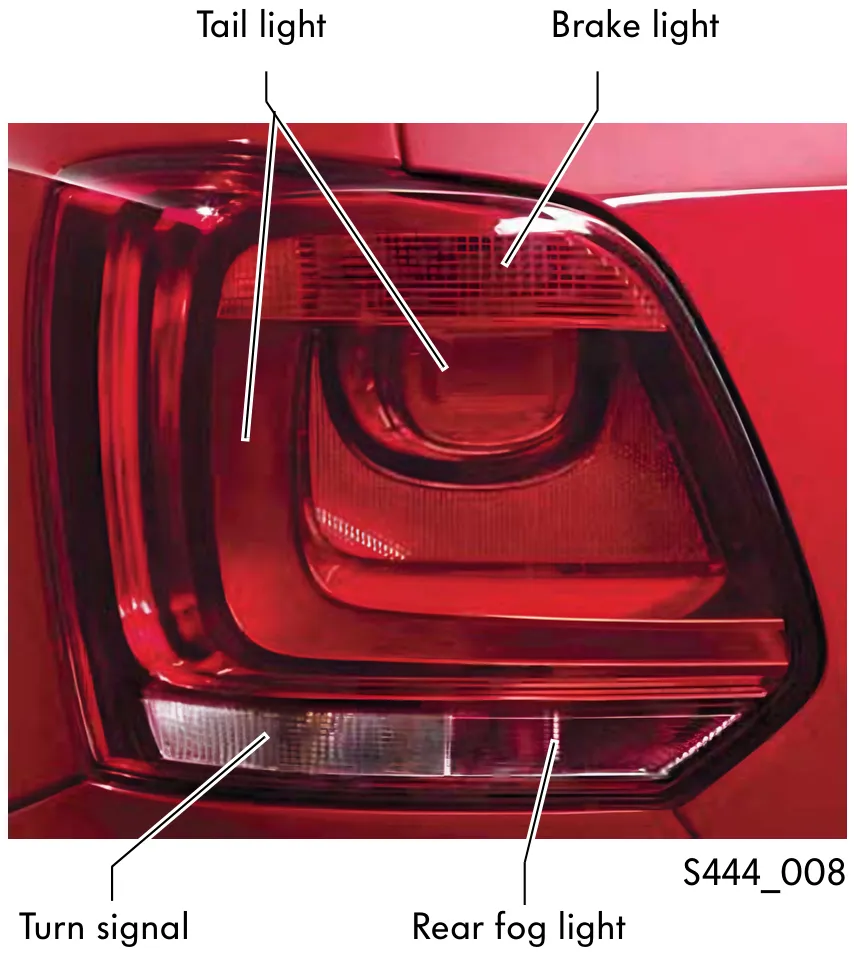
Beam path of tail light
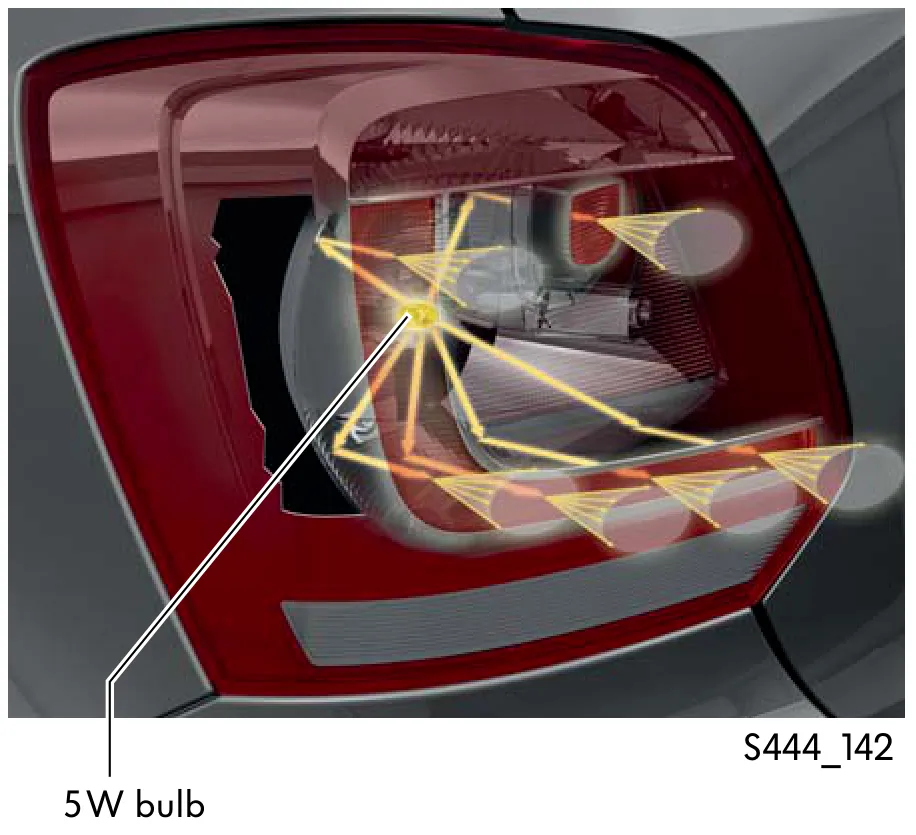
You remove the complete tail light to replace the bulbs. It is secured by a central nut on the side.
Interior
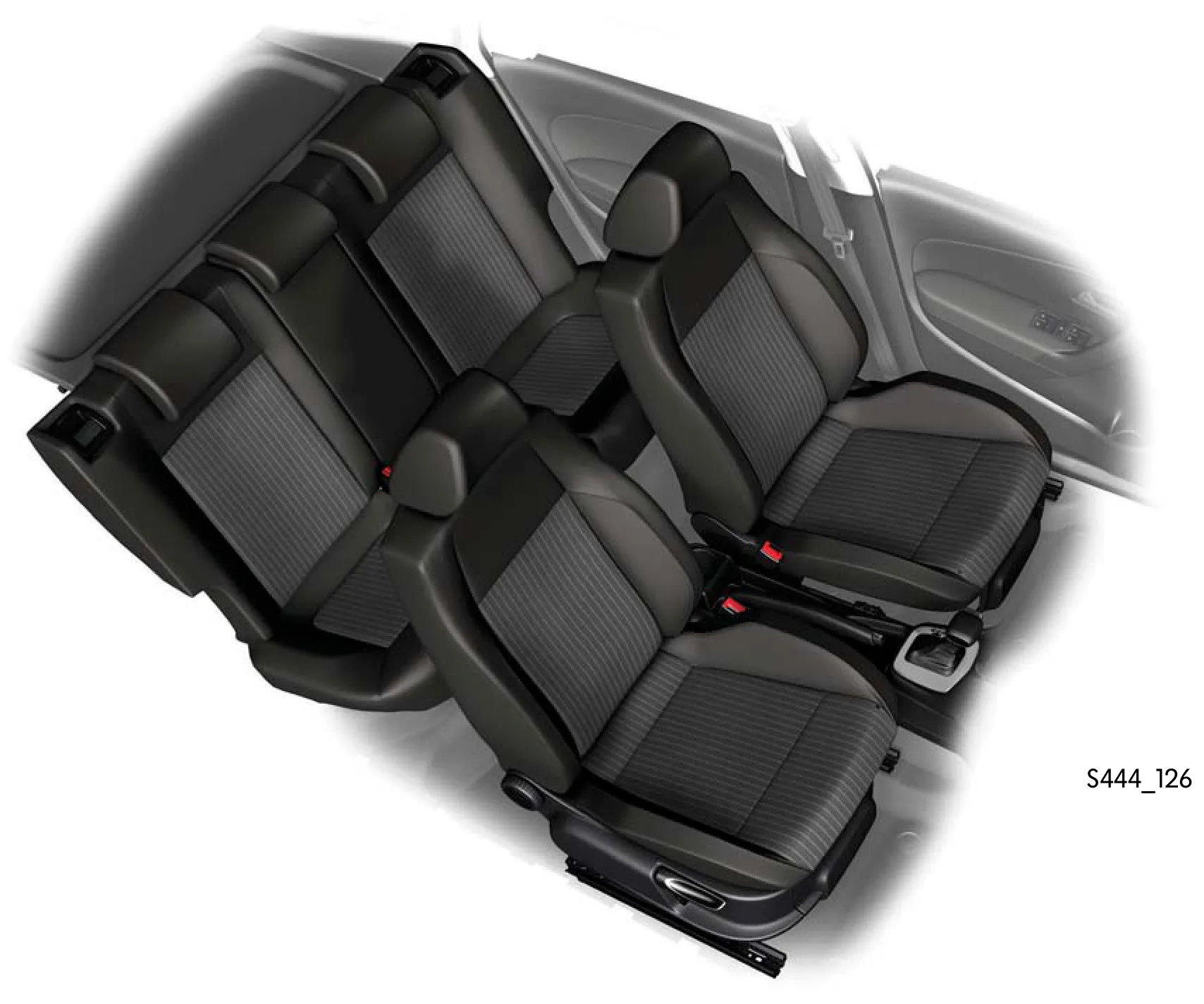
The front seats
Three types of seat with form-fitting cushions are available for the new Polo depending on the equipment line. The Trendline, Comfortline and Highline variants are distinguished by the cushion contours, the seat cover materials and the stitching types and patterns.
In the Comfort and Highline versions, pockets on the back of the front seats and height-adjustable front seats come as standard. Drawers under the seat base are standard in the Highline versions.
An optional two-level seat heating system, which responds very quickly, can be ordered for the front seats. From Comfortline, an easy-entry system with memory function comes as standard on 2-door models.
Rear seats
The Polo 2010 has a non-split and folding rear seat bench as standard. There is an optional 40% / 60% split version.
In conjunction with a variable load floor, both rear seat systems can be folded down to form a flat load floor thanks to a raised pivoting point.
Luggage compartment
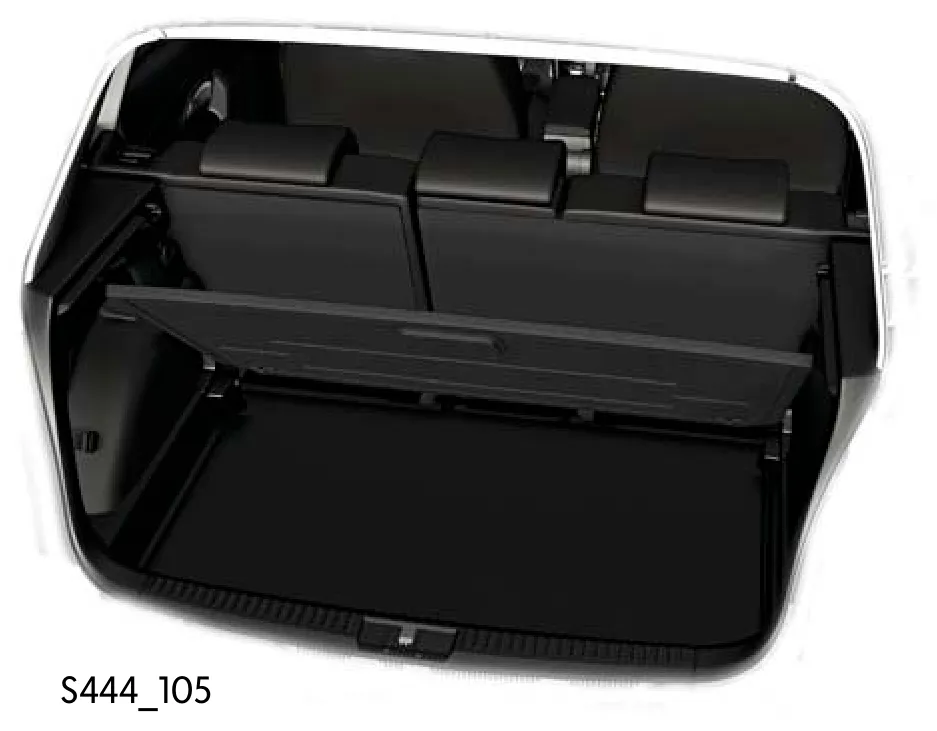
A variable load floor is available as an option. The lower position allows the maximum stowage volume. The upper position creates a flat load floor including an additional facility for storing a range of items under the load floor.
Storage compartment for warning vests
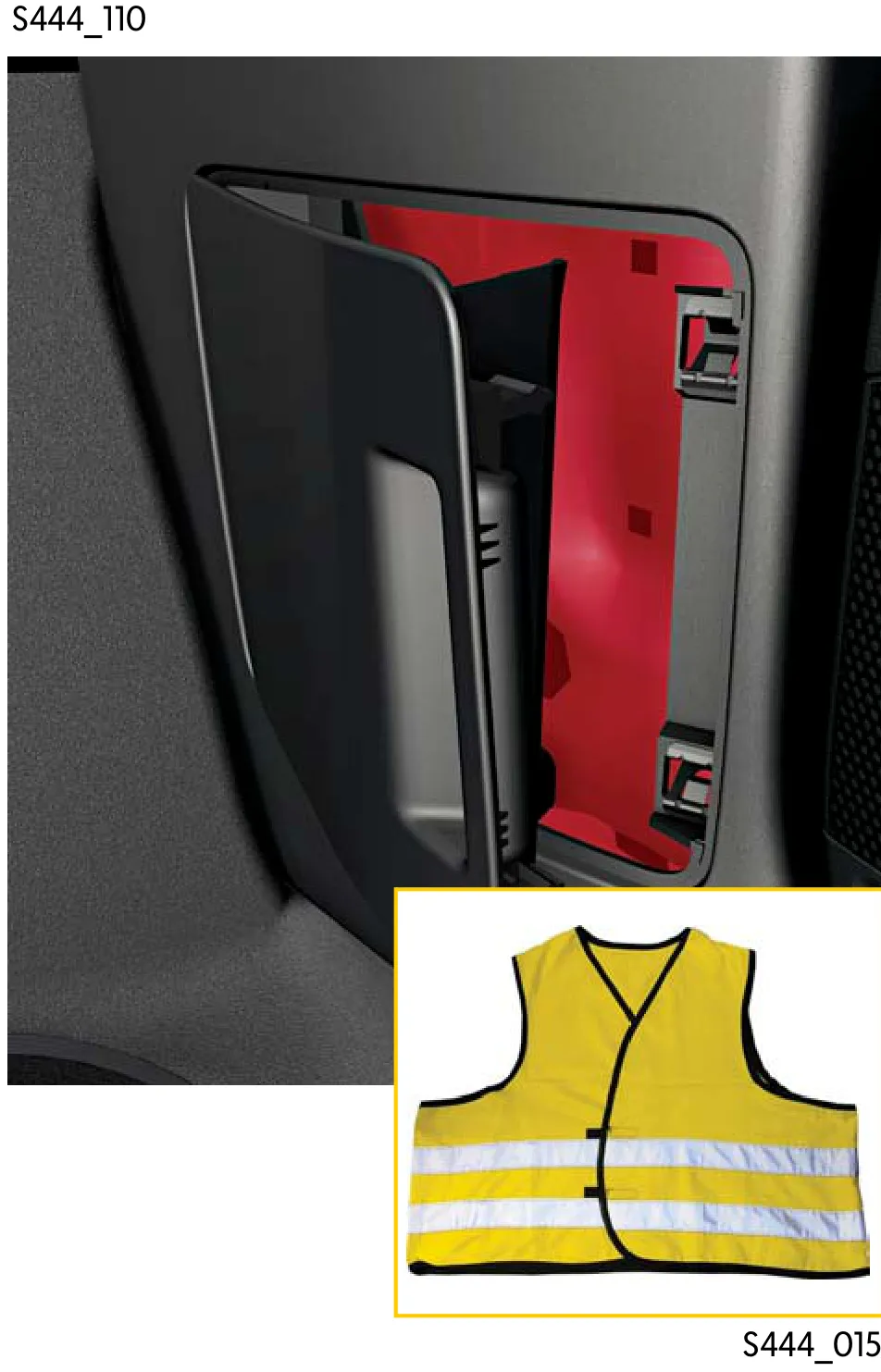
A fold-out compartment is provided on the passenger-side in the lower area of the A-pillar panelling for storing warning vests.