
Chassis
Overview of chassis
The chassis of the Polo 2010 is essentially based on the chassis of the Polo 2004. It has a 30mm greater track width compared with the previous model. The Polo can be equipped with normal or sports suspension.
There are new features in the areas:
- Front axle
- Steering column
- Brake servo

- ESP Bosch 8.2 with integrated sensor cluster
- McPherson strut front suspension
- Electro-hydraulic power steering system
- 10” brake servo for left-hand drive vehicles, 7”/8” tandem brake servo for right-hand drive vehicles
- Tyre mobility set (standard)
- Torsion beam rear axle
- New steering column concept (sheet metal steering column)
Front axle
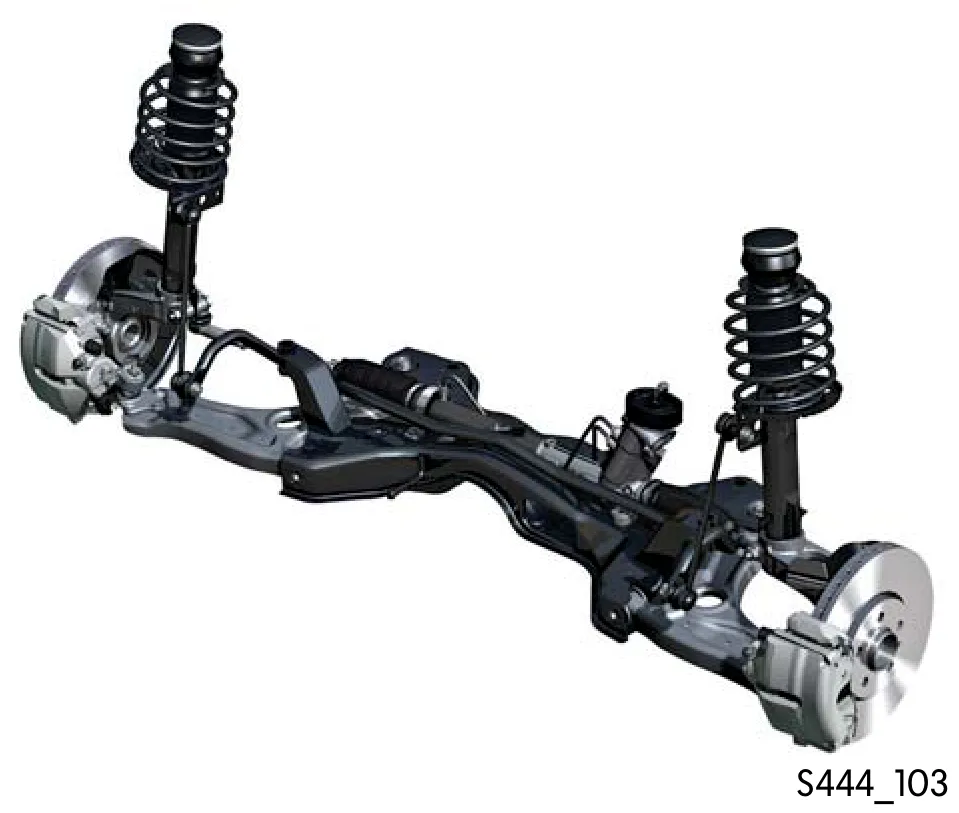
The front axle uses McPherson strut suspension with improved kinematics for the new Polo.
The track width has been increased by 30mm compared with the predecessor thus improving the driving dynamics potential. Shifting the wheels 5mm to the front gives a larger caster angle and an increased caster offset. The result is greater straightline stability.
By optimising the manufacturing technology and the selection of material for the subframe and transverse link, it was possible to reduce weight, but maintain the same axle load.
Rear axle
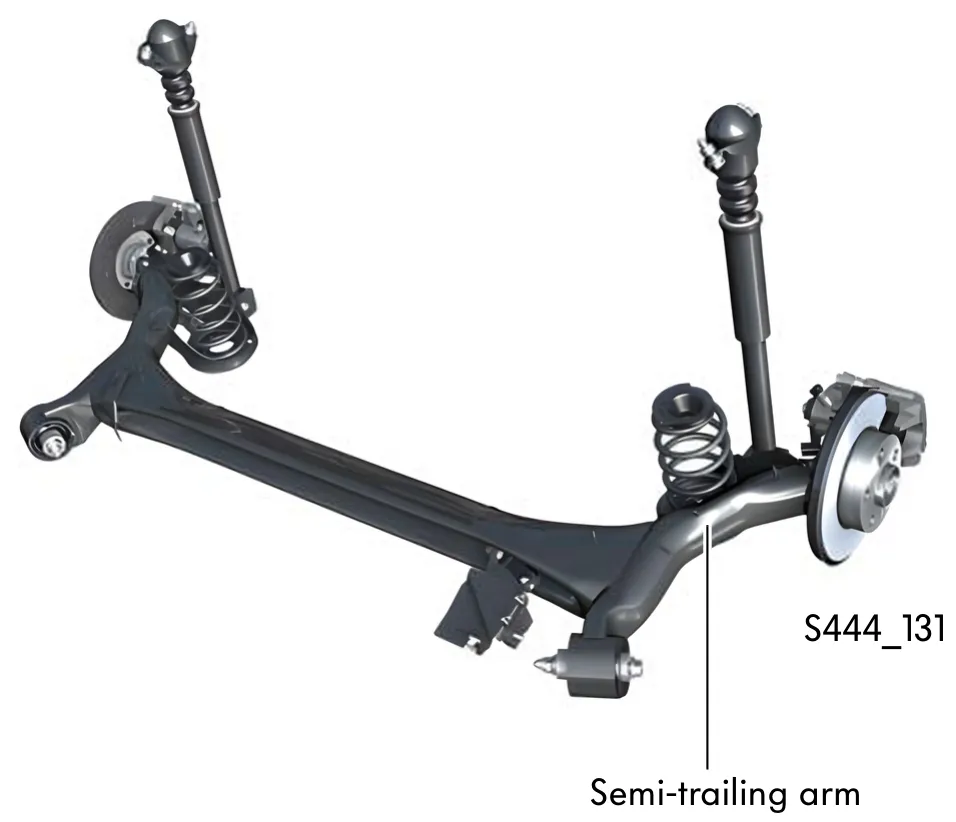
The design principle of the torsion beam axle has been taken from the previous model.
The track width has been increased 30mm by increasing the offset of the semi-trailing arm.
Steering
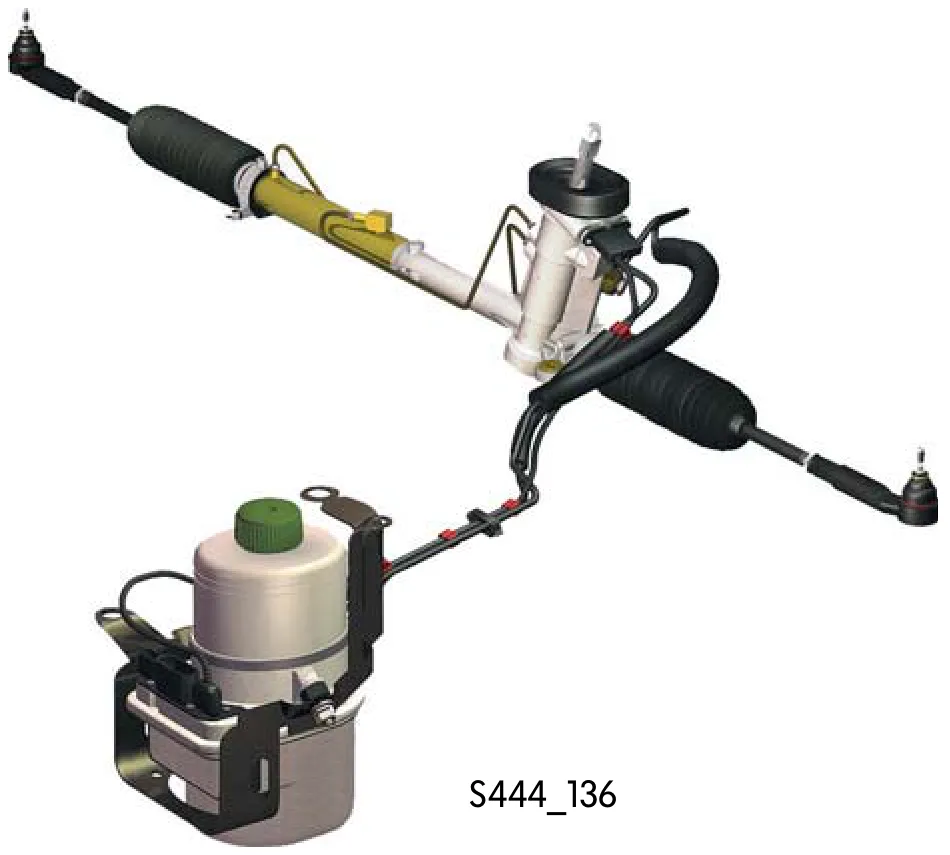
The Polo 2010 is equipped with electrohydraulic power steering like its predecessor. This has been adapted to the new front axle.
Steering column
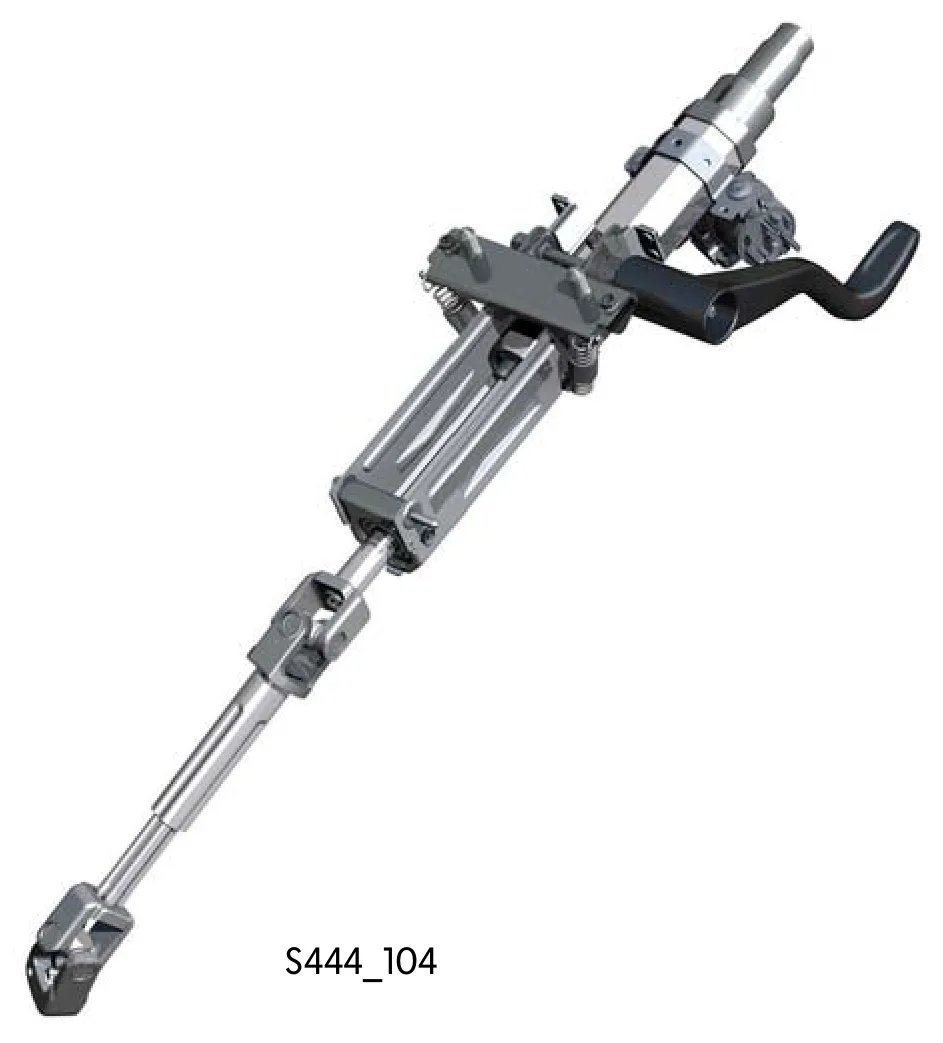
A new steering column has been developed to increase the crash safety and score 5 stars in Euro NCAP.
The new steering column has the following features:
- Console and various other parts made from steel sheet
- Side adjusting lever
- Infinite reach adjustment with an adjustment range of 45mm
- Height adjustment using teeth (12 adjustment positions) with an adjustment range of 45mm
Adjustment mechanism
The steering column is clamped in position by a curved disc. There is a spring-loaded toothed plate under the curved disc. This design always guarantees tooth-in-tooth locking when you clamp the steering column in position.
In the starting position, the lever is at the top and the teeth are engaged.
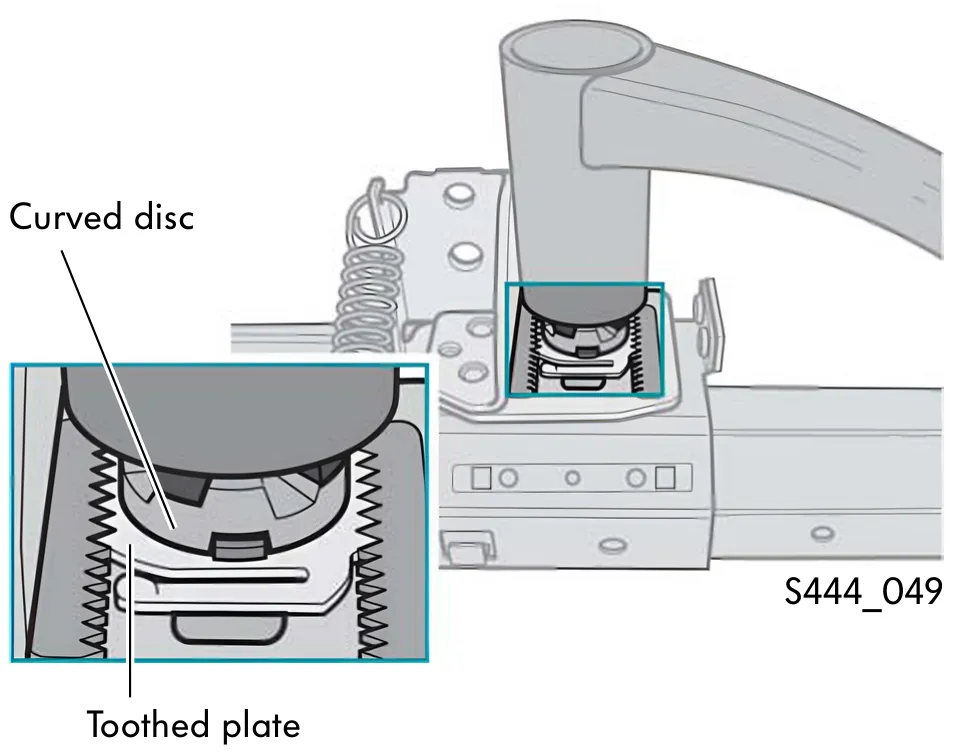
If you move the lever downwards, the toothed plate is disengaged by the pressure of the spring.

You can now adjust the steering wheel position.
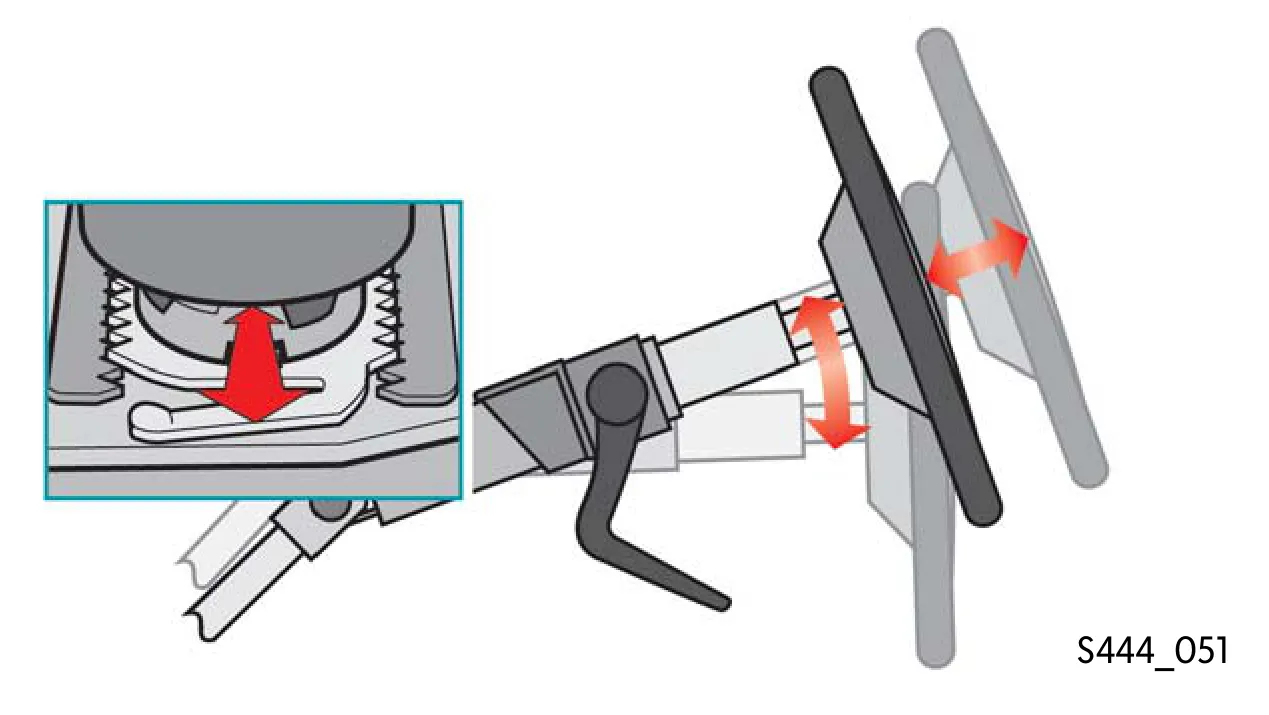
If you move the lever upwards, the teeth mesh into each other again and lock the steering wheel in the desired position.
Brakes
ESP system
The ESP system from Bosch 8.2 is used for the first time in the Polo.
Except for the familiar systems like ABS, ESP, EDS and ASR, the control unit also has the following functions:
- Hill start assist
- Hydraulic brake assist system
- Tyre pressure monitor, TPM (optional)
- Electronic differential lock EDL (optional)

ESP unit
A pressure sensor is contained in the new ESP unit.
The sensor cluster, which contains the yaw rate sensor as well as the longitudinal and lateral acceleration sensors, is not needed. These sensors are now integrated on the circuit board in the ABS/ESP control unit.