
Running gear, axles, steering · Wheels, tyres, vehicle geometry · Wheels, tyres
Wheel change
⇒ 1.4.1 Wheel change, protecting wheel centring seat against corrosion
⇒ 1.4.2 Wheel change, installation requirements
⇒ 1.4.3 Wheel change, installation instructions for wheel change
⇒ 1.4.4 Wheel change, wheel installation
1.4.1 Wheel change, protecting wheel centring seat against corrosion
Applies to alloy and steel wheels
When changing a wheel, wheel centring seat should be waxed using wax spray to prevent corrosion between wheel centring seat and wheel rim ⇒ Electronic parts catalogue “ETKA”.
- Remove wheel.
- Thoroughly clean wheel centring seat on wheel hub and the centring ring of the wheel rim.
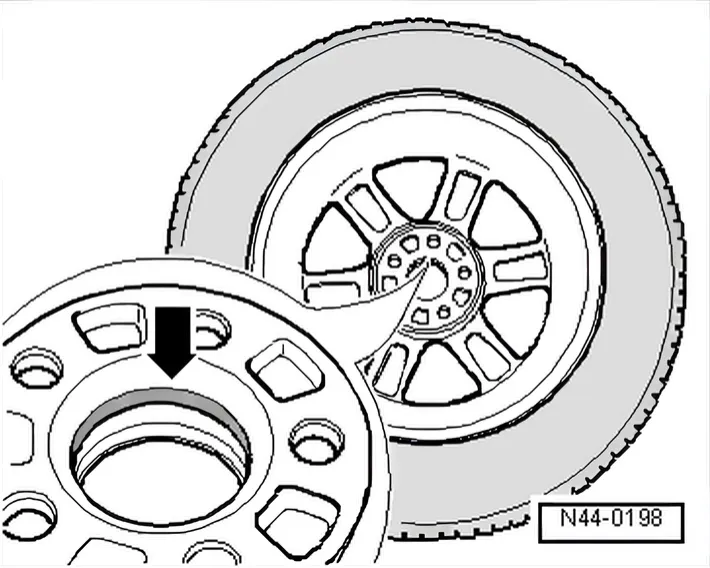
- Apply wax to centring area -arrow- with a brush.
Ensure that only centring ring -arrow- but not contact surface of wheel rim has been waxed. Otherwise, the brakes will be soiled, which would reduce the braking efficiency.
- Install wheel and tighten bolts or nuts ⇒ 1.5 Specified torques for wheel bolts.
1.4.2 Wheel change, installation requirements
Warming cold tyres to minimum fitting temperature
Warming times:
- Tyres with a temperature of above 0°C must be kept at least at 19℃ for at least 2 hours.
- Tyres with a temperature of below 0°C must be kept at least at 19℃ for at least 2.5 hours.
Warming recommendations:
- If possible, tyres should be stored in the workshop 1 day before they are fitted (order preparation).
- Store on an insulated base, pallet or on a similar surface raised from the floor.
- Position the tyres individually to allow the warm air to “circulate” around them effectively.
- Wipe off condensation
- Never heat with a radiator or hot air blower!
1.4.3 Wheel change, installation instructions for wheel change
6C 2014–2017
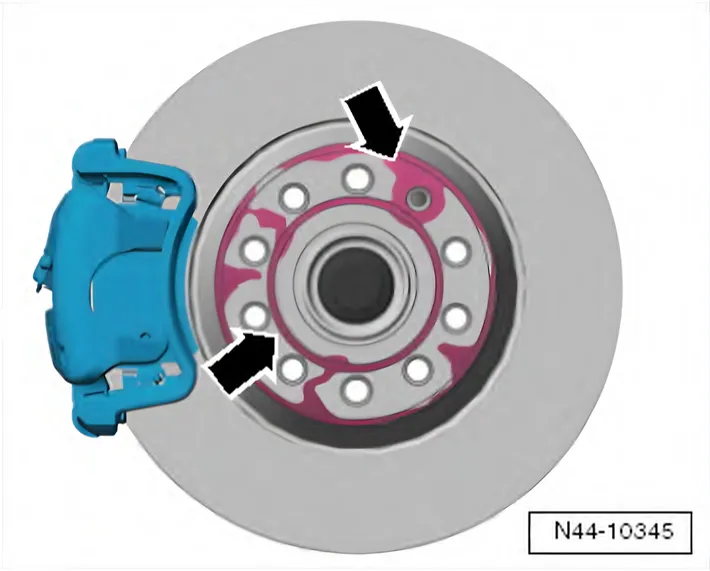
- Check to ensure that contact surfaces -arrows- on brake disc are free of corrosion and dirt.
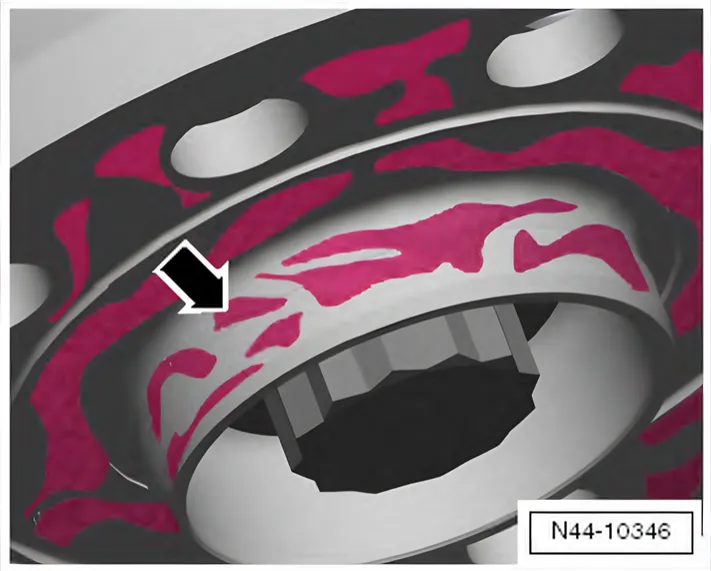
- Check to ensure that contact surface -arrow- on centring seat of brake disc are free of corrosion and dirt.
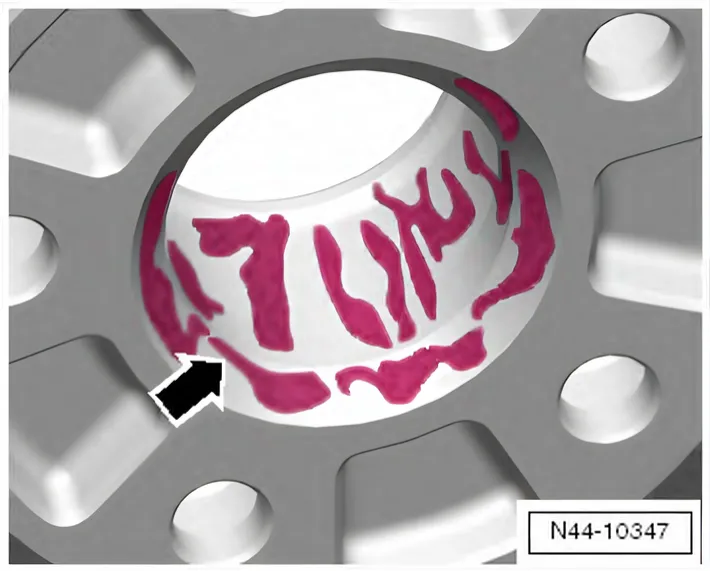
- Check to ensure that contact surface -arrow- on inner side of wheel (rim) and also centring seat of rim are free of corrosion and dirt.
- The lug seats* in the holes for the wheel bolts and the threads of the wheel bolts must also be free of corrosion and dirt, oil or grease.
* The lug seat is the curved surface of a section of a sphere cut by a plane.
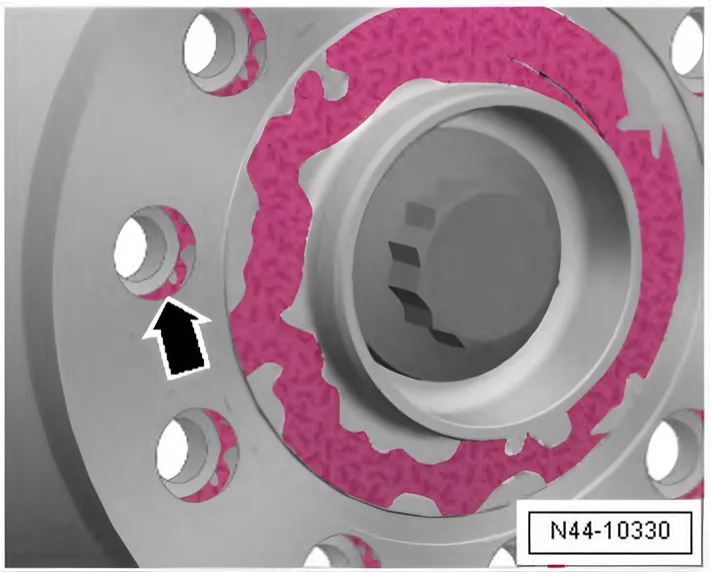
- Check whether the wheel bolts can be easily screwed in by hand. The thread of the wheel bolts must not come into contact with the bore in the brake disc -arrow-.
If the thread of the wheel bolt touches the hole -arrow-, turn the brake disc relative to the wheel hub accordingly.
If necessary, remove dirt and corrosion:
- Oil or grease from contact surfaces
- Oil or grease from threads in wheel hub
- Oil or grease from threads in wheel bolts
1.4.4 Wheel change, wheel installation
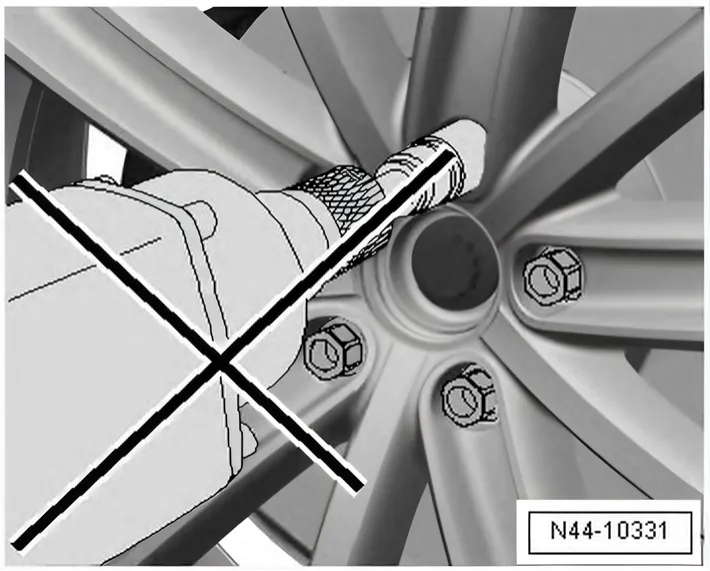
- Protect wheel centring seat against corrosion ⇒ 1.4.1 Wheel change, protecting wheel centring seat against corrosion.
- 1 When fitting the wheel, pull in all wheel bolts uniformly by
hand.
- 2 Tighten diagonally to 30 Nm.
- 3 Lower vehicle onto floor. Use torque wrench to firmly tighten wheel bolts diagonally to specified torque ⇒ 1.5 Specified torques for wheel bolts.